IN ENGLISH
New Trump’s strategy can be a threat to the unity of Europe
Objavljeno prije
2 mjesecana
Objavio:
Monitor online
China’s most advanced aircraft carrier Fujian, fully commissioned only in November 2025, sailed on June 23, through Taiwanese strait on Thursday. It is the third Chinese aircraft carrier, and the first one designed by China. And it is is considered to be more powerful than two previous Russian-designed ones.
Several hours before that, Taiwan started five-day military drills aimed at training troops to fight against a possible Chinese military attack. Taiwan’s ruling Democratic Progressive Party (DPP) regards Taiwan as an independent state, and not as a part of mainland China, temporarily separated due to political reasons. A few days before the drills started, DPP Chairman and Taiwanese president Lai Ching-te urged authorities of mainland China to renounce the use of force against Taiwan and start a dialogue with the island as with an equal partner. He was answered on June 24 by Zhang Han, a spokeswoman for the State council Taiwan Affairs office, who said that China will prevent DPP attempts to pursue “Taiwan independence” and will apply force to achieve, if it becomes necessary.
Great Britain, France and Germany on June 24 issued a joint statement, in which they condemned Chinese military activities in the Taiwan Strait as a threat to the stability in the region. However, the support of the leading European countries cannot compensate the unwillingness of the US administration to make commitments to defend Taiwan in case if Chine invades the island after the proclamation of independence. Moreover, the sale of American weapons to Taiwan was officially suspended after the meeting between US president Donald Trump and Chinese leader Xi Jinping. It was explained that the US needed air defense missiles and surface-to-air missile systems, which were to be delivered to Taiwan, for the war against Iran. Though, the war was declared to be over, the 14 billion dollars (12,3 billion euros) arms sale package still has not been approved by Trump. Lai Ching-te on June 19 expressed hope that arms purchase will be accomplished soon, but received no answer. It seems that Washington is changing its geopolitical strategy again and now is trying to avoid any escalation in its relations with Beijing.
The US administration seems be disappointed by the fail of its pressure campaign against China, and is going to try an opposite approach and work out a mutual compromise. In such circumstances, the protection of Taiwan from a possible Chinese invasion should be regarded not as a priority, but as a “bargaining chip”, as Trump put it himself. Meanwhile, the American attitude towards Taiwanese problem was quite different not long ago.
In the “National defense strategy” published by the Department of War in 2026, it was stated that the US is going “trade and engage from a position of strength in the Indo-Pacific” and will ensure that China cannot dominate American allies. Now the US are going to pursue détente, because they wore not able to accomplish its main task, – to impose an agreement that will give the US access to Chinese market and Chinese rare earths (which is even more important). There is a conventional wisdom in Washington’s new approach to Beijing. If China’s rare-earths cannot be obtained by pressure (at least in the near future), the should be acquired through concessions.
China produces 70 percent and refines around 90 percent of the world’s rare-earths. It is a monopolist without any practical alternative. The rare-earth metals are required first of all for the production of high technology products, which has an important basic feature. The cost of raw material is insignificant comparing to the market price of a final product. China receives annually less than 3.5 billion euros from exporting rare-earth elements and magnets, and the combined value of China’s total exports of manufactured and industrial goods reaches 3.5 trillion euros. China can lose all the revenues from rare-earth exports without any economic consequences. But this export is important tool of influence that prevents any attempts to influence Chinese economic and foreign policy, because without Chinese rare-earths most of the high-tech manufacturing in the U.S. will be disrupted and the damage inflicted on the U.S. economy will be estimated in the hundreds of billions.
Trump started his economic conflict with China in the spring of 2025 by restricting access to the US market with high and demanding concessions in exchange for their decrease. The EU agreed on the trade deal on Trump’s conditions in the similar situation, but China restricted rare-earth metals exports in response. Within weeks, U.S. supply chains started to collapse. Ford ceased making some models due to shortage of rare-earth magnets, and even production of Tomahawk cruise missiles became threatened. The Trump administration diminished tariffs in exchange for a suspension of the Chinese rare-earth restrictions. In January 2026, Washington eased regulations on the export of Nvidia chips to China in order to retain access to rare-earths. Though, the concessions in the US export of the advanced products and technologies undermine the strategy of attrition, which was carried out under both the Biden and the Trump administrations and aimed at containing China’s technological development. So the US administration decided to solve the rare-earth problem by shifting its strategy towards Beijing from long-lasting confrontation to gaining control over maritime trade routes essential to China and Chinese oil-import in order achieve immediate results.
The first step in this direction Donald Trump made, when he ordered the capture of Venezuelan President Nicolás Maduro in January. After the Trump administration had become certain that the new regime would terminate oil-export to China, it eased sanctions on Venezuelan oil in March. But before that the U.S. and Israel launched on February 28 war against Iran. The US administration wanted to disrupt the supply of Iranian oil to China and establish control over maritime traffic through the Strait of Hormuz, vital to Chinese oil and raw chemical imports. But Tehran derailed American plans. It managed to close of the Strait of Hormuz in the opening days of the conflict, inciting a rapid growth of oil and LNG prices. Approximately half of China’s crude oil
imports and one-third of its LNG imports transit the Strait
of Hormuz. But China proved to be prepared for the US attempts to disrupt its energy supply chains. China has built up huge strategic oil reserves and made a great progress in electrification of its transport and industry. Of course American producers benefited greatly from high oil prices, but because the US is firmly tied to global markets, households and energy-dependent industries suffered a lot. Washington faced the threat of a domestic social discontent, decided to cease trying to win the economic conflict with China and hastened to make peace with Iran.
It can be surmised that the new strategy of the US administration will be limited to avoiding unnecessary tension in the relations with China and seeking new opportunities to obtain leverages over Chinese foreign trade and economic policy. There are no doubts, that Washington can work out methods to solve this problem. It can increase the American role in the global financial system. It can also enhance American influence in the Middle East in order to make countries that supply oil to China and control important trade routes more reliable on the US. Through implementation of the peace agreement with Iran, the US administration can obtain what it failed to get by force. Supreme leader of Iran Ayatollah Ali Khamenei, who was killed in late February, was propped up by the Islamic Revolutionary Guard Corps (IRGC) and helped the IRGC to increase its foreign and domestic influence in his turn. His son Mojtaba Khamenei, whom he never regarded as his successor, will not be able to provide the IRCG with the comparable political assistance. Besides, some of the political leaders, who were in favor of expansionism, have been assassinated via targeted air strikes. So the IRGC will be concentrated on fighting for power inside the country, and not on foreign affairs. And the US collaboration with the Iranian regime will not be regarded as a threat by the Gulf countries. Moreover, both Iran and its rivals can gain profit from Trump’s desire to secure the US global energy dominance. At least Quatari government seems to expect it, as it can be concluded from its gift to President Trump. The luxury Boeing 747 plane, which is worth approximately 350 million euros arrived on June 19 to base Andrews in Maryland..
The main threat to the US is that it may loose its strategic allies in Southeast Asia, trying to deal with China without consideration of their interests. Vietnam seems to be particularly scared that it will be left without American support in the face of Chinese expansion. In the end of May President of Vietnam To Lam told the press that American presence in Southeast Asia is necessary to counterbalance Chinese influence.
But there is also a potential threat to the global stability that can even bring the US administration tactical advantages. It is a probable fragmentation of Europe. In the current situation, strong and united Europe can become an obstacle for the US strategy. First of all, because the euro is the main rival to the dollar, and unchallenged dollar domination of the global trade and financial system can become an effective leverage on China. The euro is the second most used currency in foreign exchange transactions. Central banks keep 20 percent of their reserves in in euros, international debt issuance in euros has surged recently, and the US will not be able to turn the dollar into a weapon against China, if there is another widespread and stable global currency. President of the European Central Bank Christine Lagarde said that the digital euro project, which will inevitably reduce the dominance of the US dollar, should be regarded as “a political statement concerning the sovereignty of Europe.” But it seems to be that the EU does not know, what it is going to do with the sovereignty or how it should be protected.
First of all, there is no comprehension what are the geopolitical goals of the EU and if they are different from the European countries, which are not included in the union. Now, the European police is influenced mostly by the countries, – Britain, France and Germany, – which are trying to coordinate their efforts, but often do not take in the account the opinion of less powerful. The EU countries that have their own geopolitical ambitions do not want to comply with such practice. Poland’s foreign minister Radoslaw Sikorski on June 23, urged the British government to rebuild its military and meet Nato defense spending commitments. Sikorski warned that the UK’s influence will wane, if it cannot back up its diplomacy by force.
Sikorski’ demands establishing the European political system, in which those who want to lead will have to put more efforts than others into enhancing the common security. It such system is not created, some of the European countries will start to prioritize their mutual relations with the US over their commitments to the EU. In that case, the fragmentation of Europe will become inevitable and the competition between European nations will soon reach the level comparable to the one before World War II.
The Balkans countries, which can be compelled to choose different sides in such circumstances, cannot ignore the probability of such development. They have to work out common strategy, which will allow them to ensure their common energy security and avoid economic conflicts, in spite of competition between the US and the EU and rivalry between European countries. And Montenegro, which is not regarded as an enemy or a threat by any country of the region, can play a leading part in the preserving stability and cooperation on the Balkans.
Dimitry Galkin
Komentari
IZDVOJENO
-
EU INTEGRACIJE U SJENCI PARTIJSKIH KALKULACIJA: Ustav za pogađanje
-
STEČAJNA MAFIJA: ISPARAVANJE MILIONA U VEKTRA BOKI: Privredni sud, SDT i država ćute
-
OTVARANJE SVETOG STEFANA NAKON PET GODINA: Aman ili Janu – novo poglavlje najpoznatijeg crnogorskog ostrva
-
SLUČAJ IVANE RADOVANOVIĆ NA UNIVERZITETU CRNE GORE: Odbijen izbor u zvanje zbog nepodobnosti
-
DR SRĐA PAVLOVIĆ, ISTORIČAR: Vladajuća struktura je u značajnoj mjeri ideološki antievropska i antizapadna
-
CIN-CG: GOVOR MRŽNJE I DEZINFORMACIJA DODATNO NARUŠAVA ODNOSE SRBIJE I CRNE GORE: Diplomatija uvreda
IN ENGLISH
SQUARED INTERESTS: Why Trump and Babiš are helping Vučić win the election
Objavljeno prije
1 sedmicana
3 Augusta, 2026
Aleksandar Vučić, the president of Serbia, wrote on his Instagram account on July 28, that Serbia is keeping pace with the world, that has been changing faster than ever, and must not stop. If moving forward means ensuring victory for the ruling party, regardless of mass discontent, then Aleksandar Vučić is perfectly correct.
Of course, the outcome of the parliamentary election is not certain, but the incumbent president has a great chance to become the future prime minister on the ground of its results, and keep staying in power without constraints of a term-limited presidency. On July 26, the Serbian President said that if his Serbian Progressive Party (SNS) loses election, he will not leave Serbia. He also reconfirmed his intention to resign and announced that he had received death threats.
Such statements is a clear sign that Vučić believes that everything is going well, and just a bit of drama is required to make his supporters more motivated. He would have never acknowledged an opportunity of defeat, if it had really threatened him. But he needs to be perceived by his adherents as a hero, who will keep on fighting for the country, whatever happens, regardless of any danger.
However, to circumvent successfully Serbia’s constitution and retain control over the country, Vučić needs not only to motivate voters, who remain loyal to him, but also to bring to his side those, who do not care much about politics, and demotivate those, who are likely to support opposition.
That is not an easy task. A large part of Serbians, who were neither involved in the mass protests, nor hold the president in high regard want Serbia to join the EU. It makes those voters potential supporters of opposition. In order to prevent opposition parties from receiving their votes, Vučić has to demonstrate that he will be able to facilitate the European integration for Serbia, when he becomes a head of the government.
But there is the other part of the Serbian “silent majority”, which is afraid that the opposition leaders will betray national interests. Those people are scared that the increase of the European influence will undermine the national unity and restrict Serbia’s foreign policy. They have some reasons for that, because the EU bureaucracy do not take into consideration national sentiments in the EU candidate countries.
If Vučić becomes too pro-European, the voters who do not want to make too much concessions in exchange for the EU-membership, will become demotivated. They can stay home on the election day and some of then can even support the opposition because of its anti-corruption narratives.
There is a very popular tactical manoeuvre, aimed at showing the incumbent head of the state as the most balanced figure in the political space. He should be criticized by radical supporters of the ideological concept, which brings him most of the voters, but prevents from him from expanding his support base. In case of Vucic, the concept that provides him with votes, but prevents the further growth in the number of voters is the resistance to the European political pressure in the name of national sovereignty and Serbian unity.
There are some rather well-known Serbian politicians and media-persons who will gladly slam Vučić for conducting too pro-European foreign policy. Aleksandar Voulin, who was a deputy prime minister in the government of Miloš Vučević has been already doing it for some time. For instance, on July 26, he gave an interview to one of the most popular anti-European Internet-platform DDGeopolitics. Voulin stated that the Serbian president does not deserve support of the political forces that fight against Brussels, because he is pushing Serbia towards the EU.
Both DDGeopolitics’ founders and Voulin does not hide their connections with the Russian government structures. But Vučić does not have to worry about the Kremlin’s reaction on the accusations against him, because he continues to demonstrate loyalty to Russia, at least on a symbolic level. Of course, Serbian voters associate the name of the newly rebranded electoral list of SNS, “Ujedinjena Srbija” with the name of the nationalist party in Republika Srpska and the anti-communist opposition movement formed in 1990. However, in the Kremlin there will be only one association, with the name of the ruling party in Russia (it sounds similar in Russian translation). Thanks to that, the re-branding of the electoral list is certain to be perceived there as an homage to Russia, where parliamentary election campaign has already started. Maybe, the Russian government would prefer political actions to political symbols. But in the current situation the Kremlin has to appreciate any signs of loyalty, because it has been losing allies recently. Besides, Vučić does not need active support from Russia, which can hinder the campaign and lead to defeat as the example of former Hungarian prime-minister Victor Orban showed. It will be enough, if the Kremlin just stays benevolent and refrains from active assistance. In the existing geopolitical landscape, the support of the US president Donald Trump looks much more effective. And Vucic has already obtained it.
Donald Trump, who imposed tariffs, which was supposed to hit Serbia hardest in Balkans, agreed on their significant decrease. Aleksandar Vučić announced on July 24 that the United States had lifted 35% tariffs on imports from Serbia, and US tariffs on Serbian goods temporarily fell to zero and would be eventually settled at around 10% to 12%..
New US tariffs can attract foreign investors, who plan to manufacture goods for the US market, but it looks unlikely that “hundreds of millions of dollars” of new investment promised by Vučić will be brought to Serbia in a short time. It seems to be more important that the US administration made it possible to regard the US market as an alternative to Germany, which remains the main trade partner of Serbia.
Germany is facing an economic stagnation, and the Serbian export has already been affected by it. Serbian automotive parts, copper and metal products can be exported to the US, if the demand in Germany continues to fall. Besides, the US administration does not want to increase political pressure neither on Russia, nor in China. Therefore, Serbia will be able to maintain longstanding ties with these countries without causing American discontent. Meanwhile, Germany is interested in the confrontation between Russia and Europe, because now it seems to be the only way to strengthen internal unity of the EU and enhance its geopolitical influence. The new agreement with Washington diminishes probability that Berlin uses economic leverages on Belgrade for changing its foreign policy.
It seems very likely that Donald Trump is trying to gain control over the Russian oil export. On July 28, the US senate voted overwhelmingly to advance a Russia sanctions bill that has been proposed by recently deceased senator Lindsey Graham quite a long time ago. It would never have happened without Trump’s approval. So it is expected to pass the House of Representatives without any difficulties. The bill hits Russia’s shadow fleet of oil tankers and imposes high tariffs on countries that import Russian oil. However, it grants the president broad waiver authority, and Trump will certainly use it for making exceptions for his allies. From that point of view, new sanctions against Russia can bring advantages to Serbia, if it can keep close ties with the US. Vučić can obtain an access to cheap Russian oil, while the leading EU countries will be deprived of it. In that case, Serbia can become a part of Trump’s strategy aimed at increasing Europe’s energy dependence on the US. So the US administration has strong reasons to assist Serbia’s accession to the EU, ignoring the political demands of the leading EU countries to the Serbian government.
It is remarkable that the decrease of the US tariffs was announced a week after Serbian Foreign Minister Marko Djuric and US Secretary of State Marco Rubio had signed memorandums of understanding on energy cooperation. Trump’s waiver authority is the best guarantee that the NIS oil company will keep operating and even will become more profitable.
The political strategy of Vučić grounded on the mixture of nationalist sentiments with the promises of economic growth thanks to the cooperation with the EU can become a tool of the American influence in Europe. If the Serbian economy is integrated into the EU economic space, but the Serbian government will be able to promote nationalist ideas, Belgrade can assist spreading of nationalism not only throughout the Balkans, but also in the EU countries. Strong political movements based on nationalist ideas are required to prevent the EU of obtaining internal unity and strategic autonomy. So the US administration is interested in helping Vučić to use pro-European expectations in order to dominate Serbian political space and weaken political opposition.
Czech Prime Minister Andrej Babiš who describe himself as a “Trumpist” stated during his visit to Belgrade, should not remain outside the Schengen area. Vučić expressing his «great gratitude» to Babis «for supporting Serbia on its European path» said, that the most important thing for Serbia in the coming years is to be part of the single market of Europe and to have open borders, both in the region and towards all EU member states.
No opposition leader could have promised more in the aspect of the European integration. Because thanks to the US desire to weaken and subjugate the EU, and the inability of the EU leaders to promote democratic values, the European integration ceased to be a path to political democracy.
Dmitry GALKIN
Komentari
IN ENGLISH
BEHIND THE PROTESTS IN KIEV: Zelensky’s game that the EU accepts and the US ignores
Objavljeno prije
3 sedmicena
26 Jula, 2026
President of Ukraine Volodymyr Zelenskyy informed Olexandr Syrskyi, the Commander-in-Chief of the Armed forces on July 21, that he has been dismissed and replaced a high ranking commander of the General staff Mykhailo Drapaty. On July 22, it was announced that Chief of General staff Andrii Hnatov was also removed and his deputy Ihor Skybiuk succeeded him. This reshuffle of the high army command, which started on July 16, when the president dismissed former Defense Minister Mikhail Fedorov. And it seems that the high-ranking officials, who were deprived of their positions, had not anticipated that.
Olexandr Syrskyi on July 20, when it became clear that the street actions in support of Mykhailo Fedorov will not fade away by themselves, published an article in the main military magazine of Ukraine. He explained that he had no conflict with Fedorov and was very astonished, when the defense minister mentioned their personal confrontation as the main cause of his dismissal. Syrskyi asked Fedorov to excuse him for creating such an impression and assured him that all their conflicts were originated exclusively by the desire to fight better against Russia. Syrskyi also reproached the former defense minister for concentrating too much on drones and underestimating the importance of artillery systems and other traditional weapons. Syrskyi promised that as the Commander-in-Chief of the Armed, he will keep on strengthening Ukraine’s military capacity.
On the next day, Olexandr Syrskyi lost that possibility. And on July 22, it was reported that Syrskyi’s supporters mixed on the streets with demonstrators, who were demanding to return Fedorov.
Such an alliance must look rather strange because contrary to what Syrskyi declared in his article, it was widely known that he had a conflict with Fedorov. Moreover, their disagreement caused by their different approach to the development of military forces had started even before Fedorov became the minister of defense. As a first deputy prime minister in charge of development of digital technologies, Fedorov insisted on turning the drones into the main weapons of the war and rapidly increasing their production even the expense of other military supplies. Such suggestions were criticized by top military leaders, but were not supported by Zelenskyy. And when in January 2026, Fedorov was appointed as minister of defense, it was thought that the main intention of Zelenskyy was to use Fedorov for restraining Syrskyi’s influence or even for getting rid of Syrskyi, if the need would arise.
The president wants to be the most popular military leader and needs no rivals. In February 2024, he dismissed Valerii Zaluzhnyi, who was the Commander-in-Chief of the Armed forces then, because he had become dangerously popular. Syrskyi, with his traditional military style, who replaced Zaluzhnyi did not give grounds for the same worry, but he resisted interference in military issues and wanted to direct military supply. In case, if it became a serious problem for the president, Fedorov could easily create the basis for Syrskyi’s dismissal. Meanwhile, the conflict between Syrsky and Fedorov, made Zelenskyy the final authority in all questions related both to the military supply and the strategy on the battlefield.
The key mistake of Zelenskyy was that he did not foresee that Fedorov would become so popular in such a short time. In January, the current situation could not be predicted, because the US president Donald Trump seemed to be interested in making an alliance with Russia. However, he lost such intentions. Maybe, he will have nothing against getting control over Russian oil and gas export, but he has no need to regard Russia as a probable geopolitical partner anymore. That’s why early in March, Ukraine was provided with the American space intelligence data and assistance of the AI military system for deep air strikes on industrial and infrastructure objects. A short time before than, Elon Musk switched off Starlink for all Russian users, which hindered drone operations behind the front-lines for the Russian forces. Besides, thanks to Fedorov’s concentration on drones, their number in the Ukrainian troops has rapidly increased, and Ukraine obtained a superiority in quantity and quality of drones, available for everyday basis. It helped to compensate Russian advantage in artillery systems and significantly slow down Russian offensive, even in Donbas region.
All this made Fedorov, who is young (he is 35) and intelligent, extremely popular. Under the new new defense minister, the Ukrainians at last saw Russian refineries burning and important infrastructure object seriously damaged. Even Moscow and Petersburg were successfully attacked. High casualties on the battlefield made Russian troops adopt new tactics, which exclude a rapid advancement. The apprehension that Russian troops could encircle such big cities as Kharkiv and Zaporizhzhia are now in the past.
It is also important that Fedorov could touch public sentiments. The destruction of energy facilities in the Crimea, which was annexed by Russia with the support of a huge part of local population, and air-strikes on Moscow, though incomparable with what Kyiv has to endure in response, can give a feeling of revenge.
However, the most important achievement of Fedorov is that he gave the prospect of military victory over Russia. The Ukrainian society has been deprived of that since the autumn of 2022, when Zaluzhnyi managed to breach Russian defense and liberate vast territories in Kharkiv region.
This time the victory was expected not through offense on the battlefield, but through air-strikes on the Crimea and Russian industry, which are supposed to inflict a great damage on Russian economy and make the life in the Crimea unbearable. Putin is expected to agree on immediate truce or even on surrendering some of the captured territories due to the heavy social repercussions of Ukrainian air attacks. Of course, such a plan will remain a fantasy without economic and political pressure from Washington on the Kremlin. And it cannot be guaranteed that Trump will put pressure on Russia, though he hinted several times on such opportunity. But even such expectations, even if they appear to be unrealistic is much better than war-weariness and despair which had been spreading in the Ukrainian society before this spring.
Besides, Fedorov has persuaded the Ukrainian public that thanks to the new drone, which are being developed under his guidance, Ukrainian troops will get such a great advantage over Russian, that there will be no need to supply the Ukrainian army with new soldiers, at least in such quantity as at the present. The importance of this promise for young and middle age Ukrainian men, their wives and mothers cannot be overestimated. The series of these drones, which are supposed to change everything is called “Rusoriz” (“Russosec”). This name is greatly loved by the nationalists, who remain in the current conditions the most active independent political force.
Zelenskyy had to prevent the further growth of popularity of the former defense minister in order not to create a dangerous political rival. It is understood, the elections in Ukraine both parliamentary and presidential are inevitable, even if the hostilities continue. The EU needs the Ukrainian government to be legitimate in order to go on with Ukraine’s European integration. The new laws required for the elections in the current circumstances can be adopted only by the upcoming winter. So the elections can be conducted in the next spring. So has to act now if he wants to retain political domination and exclude the appearance of political leader, who can take from him his position or the parliamentary majority.
Such political behavior has nothing in common either with strengthening democratic institutions, or with establishing accountable governance. And it is a very bad sign that it accepted by the EU leaders who want Zelenskyy to stay in power, without any concern of Ukraine’s democracy.
The unwavering support of the EU and the lack of any attention to Ukraine’s political process from the US make Zelenskyy believe that he can do whatever he wants to stay in power, because there are no political forces within the country, which can hinder him. Such an illusion destroyed Yanukovicn, and the political crisis that followed after his fall allowed Russia to annex the Crimea and instigate the military conflict on Donbas. Now, Zelenskyy is making the same mistake, and he has already disorganized military leadership by his actions, which can have dangerous repercussions.
Zelenskyy could not just dismiss the popular defense minister, whom he always supported and praised publicly. That is why it was decided to reboot the government. In that case, the president who would be able just not to suggest Fedorov as a new defense minister to the parliament. It seems that the president believed that Fedorov would be satisfied with the position, which would allow him to control the production of the drones and their supply to the army.
The former prime minister Yulia Svyridenko was not an important figure. Her main functions was to represent the interests of Andriy Yermak, the former head of the office of the president, who regardless of accusations in corruption, remains one of the most influential politicians in the country. Serhii Koretskyi, the new prime minister, is also connected with Yermak (though less closely that Svyridenko). So the closest ally of the president (at least in the recent past) got his compensation.
But everything the whole combination went wrong, because Fedorov publicly rejected the offer he had been supposed to accept. And the president, who wanted to create an illusion of an ordinary reshuffle of the government for enhancing its accountability, started to be regarded as an opponent of the former defense minister. Contrary to his wishes, Zelenskyy appeared to be an ally of the traditional styles army leaders in their struggle against Fedorov.
The president and his associates did not expect mass protests in support of Fedorov, and the reaction caused by his dismissal in social networks. Zelenskyy realized that he is going to face a serious drop in ratings, instead of strengthening his political position. So he chose to remove Syrskyi and Hnatov, in order not be regarded as an ally of the main Fedorov’s enemies. It will inevitably undermines the moral of the troops, but it will hardly satisfy the protesters. The main question now is not the political fate of Fedorov, but the ability of Ukrainain society to resist authoritarian tendencies. Despite their acceptance by the EU.
Dmitry GALKIN

Komentari
IN ENGLISH
NEW HIGHWAYS LEAD MOUNTAIN COUNTRIES TO THE GLOBAL ECONOMY: We are all closer
Objavljeno prije
4 sedmicena
18 Jula, 2026
Thanks to modern technologies that enable the construction of highways through mountains, the pattern of regional development has changed. Both in the distant mountainous countries of Asia and in Montenegro
Chinese embassy in Dhaka, the capital of Bangladesh, organized on July 13 symposium to mark the 105th anniversary of the Communist Party of China (CPC), and the event attracted high-ranking officials and influential members of Parliament, though the ruling Bangladesh nationalist party (BNP) does not share socialist ideas. Such intention of Bangladeshi political elite to pay tribute to the CPC is quite understandable, because early in July a new epoch in the relations between Bangladesh and China commenced. Dhaka has finally agreed on the Beijing’s proposal to take part in the construction of the China-Myanmar-Bangladesh Economic Corridor (CMBEC). It is going to be a strategic trade route, which will allow to bypass the Malacca Strait, managed by Indonesia, Malaysia and Singapore. China will obtain direct access to the Indian Ocean via Chittagong (the main port of Bangladesh) and Mongla (the second-largest port of the country).
This project is extremely important for China, but Bangladesh did not venture to participate in it, even after the pro-Indian government of Sheikh Hasina was overthrown in 2024 after she had ruled the country for fifteen years. The new government, which was formed by the BNP cannot be cannot called “pro-Chinese” and it certainly wants to keep close ties with New Delhi, in spite of its agreement to assist Beijing’s strategy of encirclement India. There is an example that Bangladesh wants to follow, the CMBEC is supposed to become the eastern twin to the China-Pakistan Economic Corridor (CPEC). And that project, which offered Pakistan with new prospects for economic development and geopolitical influence, did not deprive Islamabad of strategic autonomy. Despite strong dependence on military and economic cooperation with China, Pakistan has been trying to restore its relations with the US, which dramatically deteriorated during the war in Afghanistan.
The Bangladeshi government simultaneously with acceptance of Chinese offer showed that it gives importance to the relations with the US. The US embassy was allowed to organize celebration of the 250th anniversary of American independence on the premises of the National Parliament House, the largest legislative complex in the world. That decision was strongly criticized by some members of parliament with anti-American views. But it clearly proved that Dhaka is not going to change its approach to the relations with Washington.
It is remarkable that the the parliament complex in the Bangladeshi capital was designed by famous American architect Louis Kahn. His pupil Svetlana Kana Radevic became one of the most prominent architects of Montenegro and former Yugoslavia.
But in the aspect of the infrastructure infrastructure development, Montenegro seems to be closer to Pakistan than to its rival Bangladesh (both countries are trying to mitigate the impact of the Bangladesh war of independence in 1971, but mutual trust has not been fully restored yet). Mountains obstructed Pakistan’s connections with the neighboring countries made it rely mostly on the marine trade routes.
That obstacle was surmounted only with the construction of the CPEC, which is linking China’s Xinjiang region to Pakistan’s Gwadar Port. It was launched in 2015, and the CPEC became one of the most important parts of China’s Belt and Road Initiative, which China’s leader Xi Jinping considers to be essential for economic development and geopolitical influence of the country. Over 20 billion euros has been invested in the completed infrastructure and energy projects, related to the CPEC, and at least 34 billion euros has already been spent on the projects, which are still not finished.
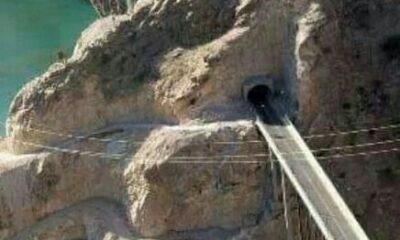
The significance of the CPEC is primarily based on its ability to provide secure way straight through the mountains, fist from China to Pakistan, and this spring corridors from Pakistan to Kyrgyzstan and Tajikistan were added. These new corridors provide Central Asian countries, with overland access to the Arabian Sea through Pakistan while bypassing Afghanistan, which is certain to remain insecure in the foreseeable future. Thanks to contemporary technologies which allow to build highways through the mountains, the pattern of regional development has changed. The most significant step in that direction was made in September 2015, when the construction of China-Pakistan Friendship Tunnels was finished. The distance covered by this project seems to be insignificant comparing with 3000 km of the CPEC. But without its completion, the significance of the whole CPEC had been diminished, because the passage from Pakistan to China would remain threatened by weather conditions, floods and landslides.
Construction of a 24-kilometer series of bridges and tunnels took 36 months and cost 240 million euros. The project, which included two large bridges, 78 culverts and five kilometers of tunnels, was executed by the state owned China Road and Bridge Corporation (CRBC). It proved that Chinese corporations obtained advantages in the mountain construction.
Thanks to improving trade routes with neighboring countries and its important role in the Chinese global infrastructure project, Pakistan became more interesting to other global players, first of all the US. Pakistani Interior Minister Mohsin Naqvi arrived on July 11 in Washington for a new round of discussions aimed at expanding bilateral economic cooperation, new opportunities for investment and commercial partnerships between the two countries. Mohsin Naqvi welcomed US investment in the mining and energy sectors and promised that American investors would be provided with the safe environment.
Pakistan was represented at the negotiations with the US by the interior minister through obvious necessity. Americans are mostly interested in acquiring rare earth metals, vital for electric vehicle motors and defense electronics, which were found primarily in Balochistan. Port Gwardar, which is considered to be one of the key elements of Chinese Belt and Road Initiative is also located in that province. And the situation in Balochistan is far from being peaceful. There are two main anti-government military organizations that operate in the province, – Baloch Liberation Army (BLA), a separatist movement that is thought to be supported by India, and Tehrik-e-Taliban Pakistan (TTP), a fundamentalist group based on the same ideas as the Afghan Taliban. Despite their differences, they seem to coordinate their activity.
BLA carried out attacks on July 7, targeting police stations and coast guard camps, killing 11 soldiers and 18 police officers (skirmishes started two days earlier). TTP on July 6 assaulted the police post, which was guarding a dam, killing 8 police officers and abducting 18 others. But the most most damaging economic impact was caused by a suicide bomber on July 3, who drove an explosives-laden truck into a coast guard camp close to Gwadar port. Such attacks are the main cause, why the deep-water port, which was supposed to become “the Singapore of the Arabian Sea” cannot operate at full capacity.
Of course, Montenegro does not have the problems with militants attacking police or trying to destroy infrastructure. However, in the current circumstances Montenegro does not have a chance to become a part of the Chinese global infrastructure project, because neither the EU nor the US can allow that. China made an attempt to do that providing both the credit and the construction corporation for the highway from Podgorica to Kolasin. But even before the project was finished, it became clear that China would not be able to use it for the economic expansion and facilitation access to the European market. The Biden administration that came to power in 2021 was trying to diminish China’s global influence and strengthen Transatlantic partnership by restricting Europe’s economic relations with China. Russian invasion of Ukraine gave a reason for creating a US-led coalition for constraining China’s expansion in Europe under the slogan of confronting authoritarian regimes that threaten democracy. On July 13 2023, the Foreign subsidies regulation was put into action. The activity of Chinese state-owned corporation (and under Xi Jinping all significant corporation became state-owned) was restricted, they were forbidden to obtain control over European ports. The Greek port Piraeus, which is operated and majority-owned by Chinese COSCO remains the only exception. Though, the corporation has shares in several other European ports, it cannot increase them.
However, after the election of the incumbent US president Donald Trump, the situation has slightly changed. The current US administration does not regard the EU as an essential all. Therefore, it has nothing against some strengthening of economic ties between the EU and China. Besides, the US has nothing to fear in that sense anymore. The EU has started to be afraid of Chinese economic development, because Chinese industrial export grows mostly at the expense of European. Anyway, Montenegro got an opportunity to use Chinese technologies for increasing its transit potential. Now Chinese credit cannot be used for that, Montenegro is to pay some expenses from its own budget and provided with European grants. Highway Matesevo – Andrijevica, like China-Pakistan Friendship Tunnels, does not cover a long distance. And it plays the same function. It changes pattern of development of the country, where mountains hindered construction of the trade routes. It can bring new economic prospects to Montenegro, which is the third most mountainous country in the world, after Bhutan and Nepal. Of course, if the EU will not refuse to fight for its economic security.
Dimitry GALKIN
Komentari

SQUARED INTERESTS: Why Trump and Babiš are helping Vučić win the election
PORFIRIJE U NAŠEM SOKAKU: Srpstvo svuda i uvijek
NOVI MINISTRI U SPAJIĆEVOJ VLADI: Andrijina vremena
Izdvajamo
-
IN ENGLISH4 sedmiceNEW HIGHWAYS LEAD MOUNTAIN COUNTRIES TO THE GLOBAL ECONOMY: We are all closer
-
Izdvojeno2 sedmiceZATVOREN MOST NA ĐURĐEVIĆA TARI: Cijena spasavanja kolosa
-
IN ENGLISH1 sedmicaSQUARED INTERESTS: Why Trump and Babiš are helping Vučić win the election
-
DRUŠTVO2 sedmiceOBALA NA PRODAJU, EKSPANZIJA TURISTIČKO-APARTMANSKIH ODMARALIŠTA: Naše privatno more
-
INTERVJU3 sedmiceALEKSANDAR SAŠA ZEKOVIĆ, GRAĐANSKI AKTIVISTA: Poricanje zločina stvara potencijal za nove zločine
-
DRUŠTVO4 sedmiceCRNA GORA ZEMLJA VISOKOOBRAZOVANIH: Sve više školovanih, sve manje stručnih
-
DRUŠTVO4 sedmiceOD PROTESTA NA SVETOM STEFANU DO NAMMOS RESORTA U REŽEVIĆIMA: Povratak Statisa – između glamura i otpora mještana
-
DRUŠTVO3 sedmiceVRH SPC I REŽIM VUČIĆA PROTIV CETINJSKE MITROPOLIJE: Novi lov na „izdajnike” i „separatiste”