IN ENGLISH
2BS FORUM IN KGB HOTEL: Atlantic Council of Montenegro – who and what it represents?
Objavljeno prije
2 godinena
Objavio:
Monitor online
The current ACM chairperson is Milica Pejanovic – Djurisic, a long-time official of the once ruling DPS, former minister of defence and a reputable senior diplomat. The activities of the ACM are realised through three centres of which the Digital Forensic Center (DFC) comes to the fore. DFC was founded in 2018 and has released a number of publications on Russian malign influence, mainly from the view point of DPS
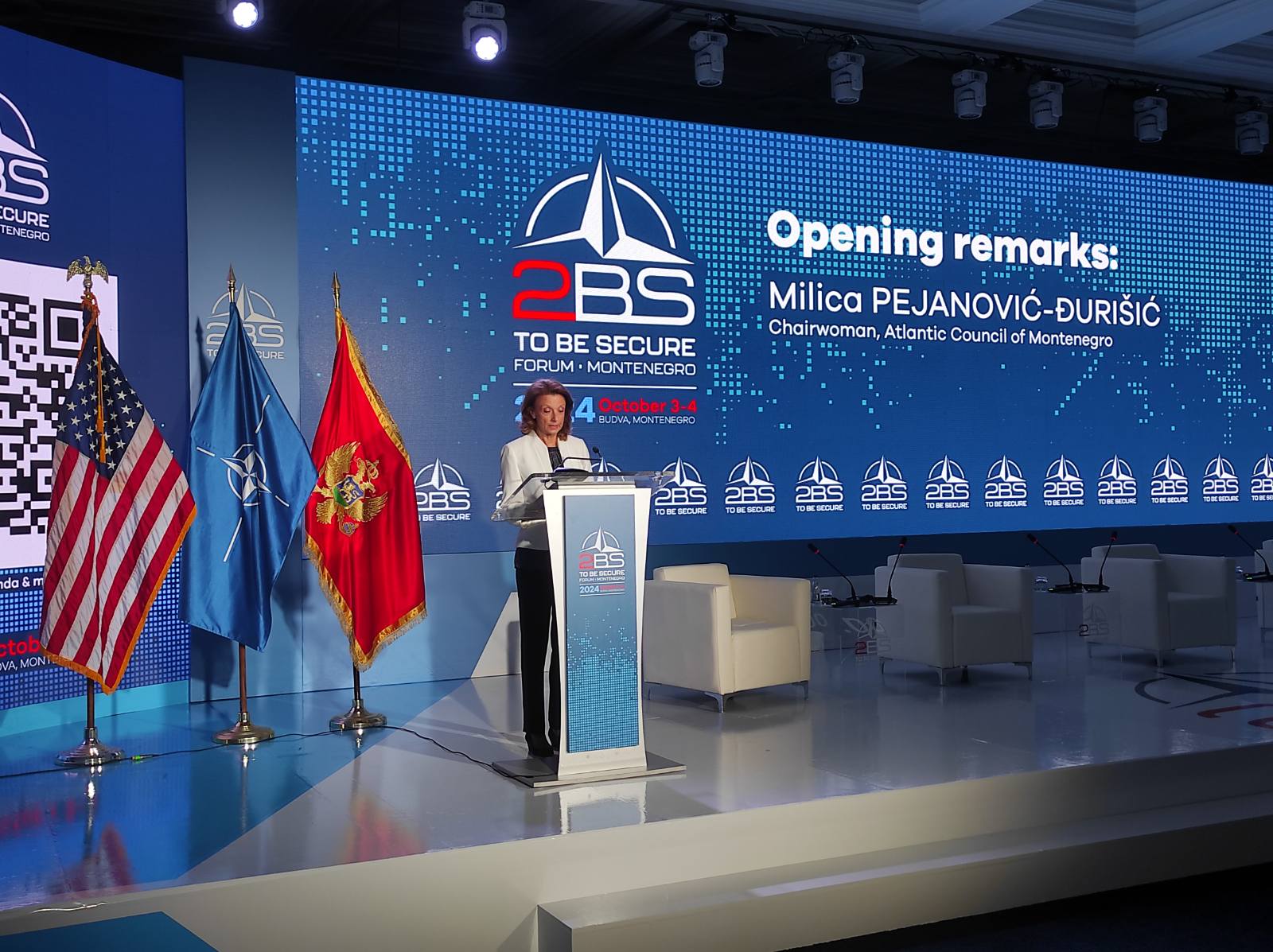
Last week (3-4 Oct) the 14th To Be Secure Forum Montenegro (2BS) took place in Hotel Splendid in Becici – Budva, under the auspices of the Atlantic Council of Montenegro (ACM). Its website states that 2BS is a leading politico – security conference in Southeast Europe. This year’s topic is World in Disorder: Turning Adversity into Opportunity with a focus on the repercussions and security challenges in the Western Balkans.
The event brought together more than 400 participants including government officials, high-ranking representatives of international organisations and diplomatic missions, and prominent experts in security and international relations. ACM points out that “it has devoted itself to the promotion of Euro-Atlantic values and international security since it was founded in 2006”. In the same year, the ACM became a member of the global Atlantic Charter Association (ATA).
The current ACM chairperson is Milica Pejanovic – Djurisic, a long-time high official of the Democratic Party of Socialists (DPS). She was also a Minister of Defence and a reputable senior diplomat. The ACM activities are carried out through 3 centres, of which the most exposed is the Digital Forensic Center (DFC) founded in 2018. DFC has released a number of publications on the subject of Russian malign influence, mainly from the view point of DPS. Allegedly, the DFC was founded in order to “fight against disinformation, fake news and propaganda campaigns aimed at destabilising democratic processes in Montenegro and the Western Balkans.”
The founder of the 2BS Forum and the DFC is Savo Kentera from Budva. He chaired the Montenegrin Atlantic Council from 2008 until May 2022, when the minority government of PM Dritan Abazovic (supported by DPS in the national assembly) appointed him to head the National Security Agency (NSA). Mr Kentera lasted little less than 5 months. As soon as the 12th 2BS Forum in Becici was over, he was sacked by the government following the DPS termination of support to Abazovic after he signed signed the controversial Concordat with the Serbian Church (SOC). Prior to his sacking Mr Kentera launched an NSA operation against Russian spy network, allegedly in cooperation with international partners and the Special Prosecutor’s Office (SPO). Two Montenegrin citizens were arrested, 6 Russian diplomats were expelled, and 28 foreigners were barred from entering the country.
However, the whole operation turned out to be a farce. Eventually, the two Montenegrins were not accused for espionage. Only one was suspected for illegal possession of weapons. No trial has ever taken place.
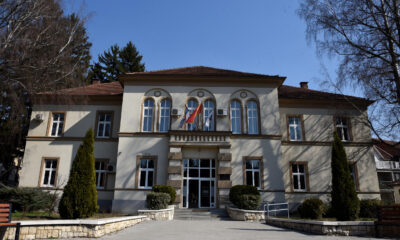
It is worth noting that the 2BS Forum founder (who claims that he supports Euro-Atlantic values) for many years chose the same hotel for the conferences. The founder of Hotel Splendid and its majority owner is now late Viktor Ivanyenko – retired director of the infamous KGB. During his term under President Boris Yeltsin, the service changed its name to the Federal Security Service (FSB). How a state employee and the chief of spies of the Russian Federation (and with money of dubious origin) came to own 4 hotels on the Montenegrin coast was never a reason for any concern, let alone inquiry, while the country was led by so-called pro-western Milo Djukanovic.
The Russian president Vladimir Putin (who was also at the helm of FSB following Ivanyenko’s retirement) said in 2004 that “ there is no such thing as a former KGB man”. The hotel is known as a meeting place of Russian intelligence and foreign and local business people and/or criminals. One of them, very close to Djukanovic, was put on the US Treasury’s blacklist, while another of his buddies is now under the protection (from going to prison) of Aleksandar Vucic.
Not only politicians and criminals have links with the Russian intelligence. In the aforesaid hotel on 24 May 2022 the then head of the Montenegrin Church (MOC) Miras Dedeic (The Rt Rev. Mihailo) met with a GRU (Main Intelligence Directorate) colonel Leonid Malofeyev. After a 5-hour meeting the two were photographed together. Mr Malofeyev, whose photographs with the Rt Rev. Mihailo were published by Podgorica-based Antena M, appeared in the robes of the Metropolitan of Moscow and All of Russia of The True Orthodox Church of Russia under the monastic name of Seraphim.
The aforementioned religious organisation (which is one of the proxies of the Russian intelligence) has developed deep ties with the MOC, including financial ones, according to critics of Bishop Mihailo. On the other hand, the Serbian Church has never even tried to conceal its non-spiritual ties with the Moscow Patriarchate. Based on the briefly opened state archives after the collapse of the USSR, the current Russian Church (ROC) head Kirill Gundyayev, is also a KGB agent who was later awarded tax free business with alcohol and cigarettes.
Much has already been published and circulated about substantial financial and political support of Vladimir Putin and his oligarchs to the project of independent Montenegro. Published audio conversations (covertly recorded) of the then Serbia and Montenegro ambassador to Russia Milan Rocen (and a long time confidante of Milo Djukanovic) have shed a new light on the Russian role in Montenegro’s independence drive. The release of heretofore unpublished recordings were recently heralded by the pro-Russian outlet IN4S. However, the publication of contents which could be potentially harmful to the DPS was stopped – allegedly on orders from the Russian embassy.
Under the DPS and its leader Djukanovic, Montenegro became one of the hubs for Russian spies and Russian organised crime in Southeast Europe. The western press and official reports of the western governments constantly warned about the Russian influence in Djukanovic’s fiefdom. Moreover, in 2011, the DPS signed a strategic agreement with Putin’s United Russia which has never been revoked. The DPS was recently challenged in the Montenegrin parliament to revoke the agreement with the United Russia. However, a DPS MP indirectly ruled it out.
In March 2023, a Russian opposition paper Novaya Gazeta and Transparency International, published a detailed report on the continued influx to Montenegro of Russian dirty capital, spies and intelligence experts for cyber warfare in 2019.
The purchase of real estates, including a cultural heritage site protected by law, and the further entrenching of Russian intelligence could not happen without the blessing of the DPS authorities. Back in 2019, Montenegro was already in NATO and claimed that it was on bad terms with the Kremlin due to so-called coup d’etat attempt in the fall of 2016 in the wake of parliamentary elections. The subsequent televised trial turned into a satirical farce resulting in the first-instance acquittal of all the defendants.
Nevertheless, the subsequent reactions of the prime minister show that the conference was rather used to promote Djukanovic again. Furthermore there are allegations of behind-the-stage efforts to broker a coalition deal for power sharing in the capital city of Podgorica with the political forces of the current president, Jakov Milatovic.
Spajic didn’t turn up at the Forum. He tweeted on X that the conference went “contrary to expectations” and became “mainly a platform for the analysis of local Podgorica election results by prominent experts like Djukanovic and Milatovic. They silenced the foreign guests by bickering against their own country.” According to informal sources, the Government has not wired the money yet.
The quantity and quality of ACM’s cooperation with similar organisations is also questionable, at least when it comes to the promotion of the aforesaid Euro-Atlantic values. Those values should primarily mean support for democracy, the rule of law and fight against organised crime.
In communication with our paper, the director of the European Center of the Atlantic Council of the USA, Jorn Fleck, emphasises that the ACM and the American Atlantic Council are two completely different organisations. As for the activities of the US Atlantic Council in Montenegro, Fleck says that “one of the Europe Center’s nonresident fellows attended the Western Balkans Growth Summit in May in Kotor. The same fellow was invited by event organisers to attend the inauguration of President Milatovic”. Furthermore, “in 2019, the Atlantic Council took a delegation of Congressional Staffers to the region, including a stop in Montenegro”.
Komentari
IZDVOJENO
-
BERANE, VANREDNI LOKALNI IZBORI: Još jedna prinudna uprava
-
Kad se vrata zatvore, nadam se da je vjetar
-
MUSTAFA CANKA: GUSARSKA REPUBLIKA ULCINJ (XVIII): Fermani sultana
-
Lov na agente
-
UZ PROTIVLJENJE CBCG, BEZ SAGLASNOSTI EK, PONOVO USVOJEN ZAKON O RAZVOJNOJ BANCI: Vladina igračka
-
FORUM 2BS U KGB HOTELU: Koga i šta zastupa Atlantski savez CG
IN ENGLISH
NEGOTIATIONS IN SHENZHEN: The dragon, the eagle and the bear have something in common
Objavljeno prije
2 danana
22 Novembra, 2026
The participants in the Shenzhen meeting have at least two things in common. They are too weak to realize their ambitions, and they are too focused on their own goals to cooperate on a lasting basis.
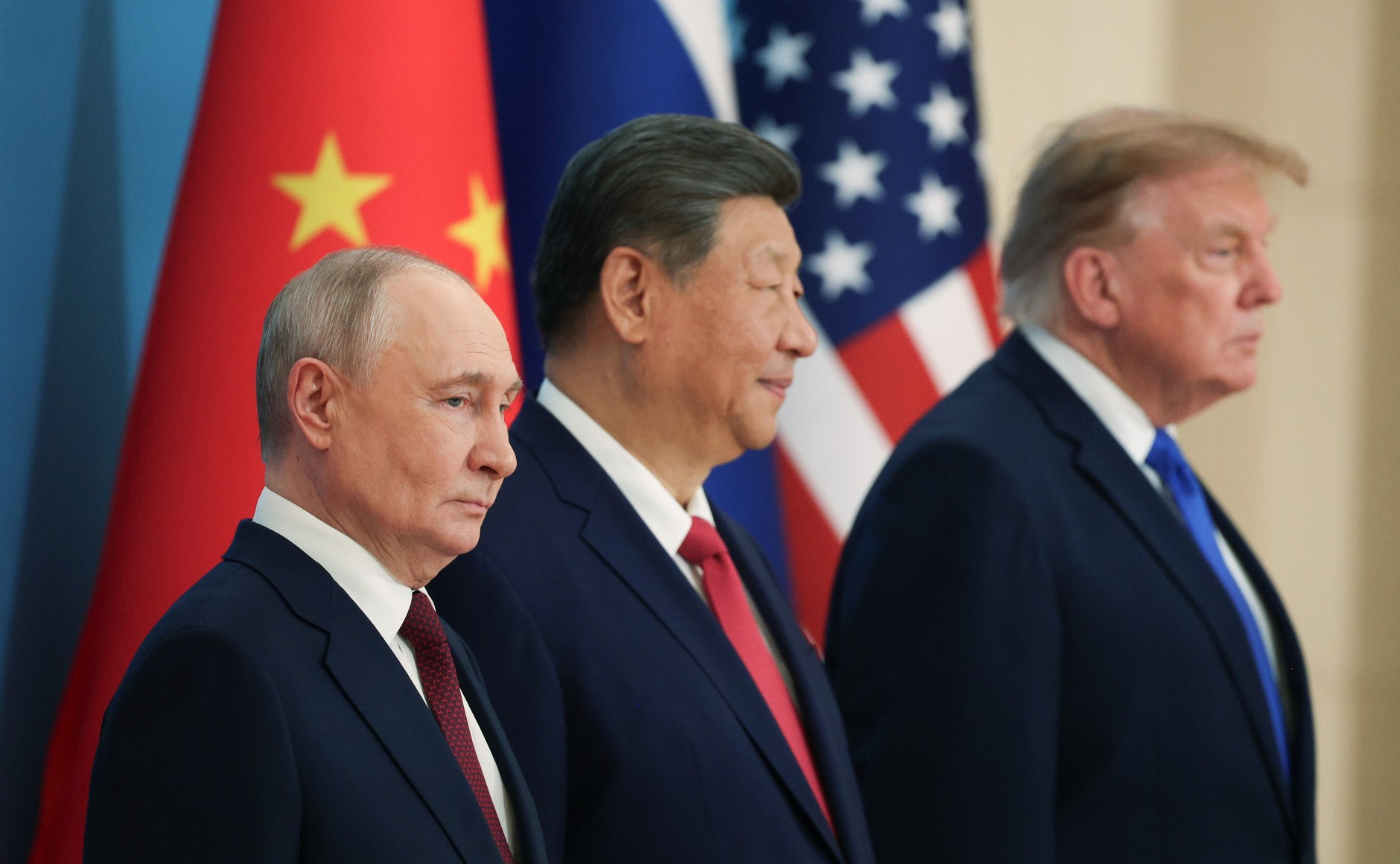
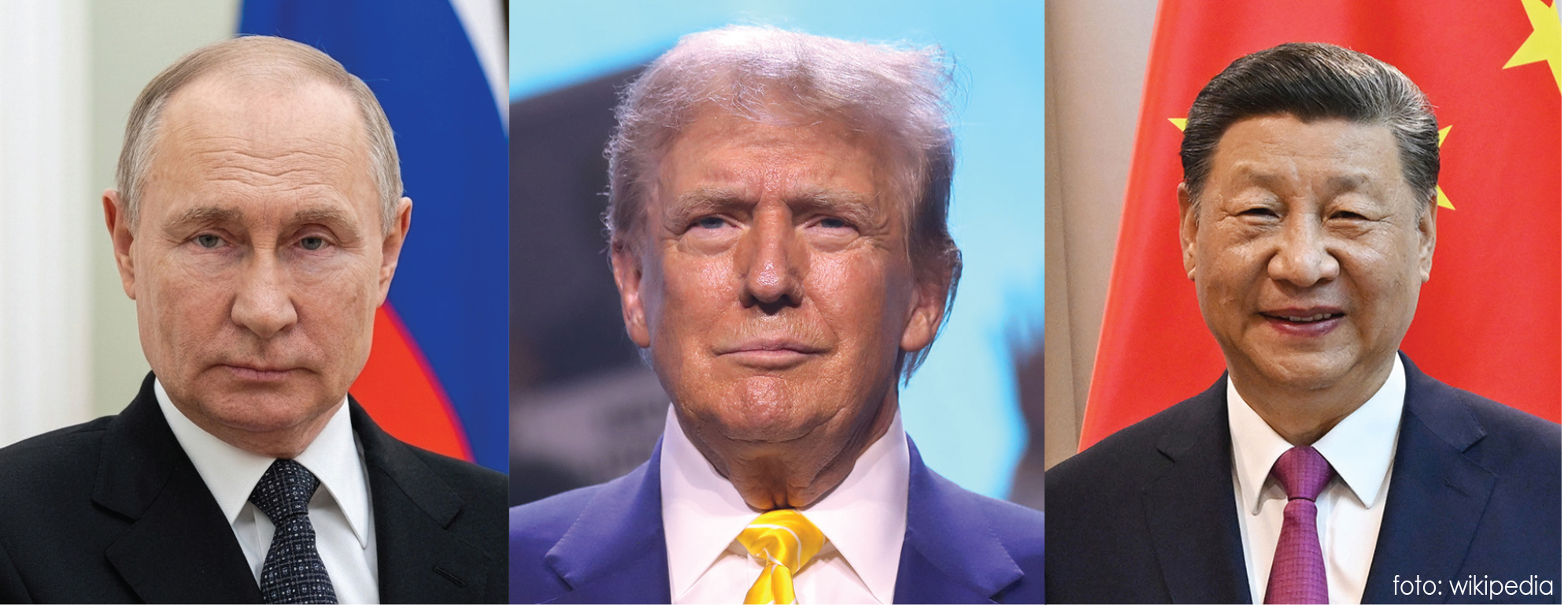
A few days before the negotiations in Shenzhen, large portraits of American, Chinese and Russian leaders were put up near the monument to Roosevelt, Stalin and Churchill, situated near the palace, in which Yalta Conference was held in February, 1945. The message is clear: Donald Trump, Xi Jinping and Vladimir Putin can be compared to the participants of Yalta conference. And their meeting on the sidelines on the of Asia-Pacific Economic cooperation (APEC) Summit should be regarded as significant as the weak-long discussion of the “big three” on the postwar reorganization of Germany and Europe.
Such a message does not have much in common with reality, because even the brevity and structure of the trilateral negotiations in Shenzhen, held on November 19, did not allow to expect that any important agreements would be reached at them. But not only the Kremlin, but also the White House were interested to create an impression of their importance. Though the motivations of Vladimir Putin and Donald Trump are different, they both would like to pretend that the US, Russia and China can collaborate in solving global problems together and overcome their disagreements. And Xi Jinping has no reasons to hinder these efforts.
The current leaders of the US, Russia and China lack a vital condition for pulling together that the participants of Yalta conference had, – a common enemy. And their goals are quite different. Trump administration entertains the ambition of turning the US into the power that can solely dominate on the global level. The Kremlin wants Russia to be recognized as one of the global leaders with the sphere of influence, which encompass a large part of the post-Soviet space and Eastern Europe. And Beijing is striving to ensure China safe trade routes and global technological leadership, which is impossible without establishing political control over Taiwan. The national leaders of all three countries are driven by grand historic ambitions, however all three are far from reaching their goals.
Because of different strategic aims, the three leaders lack both common vision and ability to form a shared approach to global trade and security. Trilateral discussion on some particular issues, like wars in Iran and Ukraine, could bring the results. But preventing the danger of conflict between Taiwan and China could not even be discussed in that format. This problem, by the way, seems to be insuperable, because political forces that can proclaim the island a sovereign state are quite strong. And the US will not be able to deny support to Taiwan, if it happens.
Beijing tried to insist on discussing mostly global security issues. However, the Kremlin succeeded in bringing in the issues of settling the Ukrainian conflict. Trump administration managed to add nuclear arms control, which should be regarded as a success. China for the first time agreed to nuclear arms talks. However, it seems that there has not been a positive outcome. It is hard to tell what were the real results of discussion of the conflict between the US and Iran. However, even if Beijing really decided to put more pressure on Tehran, it will be almost impossible to change disposition of Iran’s government. Just on the eve of the talks, on November 18, Iran attacked American military bases in the Gulf countries, showing that it has no intention to succumb to American demands and is not afraid of escalation of the conflict.
The negotiations in Shenzhen has demonstrated two things. First, China and Russia has become tightly connected, but both want to improve relations with the US. Second, all the three countries that want to be regarded as global leaders are too weak to control the ongoing on the global level. At the same time all three would like to change the existing world order. Due to their weakness they weakness, they cannot reach any consensus about how to replace it (in contrast to the participants of the Yalta conference). None of them is capable to offer any stable alternative to the present global political system. But all of them are trying to undermine it, though by different reasons and in different ways.
However, there was a very hopeful sign in Shenzhen. Xi Jinping showed that he wants to stabilize relations between China and the US, eliminating or decreasing factors that can cause an escalation of mutual tension. President of the Atlantic Council Frederick Kempe wrote before the negotiations in Shenzhen that one of the most important questions, whether the president of China would try to exploit American vulnerability and act more aggressively. Obviously, it did not happen, and from the early beginning Xi Jinping demonstrated that there was no danger of it.
The Chinese leader came to greet Donald Trump at the airport (he did not do the same for Vladimir Putin). While the group photo of the APEC summit was being taking, Xi Jinping stood next to the US president, and put his wife between them and Putin in order to increase an impression that American and Chinese leaders are sticking together. However, it dies not mean that Xi Jinping wanted to achieve some important agreements through trilateral negotiations. He made efforts to prove that there is no danger of military conflict between the US and China. According to the polls, more than 80% of Chinese mistrust the US or consider it to be a hostile power. Nevertheless, less than 20% think that China should not to avoid a confrontation.
At the same time, Xi Jinping tried to show that the trilateral negotiations are needed mostly for the informal exchange of opinions. Even their location was supposed to create an impression of a relaxed and friendly encounter. The APEC summit was held in Shenzhen International Exchange center. But the trilateral negotiations took place in Kyllin Villa, a luxury garden resort in the outskirts of Shenzhen, which is located on the shore of a beautiful lake. This resort has a personal significance for Xi Jinping, because it was built under the initiative of his father Xi Zhongxun. He was First Secretary of the Quandong Provincial Committee of the Communist party and governor of Quandong from 1978 to 1981. It was his first official position after he had been released from prison after the death of Mao Zedong. Xi Zhongxun was confident that the Shenzhen thanks to its location had great economic prospects and growth potential. He started building factories and develop tourism infrastructure in the small fishing village on the border with Honk Kong. Now, Shenzhen is a huge city with 17,5 million inhabitants and one of the most important industrial centers of the country. There can hardly be an educated person in China, who does not know that the resort hosting the trilateral meeting is connected with Xi’s family. So in China the talks in Kyllin Villa are likely regarded as an amiable conversation rather than official negotiations. And Chinese, who follow politics, seem to be the target audience of this action. They were reassured, that the national leader conduct the foreign policy that corresponds with their own opinion. He is avoiding conflict with the US and providing support to Russia, which is the most popular foreign country in China.
But for Trump symbolic gestures are not sufficient. He needs notable successes in foreign policy in order to justify his concentration on international relations and disregard for internal economic issues. If Trump forces Iran to halt development of its own nuclear weapons and makes China restrict growth of its nuclear arsenal, he will be able to declare that he has eliminated threats to the US national security. In that case, the positions of different critics of the foreign projects of the president will be weakened. Trump and his associates will get enough public support within the US to continue their foreign activity aimed, first of all, at changing the focus of the US foreign and choosing a rough approach to the EU.
Beijing does not want to take obligations that can require exerting pressure on its allies, or cause further deterioration in China’s relations with the EU. However, if Trump is hindered by the democrats in conduction its foreign policy by the Democrats, China will inevitably set new threats. The Biden’s administration was trying to form an alliance that was planned to include the EU countries, Australia and Chinese rivals in the region, aimed at fighting China’s influence.
Speaker of US the US House of representatives Nancy Pelosi visited Taiwan in August 2022 im order to express support to the government, which was contemplating proclaiming a formal independence from China. That action frightened even Joe Biden, who was at then the president. Of course, Trump concerns China to be the US rival, whose development should be hindered, but he is not trying to put China and the US on the brink of war in order to gain support of China’s adversaries. Besides, China needs a few quiet years to get out of the mess, in which it become stuck trying to increase rapidly the level of living and competing for global technological leadership with the US.
China is facing grave economic difficulties. There recent technological progress can be called a new Chinese miracle. But it is accompanied by property crisis, demographic decline, sluggish domestic demand, and high expenses on transport infrastructure that does not bring expected returns. The United States has surpassed China in crating the infrastructure most essential to AI development, because China’s internal market remains unprepared for innovations. If China gets involved in the long-lasting confrontation with the US, these difficulties will rapidly turn into the dangerous threats.
All participants of the meeting in Shenzhen have at least two things in common. They are too weak to realize their ambitions. And too concentrated on their own goals to cooperate on permanent basis. Just before the negotiations started, Trump said that beautiful thing could come out of them. Maybe, the agreements reached in Shenzhen will really help to end the wars in Iran and Ukraine. But none of the participants of the trilateral meeting can ensure global stability. And they cannot unite efforts for that goal.
Dmitry GALKIN
Komentari
IN ENGLISH
INSTITUTIONAL CRISIS IN POLAND: “Judgment Tuesday” and its unpredictable consequences
Objavljeno prije
1 sedmicana
17 Novembra, 2026
The events of November 3rd—a day dubbed “Judgment Tuesday”—have plunged the country into a dangerous institutional deadlock. Specifically, eight judges of the Constitutional Tribunal, appointed by the pro-European parliamentary majority, suspended the court’s president and vice-president for one month. A judge aligned with the ruling coalition has taken over the leadership of the institution. A spokesperson for Polish President Nawrocki announced that the President is open to discussions with Prime Minister Tusk regarding the constitutional crisis. This has offered a glimmer of hope that the conflict between liberals and conservatives—which threatens to destroy Poland’s political system—might be overcome
On November 3, the spokesman of Polish president Karol Nawrocki announced that the president is open to meeting prime minister Donald Tusk to discuss the escalating constitutional crisis. It gave a fragile hope that the confrontations between liberals and conservatives that threatens to destroy Poland’s political system will be overcome. The previous events of November 3, after which that day has been named the “Judgment Tuesday” (“Sądny Wtorek”), pushed the country into a dangerous institutional dead end. The meeting of eight judges of the Constitutional Tribunal (Trybunal Konstytucyjny, TK), appointed by the current pro-European parliamentary majority, suspended for one month court’s president Bogdan Święczkowski and vice president Bartłomiej Sochański. Anna Korwin-Piotrowska, a government-aligned judge, assumed leadership of the institution.
There are two important details, concerning the meeting of eight government-backed judges. First, they were all appointed by the ruling coalition led by Donald Tusk, but only five of them were not brought to oath by the president. Karol Nawrocki is supported by Law and Justice party (PiS), which remains the largest party in the parliament, but lost the majority after 2023 parliamentary elections. It is obvious that the president vetted the judges elected by the liberal coalition, due to political reasons. Nevertheless, the oath is required by law. And chief justice of the TK Bogdan Święczkowski had a procedural basis for denying the new judges the opportunity to fulfill their duties.
Second, the TK consists of the 15 judges, who are elected by the Seim, the lower house of the parliament for nine years. However, under Polish law the presence of the presence of the two-thirds of the total number of judges is required. And there were only 8 of them at the meeting. So the decisions taken on the “Judgment Tuesday” cannot considered to be valid. But Donald Tusk is not going to acknowledge that, at least at the present moment.
The prime minister needs the admission of the new judges into the TK to carry out demands of the EU. In July, the TK refused to recognize same-sex marriages as lawful in Poland. It should be mentioned that it had a good reason for that. Article 18 of Poland’s Constitution clearly defines marriage as a union between a man and a woman. However, there can be little doubt that the liberal judges elected by the current majority would be able to find a compromise.
During the election campaign in 2023, Donald Tusk promised to end almost total abortion ban, and that brought his Civic Coalition huge number of women’s voices. In October 2020, the TK confirmed that an abortion can be allowed only if the pregnancy is the result of a criminal act (rape or incest) or if it poses a threat to a woman’s health. Tusk failed to fulfill his promise. The ruling parliamentary coalition includes, besides a liberal party of Tusk and New Left, the parties that depend on support of people, who adhere to religious views. Because of that, amendments passed by the the Sejm on October 20, just ease penalties for helping women terminate pregnancy and allow abortion in cases of severe fetal abnormalities. There is a great chance that the president will put a veto on the newly passed amendments, and his decision will be supported by the conservative TK, which remains under the influence of PiS.
On October 30, the dangerous political crisis began unfolding. The government-backed judges forcibly took control of the court. President of the TK Bogdan Święczkowski and his deputy Bartłomiej Sochański were informed that they will not be admitted to the meetings. Police was deployed at the TK building and around it. Święczkowski’s supporters attempted to break police lines, in order to clear the way for him into the building.
During the night, president Karol Nawrocki returned to Warsaw, having cut short a trip to Senegal. He arrived in person to meet the the protesters and physically forced his way into the TK building alongside riot police and demonstrators.
The government declared that it was compelled to use force to restore democratic rule of law to a court, which was illegally controlled by the PiS appointees. However, it seems to be impossible to defend the rule of law by breaking it, even if the conservatives used the legal requirements for their political advantage. By the way, Russian president Vladimir Putin in 2020 gained personal control over the Constitutional court, under the pretext of its ineffectiveness. Since then, the Russian judicial system has not become more effective, though it now completely depends on the Kremlin.
Of course Tusk cannot be suspected in establishing a regime of personal power. He is trying to make Poland more liberal. Nevertheless, the ultimate outcome of his activity may differ a lot from his intentions. In the contemporary society, democracy has to be focused on rules and procedures. Otherwise, the democratic institutions will inevitably become manipulated for the advantage of the most powerful political and business groups. Democratic procedures can appear prolonged and boring, they can be used to hinder progressive changes, but there is no alternative to them.
An influential journalist Pawel Lisicki, who is the editor-in-chief of an independent weekly political magazine “To the point” (“Do Rzeczy”) compared the capturing of the TK with actions of Serbian students, who entered the Informer TV newsroom in October 26, interrupted functioning of the channel and escorted its owner Dragan Vucicevic out of the building.
In both cases, the goal was to ease promoting progressive changes, but the most significant outcome was further polarization of society and creating obstacles for finding a compromise with the conservative part of the society.
PiS politicians branded the meeting of eight judges an “organized crime assembly” and threatened them with imprisonment. Even before “Judgment Tuesday”, president Nawrocki denounced the takeover of the TK as an unconstitutional “coup d’état”. Following “Judgment Tuesday,” the presidential administration officially announced plans to file criminal complaints against the government for the unlawful seizure of a state institution. In his turn, prime minister on Ocntober 31, declared that the TK ‘in the form imposed by PiS was not a genuine court’. Donald Tusk also stated that “in certain matters, there can be no compromise”, despite that the protest have already become fierce and riot police had been required to protect the court’s building.
Leader of PiS Jaroslaw Kaczyński has quickly become the main figure of the protest. But he is not alone. He has been joined by eaders of the Confederation party, which always tried to stay away from the conflict between Kaczyński and Tusk. It is even more important that the Confederation party also officially called Tusk’s actions as a “coup d’état” and “usurpation.”
Moreover, former prime minister Mateusz Morawiecki, who headed the last PiS government dismissed after 2023 elections, also arrived to support the protest. Joining the actions led by PiS is obviously harmful for his own political plans. Morawiecki on 24 July was removed from PiS, and soon he announced plans to form his own political party and separately run for the 2027 elections. Morawiecki was coldly met by PiS the protesters outside the TK building, but it did not stopped him from giving full support to Kaczyński’s demands.
Morawiecki November 2 announced the establishment of an investigative committee regarding actions of Donald Tusk’s associates and warned them of consequences. He promised to ensure that “all those responsible an illegal takeover of the Constitutional Tribunal”, carried out with the help of the police, are punished by law.
Morawiecki plans to launch a parliamentary investigation of the actions of the police, the State Protection Service, and government representatives, can be blocked the parliamentary majority. However, the conservatives are united now as never before, and they regard Kaczyński as their temporarily leader. Conservatives are ready to fight against Donald Tusk’s government and they can gain enough public support for a long-lasting struggle. It can be regarded as the main outcome of the “Judgment Tuesday” so far.
It is hard to say now what can be other consequences of the current crises for the Poland. It seems that the country can be deeply divided by the conflict conflict between liberals and national-conservatives. If it is not stopped, Poland will be forced to focus on overcoming its domestic division, and will have to diminish its foreign activity. And this can heavily damage plans of the the US administration to build a new European security architecture, in which Poland is supposed to play the main part.
It seems to be a mistake to expect US president Donald Trump to refuse from his international projects, which are insignificant for the American public opinion, and concentrate on domestic problems in order to restore popularity of the Republican party after its defeat at the midterm elections. First, Trump cannot be interested in increasing public support of the Republicans, if he intends to control the party nominations after the end of his term. The party lost all its supporters, who did not like Trump. According to the latest polls, 90% of the Republican voters approve Trump’s activity. It means, that in the current circumstances, Trump’s endorsement remains essential for every Republican politician. Second, the American society is highly polarized. The Republican party has turned into the party of middle-aged white people, who mostly live in the rural areas. Due to that, it has become easily managed, and it will give it some advantages at the presidential elections over Democrats because of their highly diversified base. Third, Trump is building an Empire, and he badly needs more reliable leader of the EU, then Germany and France, which try to oppose Tump’s plans. With the American support, Poland can become the political leader of Europe. Its army is becoming stronger and its economic dependence of Germany has greatly diminished. And it seems to be the only country in Europe, where both conservatives and liberals regard Russia as the main adversary. So there is no danger of independent communications between Russia and Poland. But if the due to the consequences of the “Judgment Tuesday”, Poland gets divided, it will become useless for Trump’s plans and will have to refuse from its own geopolitical ambitions.
Dmitri GALKIN

Komentari
IN ENGLISH
A GLOBAL EQUATION WITH THREE UNKNOWNS: Negotiations in Shenzhen will determine Trump’s plans for Russia and Europe
Objavljeno prije
2 sedmicena
13 Novembra, 2026
The US remains the only country that can offer Russia what it desperately needs, and in exchange, secure a cessation of hostilities. Unlike the EU, Trump has no objection to Russia retaining the territories it has seized, provided that Ukrainian forces withdraw from the part of the Donbas currently under Ukrainian control. However, he will not assist Russia in achieving this until he defines what kind of relationship he actually wants with Russia and Europe.
On November 11, The South China Morning Post, a Hong Kong’s newspaper, which is often used by Chinese government to express its position, reported that situation in Ukraine would not be discussed at the trilateral meeting of the leaders of the US, Russia and China. The meeting is scheduled to take place on the sidelines of APEC Economic summit, which will be held in Chinese Shenzhen on November 18-19.
Russian president Vladimir Putin was certainly informed about the unwillingness of the Chinese leader Xi Jinping to include the peace settlement in Ukraine into the agenda of the meeting long before it was stated publicly. Due to that, the negotiations in Abu Dhabi, that took place on November 10-11, had been doomed, before it was even started. The main obstacle to peace has been remaining the same for the last two years. The Kremlin wants the territory of whole Donbas region. It is less than Russia demanded in the beginning of the war. There is no practical possibility of conquering the Southern and Eastern Ukraine, not to mention capturing of Kyiv, which was supposed to happen according to initial Putin plans. However, Ukraine’s president still cannot comply with Russian demands without ruining his political career. Therefore, the truce can be established, either if Kyiv is compelled by Washington to make concessions, or if Putin is offered something so attractive and significant that he will suppress his desire to look like an obvious winner.
There is only one thing that Putin wants more than to demonstrate Russians that he managed to recollect “historical Russian lands” and to show Europeans that he can effectively use military force to achieve his goals. He wants to be regarded as a ruler, who has returned the status of global power to Russia. Soon after the annexation of the Crimea the idea of negotiations between Russia, the US and China, similar to a new Yalta conference, at which Stalin, Roosevelt and Churchill agreed on division of the post-war spheres of influence in February 1945. It was clear, that Biden’s administration would never agree on such negotiations. So the execution of the “New Yalta” project was postponed. But the Kremlin has never forgotten about it.
The trilateral meeting, scheduled in Shenzhen was not exactly what Putin and his associates imagined, but it would certainly help create in impression that Russia is recognized as one of the global powers. Therefore, it will provide an opportunity for Moscow to agree on serious concessions in order to end the war in Ukraine. In that case, leaving a part of Donbas outside Russia would look, as a sacrifice made in the name of consensus between the three global leaders.
If the situation in Ukraine is not discussed, Putin will lose the opportunity to make territorial compromises, not admitting his failure. In that case, he has no need to reduce his demands on territorial gains. It seems, that Abu Dhabi negotiations were regarded by the Kremlin as a prelude to the meeting of the world’s three largest nuclear powers. That’s why Moscow insists on discussion of the architecture of security of the whole Eurasia (and not just of Europe). It is supposed to find a pretext for engaging China in working out conditions of the peace settlement in Ukraine. The Kremlin even organized International collective security Forum with the participation with the participation of the representatives of member states of the Shanghai cooperation organization. The Forum was held on November 10, the same day the Abu Dhabi talks started.
However, after Beijing had refused to debate on the conditions of peace in Ukraine, the discussion of Eurasian peace architecture lost any practical meaning for the Kremlin. Head of Russian delegation in Abu Dhabi Vladimir Medinsky, an advisor to the Russian president, turned the talks on security issues into a farce. He demanded withdraw of military infrastructure and NATO formations from all the countries that joined the alliance after 1997. It is hard to imagine a person, who believes that it can be really carried out, especially in the current circumstances. Medinsky was pretending to insist on that just to stress that Russia does not seek any compromises. He also made an appeal to cede Russia all the Ukrainian territories occupied Russian troops, even outside the regions that Russia regards as a new part of its territory. He said that the land on which Russian soldier stepped on, should belong to Russia. It is a refusal even to think about peace before Ukraine’s capitulation.
Of course, it does not mean that Medinsky’s declarations should be regarded as an expression of the Kremlin’s final position that cannot be changed. It is just an attempt to suspend the discussion, until Putin decides that he can gain more from ending the war than from going on with it. He expected China to provide him with a good pretext for concessions. It is not going to happen. The EU leaders do not want Russian to look like a winner, and the EU delegation in Abu Dhabi demonstrated it once again. So the US remains the only country that can offer to Russia something it badly needs and make Russia terminate the hostilities. It should be taken into consideration that financial difficulties that Russia is facing because of the war are increasing, despite the high prices on oil. So Putin’s demands will be inevitably reduced. Nevertheless, he can refuse from capturing the territory of the whole Donbas only in exchange of something extraordinary attractive. And the US president Donald Trump is concentrated on reaching his own goals, and needs Russia significantly less than Vladimir Putin appears to think.
In contrast with the EU, Trump has nothing against granting to Russia all its territorial gains and withdrawing Ukrainian troops from the part of Donbas that still remains under Ukraine’s control. But will not help Russia to achieve that until he knows what relations between Russia and Europe he needs.
Trump’s plans were also disrupted by Xi Jinping’s intentions to bring the agenda of discussion in alignment with China’s requirements. It is extremely important for Trump to make China stop increasing its nuclear arsenal, which threatens first of all to Japan and South Korea, two main American allies in the Eastern Asia and ensure Chine’s military dominance in the region. Beijing, in its turn, is interested in strengthening national nuclear capability.
Trump and US Secretary of State Marco Rubio stated that China must be included in a new agreement that limits nuclear arsenals, and that this issue should be addressed in Shenzhen. Beijing, however, has categorically rejected any trilateral discussion on the matter. China does not want to be constrained by a treaty. Chinese nuclear arsenal remains significantly smaller than Russian and American ones. If China is not allowed to enlarge it, Beijing will not be able to offer its allies the same military protection as the US. And it can hinder Chinese global expansion, which in the current circumstances can become essential for retaining an achieved level of economic prosperity.
It has been reported that China suggested to focus the discussion on establishing restrictions on integration of artificial intelligence (AI) into nuclear arsenals. However, the outcome of such debates might be harmful for the American plans. Leading the world in AI appears in the beginning of the official list of the White House priorities. And the Trump’s administration hardly needs any restrictions, which can obstruct gaining all possible advantages from such global leadership. Besides, an agreement on the military use of AI, even if it is reached, will not help to prevent China from increasing its nuclear arsenal.
The expectations of the US, Russia and China from their trilateral meeting significantly differs. They has not been able so far even to overcome contradictions on the the format and agenda of the negotiations. Beijing insists that the meeting follow a script fully determined in advance, in order to avoid any unexpected development of discussion. The Trump administration, in its turn, is insisting on a free exchange of views, unconstrained by rigid protocol. Xi Jinping because of domestic political situation has to avoid anything unpredictable, because he needs nothing from the upcoming summit but the propaganda effect, that can have an impact on the public mind.
The recent plenum of the Central Committee of the Chinese Communist Party (CCP), which ended on October 29, adopted the resolution, which urges the CCP to strengthen internal discipline, and fight against nepotism. It means that anti-corruption campaign started by Xi Jinping in 2012 will be continued. The data on the results of this campaign is unavailable, but it is known that almost 2,4 million of state and party bureaucrats (including police and military) were prosecuted or disciplined by 2023. And since then the campaign has been increased. There was a historically low attendance rate at the plenum, just 74%, 97 members failed to attend. It was supposed that they were absent, because they under investigation. The plenum confirmed 33 expulsions from the Central Comitte (which is a record). Due to the ongoing attempts of Xi Jinping to subdue opposition of the army to his military strategy, 16 out of the expelled officials were military commanders, and the representation of the army has sharply diminished. In such circumstances, Xi Jinping cannot appear neither too soft, no too aggressive in regard to national security issues and avoid any negotiations , which cam lead to fatal decisions. Therefore, Xi Jinping cannot even discuss any significant concessions, which can impact national security or economic development.
So Trump will have to have to increase pressure on China to make Beijing start negotiations. And to achieve that he needs to have Russia on his side. Russia should become politically dependable on the Trump administration. Due to that confrontation between the EU and Russia should be intensified, but the US should remain in good relations with both of them. So it can be expected that Trump’s attitude to the EU will be improved. The EU delegation was invited to the negotiations in Abu Dnabi, though initially they were supposed to be held in the trilateral format (between Russia, the US and Ukraine). There is no doubt, that Trump wants to end hostilities in Ukraine as soon as possible, because he is willing to start joint projects with Russia connected with oil and gas export. But as the negotiations in Abu Dhabi has shown, Washing is going to refrain from compelling Kyiv to make territorial concessions to Russia. Moscow has to be in strong need of the US support, and should be brought on the edge of the military conflict with the EU. Only in that case, it can be made to join the US demands of an agreement on restriction of nuclear arsenals. Further escalation of the conflict between the Russia and the EU can be extremely dangerous for both sides, but Trump hardly has any concerns about it. At least, until there is a chance that he might get what he needs by manipulating Putin.
Komentari

NEGOTIATIONS IN SHENZHEN: The dragon, the eagle and the bear have something in common
PREDIZBORNO BUDŽETIRANJE OD REBALANSA DO EURO MODELA: Kuća časti
VODA ZA PIĆE, MAREZA I VELJE BRDO: Ima neka tajna veza
Izdvajamo
-
IN ENGLISH3 sedmiceBACKGROUND OF MIHAILO ZINČUK’S MISSION IN MONTENEGRO: Helped to be discovered
-
IN ENGLISH3 sedmiceUncertain Fate of Wars in Ukraine and Iran: Trump Does Not Need Peaceful Solutions Before a Deal with China
-
IN ENGLISH1 sedmicaINSTITUTIONAL CRISIS IN POLAND: “Judgment Tuesday” and its unpredictable consequences
-
IN ENGLISH3 sedmiceDROUGHT AND TWO WARS CREATE GRAIN SHORTAGE: On the brink of global famine
-
SJEĆANJE3 sedmicePreminula crnogorska slikarka Vasilisa Radojević
-
DRUŠTVO3 sedmiceNEPRISTOJNA PONUDA OPŠTINE BUDVANSKOJ RIVIJERI: Parking mjesta za parcelu vrijednu milione
-
IN ENGLISH3 sedmiceREALIGNMENT: Europe trapped, Russia backed into a corner, and Trump is losing
-
INTERVJU3 sedmiceJOVANA MAROVIĆ, ČLANICA SAVJETODAVNE GRUPE BALKAN U EVROPI (BIEPAG): Evropski put – jedina održiva razvojna opcija za države regiona