IN ENGLISH
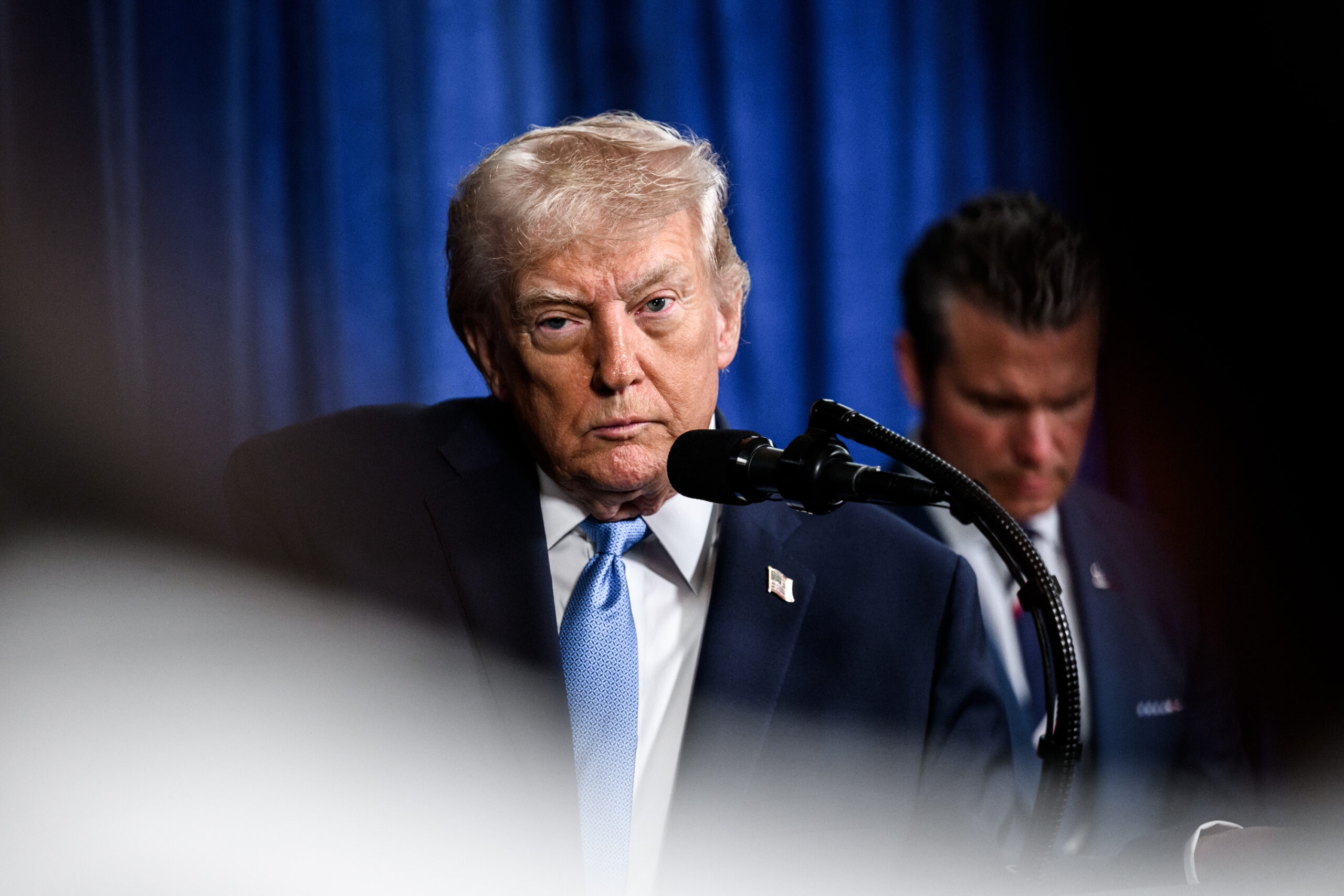
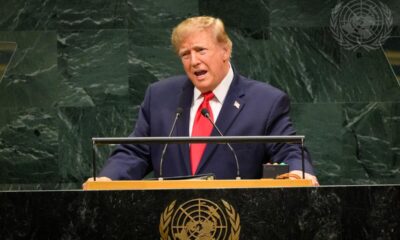
USA STUCK IN THE GULF: Trump’s failed attempt to cover up defeat
Objavljeno prije
1 danna
Objavio:
Monitor online
The war, according to Trump’s expectations, was supposed to be over in a few days and bring American control over Iranian oil exports and influence over China. It increased China’s global influence, strengthened Iran’s international position, depleted US missile stockpiles, which indicates American strategic weakness. If Trump fails to perform a miracle and win a war that seems lost, this conflict could open a new chapter in world history. Not so favorable for the US
On August 10, British Chelsea women’s football club announced on its account on the social network Threads to include in their profile the comment to the post that would gain most likes. In several days, it became clear that the top comment is “Free Palestine”, which received 136 thousand likes. The club did not make the top comment part of its profile, as it had been promised. Instead, the comment was deleted alongside with the entire post.
On August 18, the Ministry of the Interior of the German federal land Hessen banned the anti-Israel association “Palestine e.V.” It was accused of spreading antisemitic propaganda and its storage facilities were searched by the police.
These two events can be regarded as evidence that the support of Israel can create problems in such different European countries as Britain and Germany. It triggers confrontation between football club management and its fans, increase activity of radical groups, undermine public trust in political institutions. But neither Britain, nor leading EU countries can abandon support to Israel, because they have no real alternative to their traditional strategy. Though, the UK and the EU have moved toward a more critical approach to Israeli’s policy, they cannot condemn it and compel Israeli’s government to change it. The US administration has significantly less freedom in this aspect. It is much more engaged in the conflicts in the Middle East than any European country. Washington has been trying to establish control over the region using assistance of Tel Aviv. If Israel was strategically weakened, the American influence in one of the most important global regions would be irreversibly diminished. So the US administration cannot end the war with Iran, because one of the main Iranian condition is the termination of the hostilities on all fronts, including Gaza Strip. And Israeli government wants to keep at least part of Gaza under occupation under the pretext of threats to national security.
Officially, there is a ceasefire in Gaza, brokered by the US in October 2025. However, it has been violated by the both parts. But most important is that no agreement on permanent truce can be reached, until Israel preserves its military presence. And Israel has no intention to leave Gaza. Moreover, Israeli Security Minister Itamar Ben-Gvir said in a podcast on August 16, that he considers all of Gaza to be a part of Israeli’s territory. Ben-Gvir is confident that Israeli troops should stay in Gaza and keep killing Palestinians, at least 30 or 40 per night. All who can pose a threat must be targeted, even if they are not militants, because there are people in Gaza who don’t deserve to live.
Prime minister of Israel Benjamin Netanyahu needs an alliance with far-right parties. So he will not willingly remove Ben-Gvir and those who share his opinion from the government. Therefore, a peace agreement on Gaza Strip seems to be almost unreachable. However, US president Donald Trump is making efforts to achieve it. His son-in-law and the White House special envoy for peace Jared Kushner had direct talks on August 17, with Hamas leader Khalil al-Hayya. Their meeting, which took place in Egypt, was also attended by representatives from the mediating states of Egypt, Qatar, and Turkey. The US administration declined to comment on the results, but it became known that Hamas demanded the withdrawal of the Israeli army from parts of the Gaza Strip up to a designated line as a primary condition for its support of the American peace plan. Netanyahu, who had a meeting with Kushner on the next day, must have insisted on the previous disarmament of Hamas, as the Israeli prime minister had already done before. It was stated that no agreement had been reached. However, Kushner mentioned that the talks had been positive.
But even the most positive talks remain useless, if they do not lead to an agreement on truce. And without it, Tehran cannot come to terms with Washington. The US cannot abandon Israel. In the same way, Iran cannot fail Hamas.
However, it is not the only reason why the Memorandum of Understanding (MOU), which is now over, did not produce peace in sixty days term, as it had been expected. The war between the US and Iran keeps going on mainly due to Trump’s inability to acknowledge that he did not reach his goals. He obviously misinterpreted the MOU. He seems to have believed that MOU gave him control over Iran’s oil export and traffic through the Strait of Hormuz. It turned out that Tehran regarded the MOU as a list of mutual obligations, and is not going to make one-sided concessions just for the end of hostilities.
UN Secretary-General António Guterres on August 17, warned through his spokesperson: “There is no military solution to this conflict.” Trump cannot concede that it is true. So he keeps denying reality. He has declared that the US gained control over the Strait of Hormuz. However, it remains closed. There is some traffic through the Strait of Hormuz. But it hardly exceeds two vessels per day, while during peacetime the average number was around 140. Though the US managed to establish a blockade of the Iranian ports, Iran continues to fire on ships attempting to transit the strait. The Iranian government maintains its position that it will not reopen the Strait of Hormuz until the US has fulfilled its obligations under the MOU, including providing 300 billion dollars in compensation and releasing frozen assets, worth 100 billion dollars.
Moreover, chief negotiator Iranian parliament speaker Mohammed Bagher Ghalibafthe is insisting on withdrawal of US forces from the region.
The US administration cannot agree on that without making obvious the American failure. At the same time, Washington cannot force Tehran to change its position. Due to that, all attempts to conceal the defeat are falling to achieve this goal.
Meanwhile, Iran is taking advantage of the current situation to increase its influence in the region. On August 19, Ghalibaf arrived in Baghdad to discuss with Iraqi prime minister Ail al-Zaidi the Irainain assistance to his plans to bring Iraq’s armed factions under state control.
The forces of international coalition formed under the US leadership against the Islamic state are to be withdrawn from Iraq on September 30. The future of Iraqi state after foreign military withdrawal remains unclear. The government seems to be to weak to make armed factions give up weapons. Iran can provide very useful assistance. More than 90% of Iraq’s oil exports pass through the Strait of Hormuz. Now it depends on Iran, if the Iraqi government will be able to gain most part of export revenues.
Iran also continues negotiating with Oman, which is situated on the southern shore of the Strait of Hormuz. The Sultanate and the Islamic Republic can come to an agreement on how shipping through the Strait of Hormuz will be regulated without participation of the US. If it happens, the defeat of the US cannot be concealed even from the Trump’s adherents. Such a prospect provoked a severe reaction of the US president. On August 17, Trump told Fox News “If Oman gets in our way, we’ll bomb them to bits”.
Trump’s threats against the US ally cannot be executed. Not because the international role of Oman, which mediates in regional crises and is called the “Switzerland of the Middle East”. And not because China will greatly benefit from the conflict between the US and one of the Gulf countries. In the current circumstances, Trump has to restrict military activity. Otherwise, the Republican party will definitely lose the Midterm election due on November 3. The Iranian leadership comprehends that Trump cannot overcome restrictions, which are imposed by mass disapproval of the war among the American voters. Political scientist Robert Pipe considers Trump to be caught in the “escalation trap”. Iran pushes him to further escalation of the conflict, because it is clear that he either will try to avoid it or will undermine his political position within the US.
The recommencement of extensive military operations will certainly end political dominance of Trump not only on the national level, but also inside the Republican party. His polls are plummeting. But it seems to be even more important that more and more of the candidates, endorsed by him, are losing Republican primaries. Trump has already blamed his party for the possible outcome of the Midterm election, absolving himself in advance. But if he wants to preserve its influence and impact the choice of the next Republican presidential candidate, he has to appear successful at least in his foreign policy.
In order to disguise his failure Trump is turning war into a farce, making statements that have no practical sense, but can be appreciated by his supporters. Trump has promised to annex the Strait of Hormuz. For the first time, he made such a declaration, speaking at a police academy on August 14. The strategically vital waterway, according to Trump, would be “pretty soon” designated as a US territory, after the victory was secured. The Iran’s deputy foreign minister Kazem Gharibabadi advised the US president to ‘indulging on delusions’ and accept the reality of defeat. Otherwise, Iran will continue to enforce the blockade”.
If promising American voters to capture the Strait of Hormuz, Trump wanted to conceal his defeat from the US public, he has obviously failed. A lot of military experts and commentators across the spectrum acknowledged that the US suffered a strategic defeat. A war that was supposed to end in days and was expected to bring the US control over Iranian oil export and leverage on China. It increased China’s global influence, strengthened Iran’s international position, depleted missile stockpile of the US, indicating American strategic weakness.
If Trump cannot work a miracle, and win the war that seems to be lost, this conflict can start a new chapter of the world history. Not so favorable to the US, as the current one.
Dmitry GALKIN
Komentari
IZDVOJENO
-
POŽARI KAO GLOBALNA PRIJETNJA: Crna Gora i dalje nespremna
-
ERVINA DABIŽINOVIĆ, PSIHOLOŠKINJA I DOKTORKA RODNIH STUDIJA: Pomirenje, opasna lijepa riječ
-
JAVNA RASPRAVA FASADA ZA IZMJENE USTAVA: Rokovi važniji od sadržaja
-
BIVŠI PREDSJEDNIK DRŽAVNE ZAJEDNICE SCG ODBROJAVA NEDJELJE DO ZASTARE ZATVORSKE KAZNE: Marovićeva robija na papiru
-
GORAN ĐUROVIĆ, MEDIA CENTAR: Osigurati medijski pluralizam
-
NOVI NAPADI NA CRNU GORU I MCP: Na udaru Spajić i Joanikije
IN ENGLISH
HIGHLIGHTS MEETING IN BELGRADE: Zelensky helps increase support for Vučić
Objavljeno prije
1 sedmicana
19 Augusta, 2026
The Russian Foreign Ministry reacted sharply to the joint press conference of Ukraine’s president Volodymyr Zelensky and Serbian President Aleksandar Vučić, which was held in Belgrade on August 8. However, Moscow’s reaction was not directed against anything that was stated by Vučić or Zelensky. It was concentrated on the question of the journalist, who works for the one of the most influential German newspapers Frankfurter Allgemeine Zeitung (FAZ). The representative of FAZ asked the Ukrainian president, how Germany can help Ukraine kill more Russian soldiers. For that inquiry, he was called in the statement The Russian Foreign Ministry a “brown propagandist” and accused him in dehumanizing Russians and legitimizing hatred against Russia. It was particularly stressed that this “revanchist” statement was not condemned in the West.
The FAZ correspondent did a prompt service to the Russian government. Moscow had to demonstrate that it regarede the press-conference in Belgrade as an unfriendly gesture. But it did not want hit Vučić directly. The question of FAZ made it possible to show discontent and avoid criticizing Vučić in the official statement. Moreover, the Russian media-holding “Russia Today” (RT) that was made specifically for the propagandist interpretation of foreign events, explained that Zelensky’s visit to Belgrade had no real significance and its only purpose was to gave the Ukrainian President grounds for boasting that he made Serbia changed sides. RT regretted that Vučić agreed to help Zelensky in spreading such a message, but justified it by the pressure from the EU.
On August 11, Russian deputy foreign minister Mikhail Galuzin gave an interview to the Russian official news agency TASS. He touched a lot of various topics, from the Russian relations with the US to Moldova’s pressure on Pridnjestrovije, a self-decklared breakaway region. However, there was no mention of Zelensky’s visit to Belgrade. Grigoriy Karasin, a former deputy foreign minister, who became a member of Senate when he reached 70, stated in his interview on the same day, that Vučić is shifting towards the West under the EU pressure, but stressed that the Serbian president is doing it unwillingly. He said that it would be a mistake to come to rapid conclusions, because they should be made not from gestures, but from actions.
Of course, Vučić was severely criticized by Russian nationalists, and some of them called him a traitor. But they seem to perform the same function as their Serbian kindred spirits. They show that they do not trust Vučić (or even hate him) and consider him to be as pro-European as the Serbian opposition. Anyway, the nationalist is the only relatively independent political group in Russia, which is permitted to have its own mass media, but their opinion does not reflect real approach of the Kremlin.
It seems that Kyiv also did not assign much significance to Zelensky’s visit to Serbia. It was described in the media that support the president as his great achievement, but stayed in their focus only for a short time. First of all, because there were no important results to speak of. Besides, nothing extraordinary happened. Though, Zelensky was traveling to Serbia for the first time, he had already met with Vučić several times at summits in other European countries. In mid-July, Vučić arrived in Kyiv for the Ukraine-Southeast Europe Summit in Kyiv. The Serbian president became the only participant who refused to sign a joint declaration on continued support for Ukraine and increased pressure on Russia.
By the way, this deed of Vučić showed that he was not afraid of the EU pressure very much. In Kyiv he also had a meeting with EU Commission President Ursula von der Leyen. And even after that he was not compelled to join other leader of Southeast Europe in their expression of support to Ukraine and condemnation of Russian aggression. There are no reasons to think that during the last month the position of the Serbian president has radically changed. Of course, Vučić does not need, especially in the current circumstances, the confrontation with the EU. That’s why he came to the Summit in Kyiv and made Zelensky welcome in Belgrade. However, it does not mean that there is something new in the approach of Vučić to the Serbian foreign policy. Serbia has been selling ammunition (and especially artillery rounds to Ukraine) through intermediary countries for a long time. And Moscow is will aware of it. In recent months, Ukraine became a significant exporter of the Serbian electricity, which undermined Russian efforts to cause a structural energy deficit in the Ukrainian cities. Vučić even sent minister of mining and energy Dubravka Ðedovic to meet the Ukrainian president at the airport to stress that cooperation with Ukraine is profitable for Serbia.
The Serbian president remains committed to his strategy of balancing between China, Russia and the US, keeping at the same time good relations with the EU and showing the willingness to meet its demands for Serbia’s accession. This strategy brought success to Vučić and provided him with international support he needs to retain control over Serbia. Though, Russia has lost its significance both to the US and China, good relations between Moscow and Belgrade still can be used by the US administration for influencing Russian foreign policy.
The failure of the Trump’s administration in the war with Iran strengthened Chinese global standing. So it has become critically important for Washington to increase its influence in Europe without making concessions to the EU. The best way to do it seems to make a deal with Russia and gain control over Russian hydrocarbon export without diminishing tension between Russia and the EU. And in order to achieve it, the hostilities between Russia and Ukraine should be ended and a truce managed by the US needs to be established. The main problem is that Russian president Vladimir Putin does not want to cease fighting without capturing the whole Donbas. And the US president Donald Trump cannot put pressure on Volodymyr Zelensky to make him meet Putin’s demands. After the failure in Iran, it will be regarded as a new sign of the US strategic weakness.
Therefore, the only way to make Putin stop is to show him that he is will lose his strategic positions, if he remains concentrated on his tactical gains in Ukraine. Previously, president of Kazakhstan Kassym-Jomart Tokayev on July 26 publicly urged Vladimir Putin to end the war, telling the Russian leader that it is impossible to comprehend goals and reasons of the conflict. Kazakhstan is the most important Russian ally on the post-Soviet space after Belarus. Serbia has become the most important Russian partner in Europe, after prime minister of Hungary Victor Orban suffered an electoral defeat. The hospitable reception of Zelensky is not sign of the change of Serbia’s foreign strategy. But it seems to be a warning to Putin that he continues to lose his influence, because of his stubbornness. It should be noted that Zelensky’s visit coincided with the announcement made by Syrian government that Russia has lost exclusive control of its two strategic military bases in Syria. These bases were used among other things as hubs for supplying Russian military contingents in the Western African countries, where current Russian state of affairs is rather difficult to say the least.
There can be no doubt, that the Syrian government could not make such a decision without an approval of Turkish president Recep Erdogan. Similar to Aleksandar Vučić, Erdogan has become a close ally of Donald Trump and keeps strong connection with Vladimir Putin.
CIA Director John Ratcliffe, who has a significant influence on Donald Trump, has been reported to disperse expectations of the US President that Russia is capable of achieving its goals on the battlefield. So Trump, who needs to avoid direct confrontation with Putin, has use implied means of pressure. The US increased its participation the Ukrainian military operations, providing Kyiv with intelligence and coordinating strikes on Russian military positions in Ukraine and energy infrastructure in the Russian rear. It has been supplemented with symbolic gestures from the most important Russian partners in the recent weeks. And it seems that Vučić has gained a lot out of it.
Maybe, the Ukrainian President had no concerns about the political future of Vučić, but Zelensky has certainly helped to improve it. Besides, providing the Serbian president with an opportunity to demonstrate that he is putting efforts to keep good relations with the EU, Zelensky’s visit helped to propagate the message, which is extremely important to Vučić.
The Serbian president wants to persuade the voters that he is only politician that he can make stronger, using benefits from international cooperation with all possible partners. Vučić wants to show, that contrary to opposition leaders, participants of the student movements or nationalists, he has no prejudices and can use all possibilities to increase Serbia’s economic growth and international influence. Besides, Zelensky made a great favor to his host mentioning during their joint press-conference Ukraine’s non-recognition of Kosovo. Mayor of Pristina Perparim Rama removed on August 9, Ukrainian flag from the building in the center of the city. This reaction could be foreseen and nothing better could have been thought out to justify Zelensky’s visit in the eyes of supporters of the Serbian president. After that, the meeting of the two presidents can be decried only by radical adherents of political alliance with Russia, who can be ignored in the electoral sense. Zelensky’s visit turned out to be very useful to Vučić. And it seems to be the most important result of this event.
Dmitry GALKIN
Komentari
IN ENGLISH
SQUARED INTERESTS: Why Trump and Babiš are helping Vučić win the election
Objavljeno prije
4 sedmicena
3 Augusta, 2026
Aleksandar Vučić, the president of Serbia, wrote on his Instagram account on July 28, that Serbia is keeping pace with the world, that has been changing faster than ever, and must not stop. If moving forward means ensuring victory for the ruling party, regardless of mass discontent, then Aleksandar Vučić is perfectly correct.
Of course, the outcome of the parliamentary election is not certain, but the incumbent president has a great chance to become the future prime minister on the ground of its results, and keep staying in power without constraints of a term-limited presidency. On July 26, the Serbian President said that if his Serbian Progressive Party (SNS) loses election, he will not leave Serbia. He also reconfirmed his intention to resign and announced that he had received death threats.
Such statements is a clear sign that Vučić believes that everything is going well, and just a bit of drama is required to make his supporters more motivated. He would have never acknowledged an opportunity of defeat, if it had really threatened him. But he needs to be perceived by his adherents as a hero, who will keep on fighting for the country, whatever happens, regardless of any danger.
However, to circumvent successfully Serbia’s constitution and retain control over the country, Vučić needs not only to motivate voters, who remain loyal to him, but also to bring to his side those, who do not care much about politics, and demotivate those, who are likely to support opposition.
That is not an easy task. A large part of Serbians, who were neither involved in the mass protests, nor hold the president in high regard want Serbia to join the EU. It makes those voters potential supporters of opposition. In order to prevent opposition parties from receiving their votes, Vučić has to demonstrate that he will be able to facilitate the European integration for Serbia, when he becomes a head of the government.
But there is the other part of the Serbian “silent majority”, which is afraid that the opposition leaders will betray national interests. Those people are scared that the increase of the European influence will undermine the national unity and restrict Serbia’s foreign policy. They have some reasons for that, because the EU bureaucracy do not take into consideration national sentiments in the EU candidate countries.
If Vučić becomes too pro-European, the voters who do not want to make too much concessions in exchange for the EU-membership, will become demotivated. They can stay home on the election day and some of then can even support the opposition because of its anti-corruption narratives.
There is a very popular tactical manoeuvre, aimed at showing the incumbent head of the state as the most balanced figure in the political space. He should be criticized by radical supporters of the ideological concept, which brings him most of the voters, but prevents from him from expanding his support base. In case of Vucic, the concept that provides him with votes, but prevents the further growth in the number of voters is the resistance to the European political pressure in the name of national sovereignty and Serbian unity.
There are some rather well-known Serbian politicians and media-persons who will gladly slam Vučić for conducting too pro-European foreign policy. Aleksandar Voulin, who was a deputy prime minister in the government of Miloš Vučević has been already doing it for some time. For instance, on July 26, he gave an interview to one of the most popular anti-European Internet-platform DDGeopolitics. Voulin stated that the Serbian president does not deserve support of the political forces that fight against Brussels, because he is pushing Serbia towards the EU.
Both DDGeopolitics’ founders and Voulin does not hide their connections with the Russian government structures. But Vučić does not have to worry about the Kremlin’s reaction on the accusations against him, because he continues to demonstrate loyalty to Russia, at least on a symbolic level. Of course, Serbian voters associate the name of the newly rebranded electoral list of SNS, “Ujedinjena Srbija” with the name of the nationalist party in Republika Srpska and the anti-communist opposition movement formed in 1990. However, in the Kremlin there will be only one association, with the name of the ruling party in Russia (it sounds similar in Russian translation). Thanks to that, the re-branding of the electoral list is certain to be perceived there as an homage to Russia, where parliamentary election campaign has already started. Maybe, the Russian government would prefer political actions to political symbols. But in the current situation the Kremlin has to appreciate any signs of loyalty, because it has been losing allies recently. Besides, Vučić does not need active support from Russia, which can hinder the campaign and lead to defeat as the example of former Hungarian prime-minister Victor Orban showed. It will be enough, if the Kremlin just stays benevolent and refrains from active assistance. In the existing geopolitical landscape, the support of the US president Donald Trump looks much more effective. And Vucic has already obtained it.
Donald Trump, who imposed tariffs, which was supposed to hit Serbia hardest in Balkans, agreed on their significant decrease. Aleksandar Vučić announced on July 24 that the United States had lifted 35% tariffs on imports from Serbia, and US tariffs on Serbian goods temporarily fell to zero and would be eventually settled at around 10% to 12%..
New US tariffs can attract foreign investors, who plan to manufacture goods for the US market, but it looks unlikely that “hundreds of millions of dollars” of new investment promised by Vučić will be brought to Serbia in a short time. It seems to be more important that the US administration made it possible to regard the US market as an alternative to Germany, which remains the main trade partner of Serbia.
Germany is facing an economic stagnation, and the Serbian export has already been affected by it. Serbian automotive parts, copper and metal products can be exported to the US, if the demand in Germany continues to fall. Besides, the US administration does not want to increase political pressure neither on Russia, nor in China. Therefore, Serbia will be able to maintain longstanding ties with these countries without causing American discontent. Meanwhile, Germany is interested in the confrontation between Russia and Europe, because now it seems to be the only way to strengthen internal unity of the EU and enhance its geopolitical influence. The new agreement with Washington diminishes probability that Berlin uses economic leverages on Belgrade for changing its foreign policy.
It seems very likely that Donald Trump is trying to gain control over the Russian oil export. On July 28, the US senate voted overwhelmingly to advance a Russia sanctions bill that has been proposed by recently deceased senator Lindsey Graham quite a long time ago. It would never have happened without Trump’s approval. So it is expected to pass the House of Representatives without any difficulties. The bill hits Russia’s shadow fleet of oil tankers and imposes high tariffs on countries that import Russian oil. However, it grants the president broad waiver authority, and Trump will certainly use it for making exceptions for his allies. From that point of view, new sanctions against Russia can bring advantages to Serbia, if it can keep close ties with the US. Vučić can obtain an access to cheap Russian oil, while the leading EU countries will be deprived of it. In that case, Serbia can become a part of Trump’s strategy aimed at increasing Europe’s energy dependence on the US. So the US administration has strong reasons to assist Serbia’s accession to the EU, ignoring the political demands of the leading EU countries to the Serbian government.
It is remarkable that the decrease of the US tariffs was announced a week after Serbian Foreign Minister Marko Djuric and US Secretary of State Marco Rubio had signed memorandums of understanding on energy cooperation. Trump’s waiver authority is the best guarantee that the NIS oil company will keep operating and even will become more profitable.
The political strategy of Vučić grounded on the mixture of nationalist sentiments with the promises of economic growth thanks to the cooperation with the EU can become a tool of the American influence in Europe. If the Serbian economy is integrated into the EU economic space, but the Serbian government will be able to promote nationalist ideas, Belgrade can assist spreading of nationalism not only throughout the Balkans, but also in the EU countries. Strong political movements based on nationalist ideas are required to prevent the EU of obtaining internal unity and strategic autonomy. So the US administration is interested in helping Vučić to use pro-European expectations in order to dominate Serbian political space and weaken political opposition.
Czech Prime Minister Andrej Babiš who describe himself as a “Trumpist” stated during his visit to Belgrade, should not remain outside the Schengen area. Vučić expressing his «great gratitude» to Babis «for supporting Serbia on its European path» said, that the most important thing for Serbia in the coming years is to be part of the single market of Europe and to have open borders, both in the region and towards all EU member states.
No opposition leader could have promised more in the aspect of the European integration. Because thanks to the US desire to weaken and subjugate the EU, and the inability of the EU leaders to promote democratic values, the European integration ceased to be a path to political democracy.
Dmitry GALKIN
Komentari
IN ENGLISH
BEHIND THE PROTESTS IN KIEV: Zelensky’s game that the EU accepts and the US ignores
Objavljeno prije
1 mjesecna
26 Jula, 2026
President of Ukraine Volodymyr Zelenskyy informed Olexandr Syrskyi, the Commander-in-Chief of the Armed forces on July 21, that he has been dismissed and replaced a high ranking commander of the General staff Mykhailo Drapaty. On July 22, it was announced that Chief of General staff Andrii Hnatov was also removed and his deputy Ihor Skybiuk succeeded him. This reshuffle of the high army command, which started on July 16, when the president dismissed former Defense Minister Mikhail Fedorov. And it seems that the high-ranking officials, who were deprived of their positions, had not anticipated that.
Olexandr Syrskyi on July 20, when it became clear that the street actions in support of Mykhailo Fedorov will not fade away by themselves, published an article in the main military magazine of Ukraine. He explained that he had no conflict with Fedorov and was very astonished, when the defense minister mentioned their personal confrontation as the main cause of his dismissal. Syrskyi asked Fedorov to excuse him for creating such an impression and assured him that all their conflicts were originated exclusively by the desire to fight better against Russia. Syrskyi also reproached the former defense minister for concentrating too much on drones and underestimating the importance of artillery systems and other traditional weapons. Syrskyi promised that as the Commander-in-Chief of the Armed, he will keep on strengthening Ukraine’s military capacity.
On the next day, Olexandr Syrskyi lost that possibility. And on July 22, it was reported that Syrskyi’s supporters mixed on the streets with demonstrators, who were demanding to return Fedorov.
Such an alliance must look rather strange because contrary to what Syrskyi declared in his article, it was widely known that he had a conflict with Fedorov. Moreover, their disagreement caused by their different approach to the development of military forces had started even before Fedorov became the minister of defense. As a first deputy prime minister in charge of development of digital technologies, Fedorov insisted on turning the drones into the main weapons of the war and rapidly increasing their production even the expense of other military supplies. Such suggestions were criticized by top military leaders, but were not supported by Zelenskyy. And when in January 2026, Fedorov was appointed as minister of defense, it was thought that the main intention of Zelenskyy was to use Fedorov for restraining Syrskyi’s influence or even for getting rid of Syrskyi, if the need would arise.
The president wants to be the most popular military leader and needs no rivals. In February 2024, he dismissed Valerii Zaluzhnyi, who was the Commander-in-Chief of the Armed forces then, because he had become dangerously popular. Syrskyi, with his traditional military style, who replaced Zaluzhnyi did not give grounds for the same worry, but he resisted interference in military issues and wanted to direct military supply. In case, if it became a serious problem for the president, Fedorov could easily create the basis for Syrskyi’s dismissal. Meanwhile, the conflict between Syrsky and Fedorov, made Zelenskyy the final authority in all questions related both to the military supply and the strategy on the battlefield.
The key mistake of Zelenskyy was that he did not foresee that Fedorov would become so popular in such a short time. In January, the current situation could not be predicted, because the US president Donald Trump seemed to be interested in making an alliance with Russia. However, he lost such intentions. Maybe, he will have nothing against getting control over Russian oil and gas export, but he has no need to regard Russia as a probable geopolitical partner anymore. That’s why early in March, Ukraine was provided with the American space intelligence data and assistance of the AI military system for deep air strikes on industrial and infrastructure objects. A short time before than, Elon Musk switched off Starlink for all Russian users, which hindered drone operations behind the front-lines for the Russian forces. Besides, thanks to Fedorov’s concentration on drones, their number in the Ukrainian troops has rapidly increased, and Ukraine obtained a superiority in quantity and quality of drones, available for everyday basis. It helped to compensate Russian advantage in artillery systems and significantly slow down Russian offensive, even in Donbas region.
All this made Fedorov, who is young (he is 35) and intelligent, extremely popular. Under the new new defense minister, the Ukrainians at last saw Russian refineries burning and important infrastructure object seriously damaged. Even Moscow and Petersburg were successfully attacked. High casualties on the battlefield made Russian troops adopt new tactics, which exclude a rapid advancement. The apprehension that Russian troops could encircle such big cities as Kharkiv and Zaporizhzhia are now in the past.
It is also important that Fedorov could touch public sentiments. The destruction of energy facilities in the Crimea, which was annexed by Russia with the support of a huge part of local population, and air-strikes on Moscow, though incomparable with what Kyiv has to endure in response, can give a feeling of revenge.
However, the most important achievement of Fedorov is that he gave the prospect of military victory over Russia. The Ukrainian society has been deprived of that since the autumn of 2022, when Zaluzhnyi managed to breach Russian defense and liberate vast territories in Kharkiv region.
This time the victory was expected not through offense on the battlefield, but through air-strikes on the Crimea and Russian industry, which are supposed to inflict a great damage on Russian economy and make the life in the Crimea unbearable. Putin is expected to agree on immediate truce or even on surrendering some of the captured territories due to the heavy social repercussions of Ukrainian air attacks. Of course, such a plan will remain a fantasy without economic and political pressure from Washington on the Kremlin. And it cannot be guaranteed that Trump will put pressure on Russia, though he hinted several times on such opportunity. But even such expectations, even if they appear to be unrealistic is much better than war-weariness and despair which had been spreading in the Ukrainian society before this spring.
Besides, Fedorov has persuaded the Ukrainian public that thanks to the new drone, which are being developed under his guidance, Ukrainian troops will get such a great advantage over Russian, that there will be no need to supply the Ukrainian army with new soldiers, at least in such quantity as at the present. The importance of this promise for young and middle age Ukrainian men, their wives and mothers cannot be overestimated. The series of these drones, which are supposed to change everything is called “Rusoriz” (“Russosec”). This name is greatly loved by the nationalists, who remain in the current conditions the most active independent political force.
Zelenskyy had to prevent the further growth of popularity of the former defense minister in order not to create a dangerous political rival. It is understood, the elections in Ukraine both parliamentary and presidential are inevitable, even if the hostilities continue. The EU needs the Ukrainian government to be legitimate in order to go on with Ukraine’s European integration. The new laws required for the elections in the current circumstances can be adopted only by the upcoming winter. So the elections can be conducted in the next spring. So has to act now if he wants to retain political domination and exclude the appearance of political leader, who can take from him his position or the parliamentary majority.
Such political behavior has nothing in common either with strengthening democratic institutions, or with establishing accountable governance. And it is a very bad sign that it accepted by the EU leaders who want Zelenskyy to stay in power, without any concern of Ukraine’s democracy.
The unwavering support of the EU and the lack of any attention to Ukraine’s political process from the US make Zelenskyy believe that he can do whatever he wants to stay in power, because there are no political forces within the country, which can hinder him. Such an illusion destroyed Yanukovicn, and the political crisis that followed after his fall allowed Russia to annex the Crimea and instigate the military conflict on Donbas. Now, Zelenskyy is making the same mistake, and he has already disorganized military leadership by his actions, which can have dangerous repercussions.
Zelenskyy could not just dismiss the popular defense minister, whom he always supported and praised publicly. That is why it was decided to reboot the government. In that case, the president who would be able just not to suggest Fedorov as a new defense minister to the parliament. It seems that the president believed that Fedorov would be satisfied with the position, which would allow him to control the production of the drones and their supply to the army.
The former prime minister Yulia Svyridenko was not an important figure. Her main functions was to represent the interests of Andriy Yermak, the former head of the office of the president, who regardless of accusations in corruption, remains one of the most influential politicians in the country. Serhii Koretskyi, the new prime minister, is also connected with Yermak (though less closely that Svyridenko). So the closest ally of the president (at least in the recent past) got his compensation.
But everything the whole combination went wrong, because Fedorov publicly rejected the offer he had been supposed to accept. And the president, who wanted to create an illusion of an ordinary reshuffle of the government for enhancing its accountability, started to be regarded as an opponent of the former defense minister. Contrary to his wishes, Zelenskyy appeared to be an ally of the traditional styles army leaders in their struggle against Fedorov.
The president and his associates did not expect mass protests in support of Fedorov, and the reaction caused by his dismissal in social networks. Zelenskyy realized that he is going to face a serious drop in ratings, instead of strengthening his political position. So he chose to remove Syrskyi and Hnatov, in order not be regarded as an ally of the main Fedorov’s enemies. It will inevitably undermines the moral of the troops, but it will hardly satisfy the protesters. The main question now is not the political fate of Fedorov, but the ability of Ukrainain society to resist authoritarian tendencies. Despite their acceptance by the EU.
Dmitry GALKIN
Komentari

USTAVNE PROMJENE ZA EU ŠTRIK: Popravljaćemo kad uđemo u Evropu
CRNA GORA U VRTLOGU SVOJIH, SRPSKIH I HRVATSKIH INTERESA: Brod Jadran, Vučić, Moskva
BORIS MARIĆ, KOORDINATOR CEGAS-a: Ustav nije privremena skela do EU
Izdvajamo
-
Izdvojeno4 sedmiceZATVOREN MOST NA ĐURĐEVIĆA TARI: Cijena spasavanja kolosa
-
IN ENGLISH4 sedmiceSQUARED INTERESTS: Why Trump and Babiš are helping Vučić win the election
-
IN ENGLISH1 sedmicaHIGHLIGHTS MEETING IN BELGRADE: Zelensky helps increase support for Vučić
-
DRUŠTVO4 sedmiceOBALA NA PRODAJU, EKSPANZIJA TURISTIČKO-APARTMANSKIH ODMARALIŠTA: Naše privatno more
-
DRUŠTVO4 sedmiceAFERA GRADNJE HOTELA I NASIPANJA PLAŽE U BAOŠIĆIMA: Taknuto, nemaknuto
-
Izdvojeno4 sedmiceKVADRATURA INTERESA: Zašto Tramp i Babiš pomažu Vučiću da pobijedi na izborima
-
INTERVJU4 sedmiceVESELIN RADULOVIĆ, ADVOKAT: Selektivna primjena zakona je najveći problem
-
FOKUS4 sedmicePORFIRIJE U NAŠEM SOKAKU: Srpstvo svuda i uvijek