
IN ENGLISH
Mysteries of the Parallel Service

Objavljeno prije
14 godinana
Objavio:
Monitor online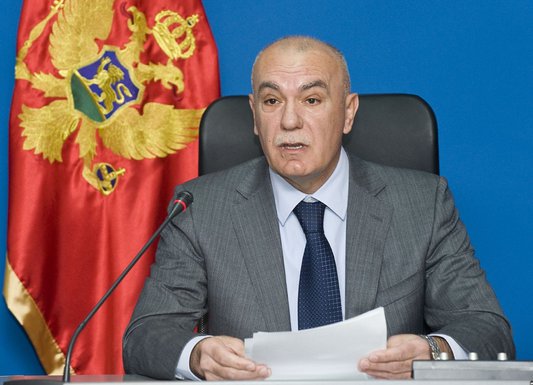
Boro Vučinić has recently been appointed the sixth Director of the Secret Services since the introduction of a multi-party system in Montenegro. He took over the position from Vladan Joković, who resigned last winter “motivated by personal reasons.” Little did anyone believe in such an explanation, since Joković resigned after the publication of a (not)falsified list of conversations between Igor Lukšić and Milan Roćen with Darko Šarić, an affair that implied alleged links between the Prime Minister and the Minister of Foreign Affairs and European Integrations with the head of organized crime whose associates in Montenegro are now convicted by non-enforceable judgements of money laundering. In the context of Montenegro approaching full NATO membership, the National Security Agency (ANB) is in focus, which should, together with other state bodies, actively participate in the implementation of measures for criminal prosecution of perpetrators, co-perpetrators, instigators, supporters and/or other persons who are in any way related to money laundering. Such an ANB role is described in the Second Annual National Program, a document submitted by Lukšić’s government in September 2011 to NATO.
However, well-known and proven facts compromise fine-grained writing. Darko Šarić, for instance, smoothly passed the security check of the ANB. It has been documented that with Safet Kalić, now accused of money laundering, secret service officers had unusually cordial contacts for at least a decade.
Zoran Lazović and Duško Golubović, high-ranked ANB officials, are most often publicly connected with the criminal milieu. Despite the fact that the Prime Minister Lukšić indirectly advised them to retire on 16 January, both of them are still active, although, it is claimed, without concrete operational responsibilities. However, this in reality does not mean much, because their roles are only partially determined by a special act of systematization.
According to Nebojša Medojević, Lazović and Golubović are the link with a group of officers specializing in espionage, who for years allegedly worked “in a parallel secret service for the needs of Milan Roćen and DPS president Milo Djukanović”. The subjects of their supervision are judges, prosecutors, non-governmental sector activists, businessmen, competitors or factions in the establishment, as well as “competitors in criminal matters and in public procurements”. Parallel service was reportedly formed because ANB’s maneuvering space for abuse was reduced.
Discussions were held on 15 February, at a session of the parliamentary Defense and Security Committee, when Boro Vučinić threatened Medojević before the appointment as the director of ANB, alternatively, he said that “they would deal with him if the prosecutor does not do it.” He tried to deny that in 2007, with no written evidence of compulsory security checks, prominent members of the former Military Security and Military Intelligence Agency, known as KOS and VOS, were employed and later deployed to extremely sensitive places in the Ministry of Defense.
Some of them, such as Colonel Vladislav Vlahović (now the Head of the military segment of the Montenegrin Mission in Brussels) and Lieutenant Colonel Darko Burić (on duty in the General Staff of the Montenegrin Army), were men of the General Branko Krga, Chief of the Intelligence Administration in two mandates (1994-1997, 1999-2001) and then until 2005 as the Deputy and then Chief of the General Staff in Belgrade.
Medojević claims that a parallel service was formed “in order to maintain ties with the Russian security structures with which military intelligence agents had previously cooperated.”
The Officers Vlahović and Burić ran the 123rd and/or 3rd center of the Intelligence Administration in Podgorica at different intervals. Their mentor, Branko Krga, has been in the vortex with Milan Roćen for two decades, because until 1994, they had served together in Moscow – Krga as the military attaché, while Roćen was the Charge d’Affairs at the FRY Embassy. Recently, for the Sarajevo-based magazine Dani, Krga talked about his recollections from that time, so he acknowledged that they provided contacts in Moscow to Radovan Karadžić.
After Krga, the military attaché in Moscow and Roćen’s colleague was Radoslav Škorić, who was later general, from 2002 to 2003, the Head of the Intelligence Administration who formed the 3rd center in Podgorica and appointed Lieutenant-Colonel Burić as the Chief. Škorić was dismissed after one lieutenant colonel was arrested in Belgrade in September 2003 for the crime of espionage in favor of Russia.
Several officers accused of illegal espionage, according to Vučinić’s permission, gave public statements and tried to deny Medojević’s allegations. All of them, as the proof of their correctness, are referring to the fact that in 2009, ANB checked them so that they could obtain a security clearance for access to classified NATO information.
However, this is a procedure on a different basis, not a background check that had to be done by 2007 and on which Medojević insisted. Three members of ANB, with the previous history of undermining Belgrade’s military agency work ahead of the referendum, were then directly in charge of the checks at the Ministry of Defense: Božidar Lakić (now retired), Predrag Abramović (transferred to a bank to a security position) and Veselin Mazić.
In the Second Annual National Program, Igor Lukšić’s government reported in the autumn to NATO that “after the completion of the assessment of vulnerability, the updated plans for keeping and handling classified information were adopted”.
NATO reportedly observed serious problems in the security sector of Montenegro. There is a fear of or possible confirmation of the illegal leakage of NATO information submitted to the Directorate for the Protection of Classified Information, which is kept in the building of the Ministry of Defense, and for whose security ANB is responsible.
Such a conclusion is indirectly derived from the fact that last year the ANB appointed a special “responsible person” for performing internal control over the implementation of the measures for the protection of classified information. Previously, the Montenegrin officials claimed that the security of NATO information was maximum. In the meantime, the Ministry of Defense has launched contradictory information about the parallel service. They said at the beginning of February that this department and the Montenegrin Army “do not have and did not have eavesdropping equipment and devices”. Later on, the new Minister of Defense, Milica Pejanović-Djurišić, alluding to their obsolescence and inefficiency, mentioned certain “megaphones, dictation machines and record players”.
The Army without the Service
For years, Boro Vučinić unsuccessfully tried or just pretended to try to legalize, without ANB, a special, transparent, “military service”, which is, after all, a NATO standard.
However, the military security operations are still in the jurisdiction of ANB. In April of last year, the Law on Amendments and Supplements to the Law on ANB was adopted, which “extended the competencies of the Agency to issues of importance for the defense interests of Montenegro and fulfillment of strategic security goals and interests (intelligence and counterintelligence activities in the field of defense).”
On the data gathered in this area, ANB reports to the Council for Defense and Security (Filip Vujanović, Ranko Krivokapić, Igor Lukšić), as well as to the Minister of Defense and the Chief of General Staff of the Montenegrin Army.
On 29 July 2011, ANB signed an Agreement on Cooperation in the Field of Intelligence and Counterintelligence Operations with the Ministry of Defense, which, among other things, regulated the sending of ANB representatives to the Ministry of Defense, which occurred only at the beginning of December last year.
The Minister of Defense, Milica Pejanović-Djurišić has recently said that the special military service “has not yet been formed”.
Counterattack against Medojević
The counterattack against Nebojša Medojević, who for two or three years has been insisting on the fact that an illegal secret service is operating within the Ministry of Defense, was also joined by Ivan Mašulović, appointed from last winter as the Assistant Minister of Defense for the defense policy, previously the Head of the Criminal Investigation Police, security guard at the Ministry of Foreign Affairs of Milan Roćen, Head of ANB for Podgorica, advisor of Igor Lukšić.
Mašulović as part of the public reaction on 16 March – only three days after Milica Pejanović-Djurišić was appointed – said that he would press charges against Medojević “because of the untruths”. He did not deny the connection with Andreja Savić, former Director of the Security and Information Agency of Serbia, with whom he published certain police textbooks – what the Monitor wrote about – but on that occasion Mašulović stated:
„I have never seen or heard from Mr. Branko Krga, nor have I talked to him on any basis, and I simply do not know him. Also, I have never held a single lecture at the Academy for Diplomacy and Security (ADB) in Belgrade, nor have I physically ever entered this facility. The only connection I have with ADB is that one of my books is used as supplementary literature in the field of security management”.
It is not clear when Mašulović is telling the truth, because he denies himself. In his chrestomathy “Security of the European Union” (Podgorica, 2009), co-authored by Andreja Savić, Mašulović wrote in his biography that he was “an associate” of ADB.
The founder of ADB is a controversial businessman Nenad Djordjević, who until 2007 was the owner of a part of the island of Hawaii near Budva. Andreja Savić and Branko Krga are lecturers at ADB.
At the end of 2011, Ivan Mašulović, during the mandate of Boro Vučinić, was appointed as the Assistant governing the Sector for Defense Policy, and in that way, according to the systematization of the Ministry of Defense, he oversees the operational links of official Podgorica to NATO, including the Directorate for the Protection of Classified Information, military-diplomatic representatives, Department for International Cooperation and Department for NATO and the European Union.
During the visit to the headquarters of ANB as a member of the Security and Defense Committee, Nebojša Medojević asked the competent officers whether foreign partners, including the US DEA (Drug Enforcement Administration), asked for checks on whether Ivan Mašulović also “disclosed information” to Dragan Fric Dudić.
He did not get a specific answer to that question.
For a few years, Mašulović was the head of CB Herceg Novi, under whose jurisdiction was Kotor, the town from which Dudić worked.
Vladimir JOVANOVIĆ
Komentari

IZDVOJENO
IN ENGLISH
BRICS SUMMIT: China and India want to lead the global South
Objavljeno prije
2 sedmicena
24 Septembra, 2026
Donald Trump aimed to preserve U.S. global leadership by increasing American control over global maritime trade routes. The failure of this strategy created an opportunity to undermine U.S. dominance in both world trade and the global political system. The BRICS summit, held in India on September 12 and 13, demonstrated that India and China had decided to set aside their rivalry and join forces to capitalize on this opportunity. They plan to enhance their global role by leading the Global South, which has become the primary engine of global economic growth
US president Donald Trump mentioned speaking to reporters on Sunday, that he asked Ukraine’s president Volodymir Zelensky to cease air-attacks on Russian refineries in order not to disrupt the production of diesel. At the US president explained, due to the damage inflicted by Ukrainian air-strikes, Russian diesel is not reaching the global market, and it is pushing prices higher. According to Trump, the world is hurt, because Russian plants are being hit by Ukraine.
The US president must be paid his dues, he managed to make an extremely funny a statement. Ukraine had been trying to hit Russian refineries for three years, before it was provided with American satellite data and assistance of Palantir’s military AI systems for for planning and conducting the attacks this February. Before that the damage brought to Russian plants and infrastructure objects had been insignificant. In the recent months, oil production capacity of has been greatly diminished (up to 40% on the peak, according to some assessments). Therefore, Trump did not have to ask Zelensky to stop attacks on Russian refineries. It was enough to order the CIA and high military command of the US to quit assisting Ukraine in this activity. In the end of July, Tucker Carlson rebuked Trump for failing to do it.
Zelensky ignored Trump’s request. However, even if Ukraine’s air-attacks on Russian oil industry had come to a halt. Because Russia severely restricted diesel export in July, only 20% of its previous volume is reaching the global market. Prices surged after the export flow of Russian diesel had been reduced. But its amount is so insignificant that the global prices cannot be affected by its further decrease. Everyone, who is following events, comprehends the actual reason for the new price-rise. In September, Yemen Houthi movement gained important victories over coalition forces formed and supplied by Saudi Arabia. The port city of Mocha and several strategic islands in the Bab el-Mandeb strait were captured. As a result, Saudi Arabia, which is an important producer of diesel, lost its most important oil export corridor. And it seems that other Gulf states will either not be able to use the Bab el-Mandeb strait for their export operations at least in the near future. Therefore, Trump wanted to disguise the well-known factor of the price-surge. Because he was afraid to acknowledge it.
Donald Trump decided that the US should stop maintaining international coalitions, it had formed in previous decades, because it required significant economic concessions. He intended to preserve the US global leadership not through political and military alliances, but by increasing American control over the global sea trade routes. And the obvious failure of this strategy, gave an opportunity to undermine the US dominance both in the world trade and in the global political system.
The BRICS Summit, which was held in India on September 12-13, showed that India and China decided two cease their rivalry and unite their efforts in order to seize the chance. They are planning to increase the global role by leading Global South, which has become the main driver of the global economic growth.
Of course, both states were having such plans for quite a long time, but now the made significant steps to this goal. It was openly proclaimed at the summit that the BRICS is going to unite the Global South and provide it with means both for economic development and increasing its role in the global governance. There can be no political alliance between India and China, because their interests are too different. But they demonstrated the desire and ability to coordinate their efforts. And it has indicates a great change in their foreign policy, which has been marked for their mutual confrontation in the last six years.
The motto of the summit was “Building Resilience and Innovation for Cooperation and Sustainability”. And prime-minister of India Narendra Modi explained that these words are to redefine BRICS (their first letters of these words make in English the same abbreviation as the name of the organization). Modi stressed that the concerns of BRICS will be placed on the Global South, which will be supported by the organization in the upcoming global disturbance.
President of China Xi Jinping in his speech stated that the Global South is on the rise, but at the same time, it faces “risks and challenges”, because of the unstable international landscape. BRICS intends “to bring stability to the world and make it a better place”. It is ready to “seize the historical initiative”, unite the Global South, help him in increasing its influence on international affairs, and in advancing the well-being of all humanity.
According to Xi Jinping, BRICS is starting a new page in its history. Before that, it has has been winning its reputation on the global stage and working out its own approach to the global affairs, which is based on intention “to take everyone along”. Now, the unity and consensus established inside BRICS are going to be used for transformation of the global governance and economic system. “For the next twenty years, we must work on a new and ambitious agenda”, said the Chinese president. Accorfing to him, the world needs new international rules in order to avoid chaos. And they must be written by all countries, and the Global South countries should join their efforts to defend the rule of law in international affairs and get rid of double standards in international relations.
The world will have to overcome dangerous challenges in the near future, and it is important not just fight the symptoms, but deal with the root causes of the global problems. Global South countries should jointly improve global governance and find the way toward shared prosperity.
There two mutually supplemented approaches for the unification of the Global South proposed by India and China. Narendra Modi wants to enhance cooperation, Xi Jinping offers economic and political support in achieving common goals related with improving global governance and reaching prosperity. Against this background, it can be noticed that Russian president Vladimir Putin was not invited to take an active part in the unification efforts. Hes speech at the summit was focused on turning BRICS into one of the main centers of the multi-polar world. It is certainly far less ambitious than plans revealed by Indian and Chinese leaders. And it is obviously incompatible with their desire to use BRICS capabilities for unification of the whole Global South.
The video with Putin’s speech at the summit has become viral on the internet, thanks to National Security Advisor of India Ajit Doval who was sitting behind the Russian president and constantly eating snacks, while he was speaking. Ajit Doval, who is a strong supported of the idea of unification of the Global South under India’s leadership, can be excused. He was not expecting to hear anything interesting from Putin.
The approaches of India and China might be based on their good intentions, but they certainly correspond with national interests. India needs cheap fuel and mineral resources, it needs to find new markets to increase export and diminish trade deficit. Therefore, Delhi regards cooperation in economic development and creating transport infrastructure as a base for the unification.
Beijing has nothing against it. But Chinese economic challenges are much complicated, and its problems cannot be enhanced just by enhancing of export. China has been suffering from enormous trade surplus, which has already reached 710 billion euros in the first eight months of 2026. It means that the last year record of 1,035 billion euros can be exceeded. It means that Chinese corporations export too much and Chinese citizens consume too little. Meanwhile, Xi Jinping was trying to achieve economic growth grounded on internal consumption. It was expected to provide investments for rapid developing of the Chinese industry It seems that this strategy is not working, and it is necessary to find another source of investments, and the Global South can deliver them, if it will become dependent not only on Chinese goods, but also on Chinese technologies.
The US also needs to make as many countries as possible dependent on its technological achievements, if it wants to preserve the global leadership. The easiest way to achieve it is to use the advantages in developing AI systems for making other countries reliable on them. Both the US and China are focused now on spreading their AI technologies.
This theme was given a lot of attention in the Xi Jinping’s speech. He promised that China will become a pioneer in establishing a BRICS AI open source community. China is going to build an open ecosystem for AI and assist the Global South countries in developing and applying large language models. Most of them have no chance to accomplish it with their own efforts.
Of course, it will be a great help, but the Chinese partners in this sphere will inevitably become dependent on China. The US administration is trying to solve the same task, but by other means. Washington wants to impose obligations on governments interested in adopting American AI technologies for public-sector use, preventing them from breaking ties with American corporations.
The battle between the US and China is for AI supremacy seems to be not less important as the arms race between the USSR and the US during the “cold war”. The US and China account for 90 per cent of the world’s frontier computing power. So the winner of the the AI race will gain an unassailable technological lead. That’s why China so desperately needs to unite the Global South. It will help spreading Chinese affordable models. There is little doubt that can make them attractive and effective. The Chinese government has been constantly increasing its spending on research and development and it has already surpassed the US in this aspect. Chinese scholars published as many papers as American, British, German, and Japanese researchers combined in 2025.
India can only win from China-U.S. competition over technological influence and it is interested in its prolongation. But in the end there has to be a winner. If China and India manage to unite the Global South, China will get a good chance for success. But after its is achieved, it will not need a partner in leading the united Global South any more.
Dmitry GALKIN
Komentari
IN ENGLISH
Giants at the Chessboard: The US and China are using Russia for their own purposes
Objavljeno prije
2 sedmicena
24 Septembra, 2026Special US envoys Steven Witkoff and Jared Kushner were well received in Moscow. Putin thanked the US envoys for their efforts and asked them to convey his best wishes and gratitude to Trump. Only the US can compel Ukraine to cede the entire Donbas to Russia. Furthermore, only the US can make significant investments in oil and gas exploration. Without the lifting of US sanctions, energy production in Russia would be severely hampered, particularly following Ukrainian air strikes on Russian refineries, which rely heavily on Western technology and equipment.
On September 4, a grand opening of the new war memorial took place in in Khabarovsk, the city that was the center of the Soviet operations against Japanese army in Mongolia, China and Korea. The monument was constructed rather quickly. In January, Russian President Vladimir Putin urged the Russian Military Historical Society to create such a memorial. Soon the project was chosen and put into action after some details were added. During the construction, the Japanese government asked to change a few design elements, and was ignored. After the monument was opened, both Japanese Foreign Minister Toshimitsu Motegi and Prime Minister of Japan Sanae Takaichi demanded the monument be changed. The reason is simple, the monument depicts a Soviet soldier destroying a Japanese border marker with a chrysanthemum emblem. This flower was a symbol of the Japanese empire and still serves as one of symbols of Japanese nation. The monument is openly offensive to Japan, and it is not a mistake or an unthoughtful gesture. It was supposed to be insulting.
The people who was in charge of the construction belong to different political groups. Governor of Khabarovsk region Dmitry Demeshin is connected with Sergey Chemezov, a close friend of the president, who manages military and high-tech production. There are important military plants in the region, so Chemezov needs a reliable person as its governor. Chairman of the Russian Military Historical Society Vladimir Medinsky is an associate of Sergey Kirienko, the first deputy chef of the presidential administration. The decision on the highest level is required to make groups with different spheres of interests and responsibility to work closely together on the same project.
And it has not been the first time, when Vladimir Putin tried to make things hard for Sanae Takaichi. On August 13, he visited Iturup (known as Etorofu in Japan), the largest of the four Southern Kuril Islands, which Japan considers to be a part of its own territory. Putin never visited the Southern Kuril Islands before, and it was obvious that Japan, which keeps on insisting on obtaining control over the islands, would immediately react on that. It strained relations between Japan and Russia. On August 24, Sanae Takaichi promised to maintain sanctions on Russia and support Ukraine.
Putin’s behavior seems to be inexplicable from the point of national interests. It is hard to comprehend why is he aggravating relations with one of the most influential states the Asia-Pacific region, while prosecuting a war in Ukraine and trying to scare Western Europe. The only possible explanation is that Moscow has to take into considerations the requests of Beijing.
Sanae Takaichi, who was elected as the Prime Minister of Japan in October 2025, has been regarded as the most pro-Taiwanese Japanese leader and her confrontation with China was almost inevitable. The Japanese Constitution adopted under American influence after the Second world war permits the use of military forces only for fighting against aggression. But there is one important detail. If the country, which is important for Japanese national security is attacked, Japan can come to the rescue. It is regarded as an action of collective self-defense and Taiwan closely connected with Japan can count on its protection. Sanae Takaichi reminded about that soon after she had been elected, which provoked a crisis in relations between China and Japan.
The remark of Sanae Takaichi on the possibility of Japan’s military actions in Taiwan’s defense cannot be treated as a mere speculation. The new Japanese prime minister has close ties with the leaders of the Democratic progressive party (DPP), which is ruling party in Taiwan. The DPP is not planning to proclaim any formal declarations of independence, but it regards Taiwan as an independent country. It imposes a threat of a military conflict with mainland China, because Beijing can use the DPP refuse to recognize the island as a part of the unified Chinese state as a pretext for the invasion. The Japanese prime-minister declared that Taiwan will be given Japan’s assistance in that case. China restricted the export of rare earth metals to Japan in response to that statement. In 2026, China has not be selling to Japan neither terbium (essential for high-performance magnets), nor dysprosium oxide needed for producing lasers and superconductors. China controls more than 90% of global supply of both metals.
Besides, China started to demonstrate its readiness for military conflict. Chinese air patrols near Japanese airspace were increased and China’s naval activity was intensified also with Russian assistance.
Russia proved to be useful for putting pressure on Japan. Russian planes took part in joint bomber exercises with China in the zones of the probable military conflict. Moreover, in August,Vladimir Putin at the meeting with the high command of Russia’s Pacific Fleet threatened to disrupt trade between Japan and the EU, which exceeds 130 euros and has great importance for both sides. The Russian president stated that if the EU keeps on seizing vessels with cargo belonging to Russian exporters, Moscow will be forced to retaliate. European ships will be attacked in the waters where Russia has advantages, including the Pacific Fleet’s area of responsibility, which is concentrated around Japanese islands.
Russia is also planning to do China an important service in Myanmar. There has been a civil war in this country, started after a pro-Chinese military coup. There are two important pipelines that run from Myanmar’s Western coast to China, shortening the route for gas and oil import to China. Beijing supports the Myanmar’s military junta, but avoids direct involvement into the civil war. Meanwhile, military government keeps losing territory, including economically important areas. In the middle of August, it was announced that Russia is going to make significant investments in the Southern Myanmar, where heavy fighting is under way. Russian companies are going to build a power plant, oil refinery and even a deep-water seaport in the region. All this cannot be achieved without take control over the situation in the Southern Myanmar.
In exchange for all services, Russia expects to be provided with economic support and technological assistance, needed for the continuation of war efforts. China has become extremely important economic partner for Russia. But it has obviously no intention to repeat German’s experience and grow reliant on Russian hydrocarbon exports. Supply of Russian oil and gas to China has significantly grown this year, but it remains only a small part of what Russia delivered to Europe before the war. By the way, Russian gas export to Turkey has also increased in the first half of 2026.
Russia was promised that it would be allowed to construct a new gas pipeline to China, the “Power of Siberia 2”. However, Chinese authorities keep postponing the implementation of the project.
The ground for such an approach seems to be not only the unpredictable consequences of dependence on Russian energy export. The strengthening of Russia has no sense for China, because Russia would try to use its increased might to force Europe to restore economic cooperation. The EU remains the most attractive trade partner for Russia, because of historical ties, the EU market size and much more developed transport infrastructure in the West of the country.
The prospect of rebuilding ties between Russia and the EU depends on ending the hostilities in Ukraine. And the US is only one country that can make Ukraine surrender the whole Donbas to Russia and thus provide Putin with an opportunity to declare victory. Besides, only the US can make significant investment in oil and gas exploration, in which American companies are very experienced. And without removing American sanctions, energy production in Russia will be seriously hindered, especially after Ukrainian air strikes on Russian refineries, which rely heavily on Western technologies and equipment. Due to Ukrainian attacks and possible US sanctions against the buyers of the Russian oil, government revenue from the oil industry fell almost twice in August, almost reaching the level it had before the war between the US and Iran. Though, the Kremlin puts hopes in the partnership with the US administration, it wants to show that it can achieve its goals in Ukraine and overcome economic difficulties without the US assistance.
US Special Envoys Steven Witkoff and Jared Kushner were well received in Moscow on September 5. Kirill Dmitriev, who is in charge of the contacts with the US administration in negotiating a peace agreement, wrote “Welcome to Moscow, Peacemakers” on his X account to sign the pictures of his meeting with Kushner and Witkoff at the airport.
Vladimir Putin thanked the US envoys for their efforts and asked them to convey his best wishes and gratitude to US President Donald Trump. According to Russian Presidential Aide Yuri Ushakov, the negotiations in Moscow were not limited to the issues related to the peace deal between Ukraine and Russia. Potential Russian-American economic projects “were also discussed in detail”. The talks came out to be “highly beneficial for both sides” and the presidents of Russia and the US will continue to maintain personal contacts, in addition to the mediating activity of Steve Witkoff and Jared Kushner.
Despite long and productive negotiation with the US envoys, the Russian president managed to find time on September 5, for the participation via internet connection in the opening of a new oil terminal on the shore of the Arctic Ocean. The terminal is connected by the pipeline with two large oil-fields in the Northern Siberia, which are being exploited by the state-owned Rosneft, the largest oil company in Russia. Igor Sechin, the CEO of Rosneft, is the most ardent adherent of the China-oriented economic strategy. He promised to turn Russian oil and gas field into a “bowl of rice” for China. And he is fulfilling his promise. The new oil terminal will allow to significantly increase supply to China by tankers. So Beijing will be able to purchase Russian crude oil to substitute the Iranian one. The shipments from Iran to China were disrupted, and traditional sea routes from the Middle East are threatened. China is the only buyer of the oil supplied through the new terminal in the Arctic, and Rosneft is able to increase amount of supply on China’s request.
It is very remarkable that no other day could be found for opening of the project that undermines the US pressure on China, but the day of the negotiating with Trump’s envoys. It is also worth noting that Igor Sechin in his report to the president on the project expressed gratitude to Rex Tillerson, who was called “a distinguished oilman and former head of ExxonMobil”. Rex Tillerson, who was the US secretary of State for a year in the first administration of Donald Trump had a conflict with the president, they parted on bad terms.
After his resignation, Tillerson explained that after making a career in the process oriented ExxonMobil, it was hard for him “to work for a man who is pretty undisciplined, doesn’t like to read”, and has a tendency to violate the law. In response, Trump called Tillerson “dumb as a rock” and “lazy as hell”.
Igor Sechin is a close ally of Vladimir Putin and one of the most influential persons in Russia. And the Russian president has to take into account his desire to show that economic relations with China are no less important than political ties with the US administration. And Sechin obviously does not care about fragile Trump’s feelings, because he believes that all the bets should be put on increasing cooperation with China. Some other influential Russian entrepreneurs seem to share Sechin’s thoughts. However, Putin will not be able to make an ultimate choice in favor of alliance with China, because the Kremlin has the common goals with the US administration in Europe. Both Moscow and Washington want to weaken the EU, undermine the influence of Germany and France, and bring right-wing parties wherever its possible. The decisive victory of far-right Alternative for Germany (AfD) at the elections on September 6, in Germany’s eastern federal state Saxony-Anhalt will certainly bring new hopes both to Putin and Trump. The AFD gained almost 44% of votes and it means that it can count on good results in other lands, which will inevitably undermine the positions of the German government. The AfD is often regarded as a pro-Kremlin party, because it demands to cease support to Ukraine and recommence the import of Russian oil and gas. However, Alice Weidel, the actual leader of the party, calls herself a Trump’s admirer and claims that she wants to bring the ideas of MAGA movement into German’s politics.
Beijing has not be trying to prevent Russia and the US political cooperation in Europe and Washington under Trump has accepted the increase of Chinese influence in the Middle East.
During his visit to Egypt in the beginning of September, president of China, Xi Jinping urged countries of the region “masters of their own destiny” and design a new regional “security architecture”. It means that the US should not be regarded as the country that guarantee long term stability in the Middle East and American interference in the region should be restricted. In that case, the US global influence will be dramatically diminished.
However, there is not a real danger of the direct military conflict between the US and China. As in the times of the cold war, there are means of containment. The nuclear weapons have been supplemented with economic interdependence.
Chinese President Xi Jinping is going to visit to Washington on 24 September and a large delegation of Chinese business leaders is expected to accompany him. Thus, Beijing wants to demonstrate its willingness to maintain investment and commercial ties with the US. And in the current situation, the US administration will have to accept Chinese suggestions. However, in the long run, the rivalry between Washington and Beijing is destined to increase. And the countries that like Russia or Serbia are trying to simultaneously rely on two global rivals will have to face dangerous repercussions of their strategy.
Dmitry GALKIN
Komentari
IN ENGLISH
AFFAIRS IN THE UKRAINIAN TOP: Who is Forest and where he has to run
Objavljeno prije
1 mjesecna
3 Septembra, 2026
Ukraine’s High Anti-Corruption Court on August 25, decided to suspend pre-trial detention of Oleksiy Stupak the Chairman of the state-owned Sense Bank due to his poor health. A day earlier, Iryna Mudra, the deputy head of president’s office arrested under the same investigation conducted by the National Anti-corruption bureau of Ukraine (NABU) was left in custody until bail of 20 million hryvnias (390 000 euros) is paid. The comparatively low amount of the bail for Mudra and the consideration of Stupak’s health condition were interpreted by many Ukrainian journalists as a sign that they both agreed to cooperate with the NABU. And there are good reasons to believe it.
Stupak, Mudra and several other civil servants and entrepreneurs were accused in laundering money collected to pay the bail for Herman Halutshchenko, who served first as the Minister of Energy and then the Minister of Justice. He was detained on February 15, and the bail for him is 150 million hryvnias (2,9 million euros). Because all money that belonged to Halutshchenko and his family was frozen the NABU started a new operation in order to find out how the money would be collected.
The phones of those who can be involved in the releasing Halutshchenko out of jail were wiretapped, and the NABU has already published some of the intercepted conversation. The NABU called this operation Forest Gump. The most popular explanation of such a name is that it was used for Halutshchenko by one of this participants of laundering scheme. Talking about the difficulties caused by the freezing of assets belonged to Halutshchenko, he said that only mentally retarded person could set up a trust for some of family expenses and transfer in it the money gained from corruption schemes. So laundering the money for his bail should be called “saving Forest Gump”.
However, influential political journalist Juriy Vishnevsky suggested that the name of the main character of the famous movie was used by the NABU not to mock at the former minister. He paid attention that the phrase “Run, Forest, run” is remembered by everyone who saw the movie, and comes to mind first when it is recalled. In that case, the message is clear. The person, who is meant to be the target of the message, is advised by the NABU to leave his position. Mudra in her conversations with other participants repeated a few times that her superiors make her hurry up with Halutshchenko’s release. There were only two people higher in rank than Mudra the president’s office. Head of the office Kyrylo Budanov and the President of Ukraine Volodymir Zelensky. It seems highly unlikely that the NABU wanted to send any message to Budanov. And there can be little doubts, that he NABU would not start such a communication without approval (or even request) of its American partners.
Mudra was arrested on August 19, on charges of the legalization of the cash, which was brought at her disposal to be used as a bail for Halutshchenko. The main problem was that the bail could not be paid with the money of doubtful source. So they had to be transferred from account to account until their origin could be considered completely trustworthy. The bail was paid on June 29 and Halutshchenko was released thanks to the money-laundering operation carried out by the state owned bank. Moreover, when Mudra mentioned in her conversations with the top managers of the bank the possible problems with the State financial monitoring service, she was promised that all the problems would be settled. It turned out to be true. The agency did not terminated or suspended any of the transfers, though most of them should have been regarded as extremely suspicious.
It turned out after her arrest, that Iryna Mudra is much wealthier than her legal income allowed. More than 6 million euros were found on her deposits and accounts in Ukraine and Israel. She also came to be an active investor in the construction projects and bought shares of Microsoft. She owns five expensive apartments in Kyiv, which are partially registered for her 73-year-old mother. If the two Mudra’s superiors knew nothing about that, they both should be considered dangerously incompetent.
There is no mystery in the source of Mudra’s wealth. When she was arrested at 7 in the morning, scandalously known developer and former Member of Parliament Maksym Mykytas was found present in her apartment. He has been also put in custody with comparatively law bail, just 580 thousand euros.
Mykytas has become the suspect in several anti-corruption investigation since 2019 and three of them (not counting Forest Gump operations) are still going on. He had to stay in custody for quite a long time in recent years and his former partners swindle out of his business. Mykytas came for protection to Vadym Stolar, an acting member of parliament and one of the biggest Ukraine’s developers, who prefers to live abroad. In last years of the rule of Victor Yanukovych, Stolar was considered to be a mediator between the president’s close circle and developers, who had construction projects in Kyiv, It seems that Stolar has not lost his influence, because he helped Mykytas to regain control over construction companies and sites he had owned. Mudra, as it can be concluded from the published records, has actively participated in the restoration of Mykytas’ property rights. In accordance with her last name, she gave him useful advises how to influence judges and acted on his behalf in the ministry of justice. Once, they even has a quarrel, because Mykytas did not warn her that he fabricated some of the court decisions.
It should be noted, that in the president’s office Mudra was responsible among other things for the justice reform.
But the most interesting question is why Mudra and Mykytas became involved in the scheme of laundering money for Halutshchenko’s bail. It was not related with their business interests. The only possible reason is that Mudra was compelled to do it. And here the most interesting part starts.
Halutshchenko’s arrest was one of the outcomes of “Operation Midas”, executed by the NABU in 2025. But he was not the main target of the investigation. It was directed against Timur Mindich, a former friend and a business partner of Volodymir Zelensky, – Mindic was a co-owner of a production company, which made movies and comedy shows with the future president of Ukraine. During the war, Mindich became the key figure in the illegal scheme of electric energy distribution. Thanks to the constant deficit, caused by Russian air-strikes, some companies were eager to pay huge bribes for the uninterrupted delivery of electricity. And the former producer managed to provide it through nuclear power plants (all of them are state-owned in Ukraine).
Timur Mindich and his friend Oleksandr Zukerman were supposed to be arrested under the warrant issued by the NABU and Specialized Anti-corruption Prosecutor’s office (SAPO) on November 10, 2025. However, both managed to leave the country on that day without being stopped at the border. It was also also found out that the some of the revenues from illegal energy distribution were utilized for the construction of elite estates. And Andriy Yermak, who served as the head of the president’s office, has been suspected in supervising this activity.
On November 28, 2025 Yermak was dismissed from his position. On May 14, 2026 he was detained, but he was released on bail of 140 million hryvnias (2.7 million euros). He lost part of his influence recently, but preserved some of his people both in the president’s office and in the government, even after its recent reshuffle. Mudra is considered to be a trusted associate of Yermak, who seemingly had no connections with Mindic. However, Mudra carried out directions of Mindic.
It has not been proved that the money for Halutshchenko’s bail was provided by Mindic, though it is suspected. But it can be concluded from Mudra’s phone conversations that Mindic asked her to prevent the Sense Bank from falling under control of “David”. It is obvious that she meant David Arakhamia, the head of the ruling parliament faction. It can be comprehended that the Sense Bank has been washing out money from online gambling. And “David” wanted to get a share of it.
Mudra used her connections to make David’s people to behave like “cute kittens”. So the peace between the different groups in the Ukraine’s ruling establishment remained undisturbed. It can be observed that the political system created by Zelensky and his associates function without any serious problems. As it can be concluded from conversations of Mudra, the president’s office controls civil courts and top-level bureaucracy. And Arakhamia can deliver desired results of voting in the parliament thanks to his informal interactions and deals with some of the opposition groups, including former pro-Russian opposition. Serious obstacles for the smooth functioning are created by the NABU and SAPO. And Mudra discussed the ways to remove head of SAPO Oleksandr Klymenko. Last year, the president’s office made an attempt to deprive the NABU and SAPO of their independence, but was stopped by the US administration and suffered a public humiliation. The lesson seems to be learned, and the ant-corruption agencies continue to operate without restraint. They can cause difficulties and troubles for president’s associates, but they cannot change the system. It can be achieved only through elections.
On August 18, former Ukrainian Defense Minister Mykhailo Fedorov has called in his address to Ukrainians for a search for a legal and safe mechanism that would allow the electoral process to resume in Ukraine, even if the war with Russia continues for several more years. Fedorov stated that corruption remained widespread under Zelenskyy and it should be regarded as a symptom of the deep crisis of governance. On the next day, Mudra was arrested.
Zelensky suggested that Fedorov could have been pushed to call for elections by external forces. The former minister denied this. But his plans to visit the US in the near future and raise there capital for drone production deserve attention. Meanwhile, CIA Director John Ratcliffe, who is considered one of the most ardent Ukraine’s supporters among the close associates of president Donald Trump, unexpectedly arrived in Moscow, on August 25. The goal of his visit was not revealed. But the US administration strove to disclose the Ratcliffe’s trip to Russia. He traveled by a U.S. Air Force Boeing C-17A Globemaster III transport plane that naturally attention at a Moscow airport, as a U.S. diplomatic motorcade in the Moscow streets. Moreover, ahead of Ratcliffe’s trip, the U.S. told Ukraine that a senior delegation would be traveling to Moscow and asked it to suspend strikes until the delegation’s departure. It could be expected that Kyiv would spread information about such a request that proves that Washington has high estimation for Ukraine’s military capabilities. It can also be suggested that the US administration wanted to inform Zelensky that there are negotiations between the US and Russia on the matter that remains secret to him.
It can be a good way to inform a person, who like Forest Gump has some problems with comprehending reality, that situation is very serious. And it would be better for him not to fight against necessary changed. Even if it means that he will have to leave his post.
Dmitry GALKIN
Komentari



STABILNOST SISTEMA: U kom grmu leže pare

EURO MODEL I POSLOVANJE CRNOGORSKE PRIVREDE: Svakom svoja glavobolja

POGLAVLJA, USTAVNE PROMJENE, SUSJEDI…: Sat otkucava – Crna Gora stoji


Izdvajamo
-
IN ENGLISH2 sedmice
Giants at the Chessboard: The US and China are using Russia for their own purposes
-

 IN ENGLISH2 sedmice
BRICS SUMMIT: China and India want to lead the global South
-

 DRUŠTVO4 sedmice
GEMAXX GRADI MONTAŽNU GARAŽU NA TUĐOJ PARCELI: HG Budvanska rivijera nije dala saglasnost
-
 Izdvojeno4 sedmice
VELIKI ZA ŠAHOVSKOM TABLOM: SAD i Kina koriste Rusiju za svoje svrhe
-
 Izdvojeno4 sedmice
RAST KRAJNJE DESNICE U NJEMAČKOJ: Evropa na koju se (ne)treba navići
-
 FOKUS4 sedmice
MANDIĆEVO SAUČEŠĆE PRED PARLAMENTOM: Pod bremenom devedesetih
-

 DRUŠTVO3 sedmice
SDT KUCA NA VRATA BUDVANSKE VLASTI: JRB pod istragom – montažne garaže na provjeri
-
 Izdvojeno4 sedmice
MLADIĆEVA DRŽAVNA SAHRANA S PATRIJARHOM U GLAVNOJ ULOZI: Opet uznemireni region