Povežite se sa nama

IN ENGLISH

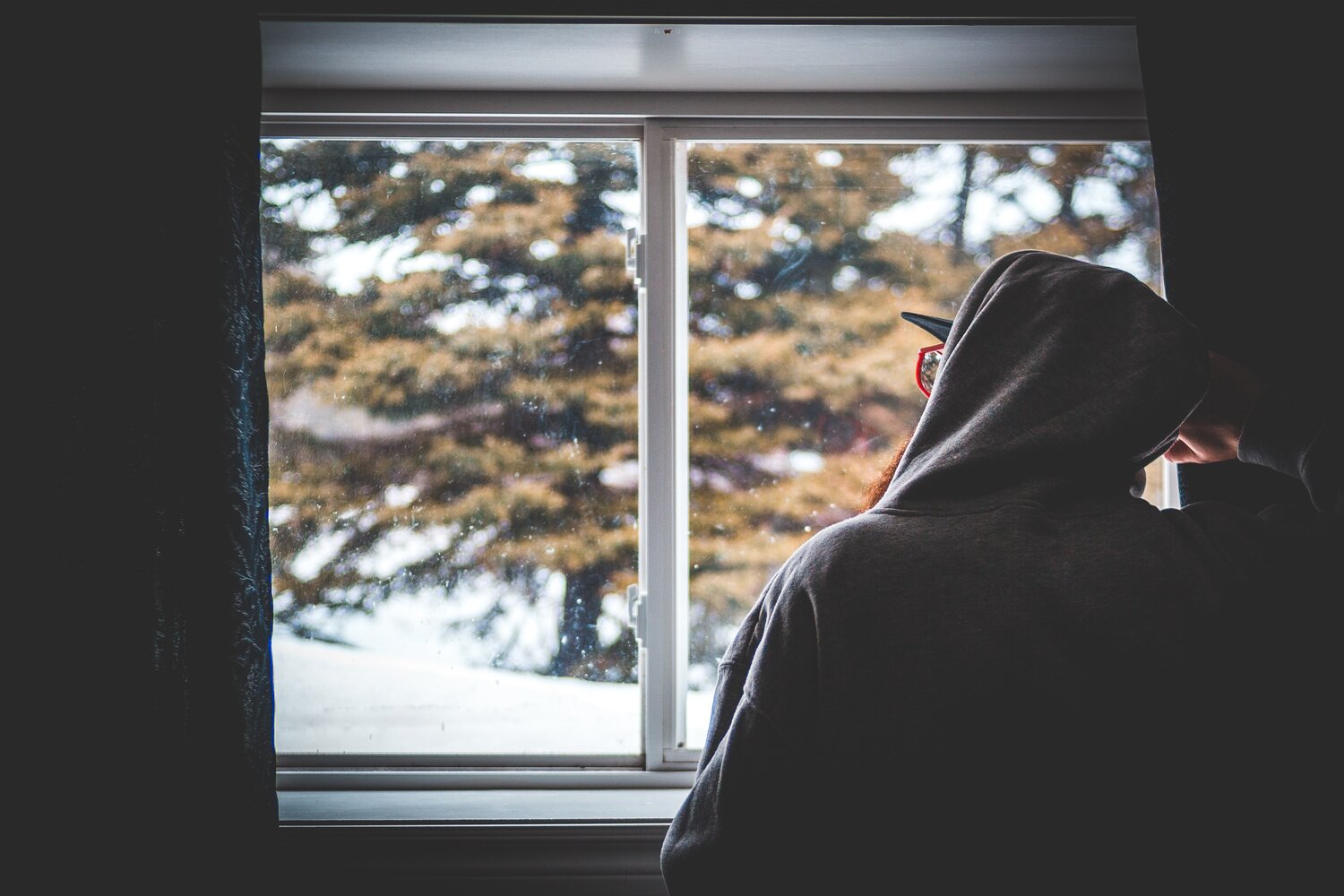
HOW HIGH SCHOOL STUDENTS ACCEPTED STAY-AT-HOME AND SOCIAL DISTANCING ORDERS: Time of Worrying and Learning

Objavljeno prije

na

It has been shown that keeping prescribed distance without physical contact, shaking hands, hugging … is one of the least respected measures among surveyed high school students. According to received answers, the only recommendation that was less respected was the one concerning wearing of protective equipment


Do high school students in Podgorica and to what extent respect the measures taken to prevent coronavirus spread? Through social networks, we surveyed about 200 students, from all high schools in Podgorica, to find out first-hand, how they cope with recommendations and measures that, among other things, limit movement and outdoor activities.

“Ever since the coronavirus appeared in Montenegro and since the Government announced the protective measures, I fully comply with them,” Elena Dabetic told us. “I haven’t been out of the house since March, even when I have to go to the store, I go with full equipment: masks, gloves, and I keep distance from other people. Quarantine was not difficult for me since I’ve focused on some other activities, for which I did not have time, such as drawing. I kill boredom by playing online video games with my friends, watching movies, reading books, etc. I believe that people just need to think positively and use this time to work on themselves; well, we have a lot of time and we will learn more to appreciate going out after all this.”

Others, again, relativized the danger and explained why they did not exactly adhere to the imposed measures of social distancing. In fact, it was shown that keeping a prescribed distance of 1-2 meters without physical contact, shaking hands, hugging…was one of the least respected measures among surveyed high school students. Only every tenth respondent respected this experts’ recommendation. Even less number of respondents, according to received answers, respected recommendation concerning wearing of protective equipment. It was respected by every fifth research participant.

“When it comes to quarantine, I was relaxed at first, but when the situation intensified, I took it more seriously,” said Isidora Milatovic. “It is difficult for me to get used to it. This is the first time I am faced with situation like this. I spend my time learning, so I don’t really do any other activities. I sincerely hope that the situation will stabilize and that we will soon return to a normal life. ”

Her peer Danilo Kujacic explained: “I accept quarantine well, since my usual lifestyle is not much different. I spend most of my day at the computer. I go out with friends in the evening or occasionally, go out for training. I think the current situation is exaggerated and not half as significant as the media present it.”

A significant number of young people, according to their own testimonies, comply with the recommendations and stay at home. Survey has found that watching series and movies, playing games on a phone/computer and using social networks are three of the most common activities young people currently do. According to collected data, every tenth respondent takes an online course, learns a foreign language and (or) reads extracurricular literature.

Milica Radulovic stated that the current situation disturbed everyone’s usual activities, but, as she said, we must accept this way of life. “We all eagerly wait for measures to ease, but until that happens, we must use this time as good as possible. I suggest that we all devote this time to ourselves: by doing home-based training, reading a book, studying, but also communicating with friends through social networks. If after doing all of these you still have spare time, you can always watch a series or a movie…”, said our interviewee. And she concluded: “I really miss gatherings in the neighbourhood, but these measures must be respected if we want to get back to our old habits as soon as possible.”

In our survey, high school students cited several common reasons why they went out: a third of surveyed participants went out to shop at stores and pharmacies; a quarter for a walk or training in nature; every fifth for meeting and hanging out with friends… Boris Janjusevic said: “It was strange at first, but over time I got used to it. I spend my time doing homework, but of course I play games more than usual. As usual I spare an hour, an hour and a half of time for training.”

Given the new circumstances, interaction between students and professors in the school classroom has been replaced by online teaching, a platform and a website. Survey showed that most students did assignments, presentations, essays which professors gave, as well as that they studied provided resources. However, based on the results, two-thirds of high school students were not satisfied with online teaching, since, as they said, new way of work, to which they were not used to, required more work, effort and time than “traditional” class attendance.

Almost everyone missed social life, going out and socializing (without set limits). “I am very bored in quarantine and it has been difficult for me to find anything interesting to do”, notes S.P. who wanted to remain anonymous. “I usually play games, write songs, listen to music or do my homework. The current situation has great impact on us and our psyche. When all this is over, the consequences will be visible in our country, as well as in the whole world”, he said.

On the other hand, a smaller number of respondents said that they did not have any difficulties during quarantine. They believe that there has not been any other situation in which they would have so much time to devote to themselves and to improve their skills and potentials. Thus, M.P. explained: “I learn languages ​​during quarantine. I try to organize myself well, especially because of my school obligations. Of course, this is not always possible, but I manage. I also watch movies, communicate with friends, and read books. This is a chance to correct most of the mistakes, because time, despite the space barrier, works in our favour. ”

We spoke with Patricia Pobric, a civic activist and Executive Director of the NGO Our Action, about the behaviour of young people in this new situation caused by coronavirus pandemic and in what way they can make useful contribution.

“One who understands young people understands that current situation is most difficult to them. It’s still easy for kids to have fun at home with toys and other activities, but young people are, by their nature, very social beings. They like to move, to socialize, go out…Although we consider that they are too much attached to their phones, physical socializing means a lot to them. In general, I think most young people understood the significance of the situation, and that it was accepted with understanding but not with fear. Only young people to whom parents, relatives, and media transferred fear, showed it.”

Pobric however, pointed out that there were also undesirable examples. “It happens that a small number of young men drives their vehicles after curfew, or organize trips and barbecues and do not respect social distancing. My advice to young members of NGO Our Action, from the beginning of quarantine, was to spend time after online school activities not only on games and internet, but also on planting, working on farms, gardens, learning new skills at home and in nature.” Photos prove that some have accepted the advice.

Zana KNEZEVIC

Komentari

IN ENGLISH

BEHIND THE PROTESTS IN KIEV: Zelensky’s game that the EU accepts and the US ignores

Objavljeno prije

na

Objavio:

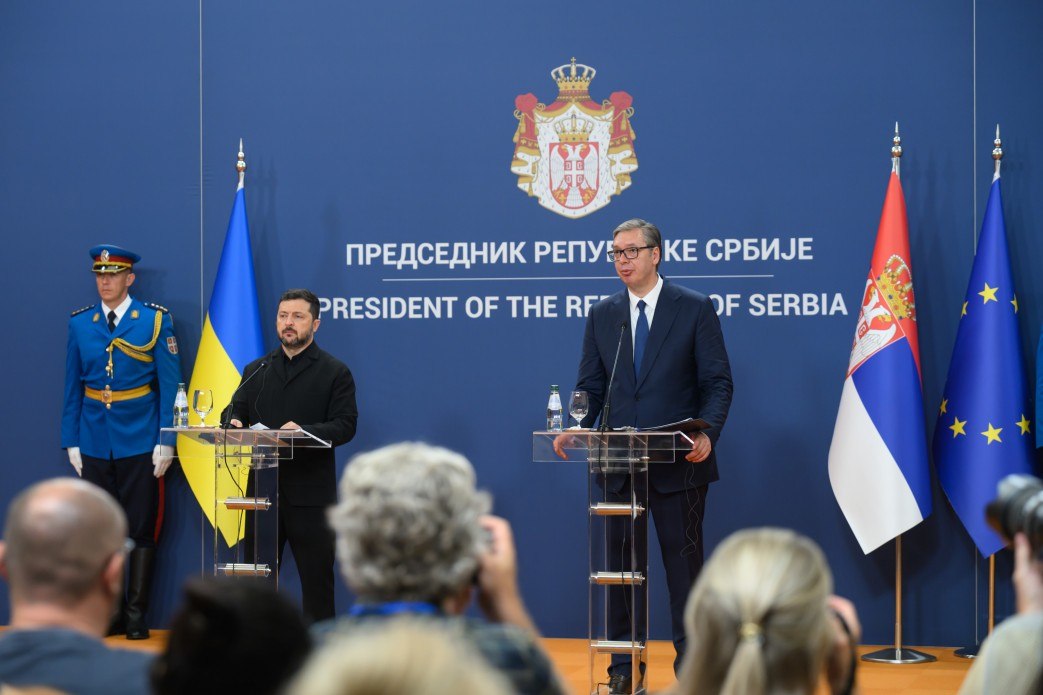
President of Ukraine Volodymyr Zelenskyy informed  Olexandr Syrskyi, the Commander-in-Chief of the Armed forces on July 21, that he has been dismissed and replaced a high ranking commander of the General staff Mykhailo Drapaty. On July 22, it was announced that Chief of General staff Andrii Hnatov was also removed and his deputy Ihor Skybiuk succeeded him. This reshuffle of the high army command, which started on July 16, when the president dismissed former Defense Minister Mikhail Fedorov. And it seems that the high-ranking officials, who were deprived of their positions, had not anticipated that.

Olexandr Syrskyi on July 20, when it became clear that the street actions in support of Mykhailo Fedorov will not fade away by themselves, published an article in the main military magazine of Ukraine. He explained that he had no conflict with Fedorov and was very astonished, when the defense minister mentioned their personal confrontation as the main cause of his dismissal. Syrskyi asked  Fedorov to excuse him for creating such an impression and assured him that all their conflicts were originated exclusively by the desire to fight better against Russia. Syrskyi also reproached the former defense minister for concentrating too much on drones and underestimating the importance of artillery systems and other traditional weapons. Syrskyi promised that as the Commander-in-Chief of the Armed, he will keep on strengthening Ukraine’s military capacity.

On the next day, Olexandr Syrskyi lost that possibility. And on July 22, it was reported that  Syrskyi’s supporters mixed on the streets with demonstrators, who were demanding to  return Fedorov.

Such an alliance must look rather strange because contrary to what Syrskyi declared in his article, it was widely known that he had a conflict with Fedorov. Moreover,  their disagreement caused by their different approach to the development of military forces had started even before Fedorov became the minister of defense. As a first deputy prime minister in charge of development of digital technologies, Fedorov insisted on turning the drones into the main weapons of the war and rapidly increasing their production even the expense of other military supplies. Such suggestions were criticized by top military leaders,  but were not supported by Zelenskyy. And when in January 2026, Fedorov was appointed as minister of defense, it was thought that the main intention of  Zelenskyy was to use Fedorov for restraining Syrskyi’s influence or even for getting rid of Syrskyi, if the need would arise.

The president wants to be the most popular military leader and needs no rivals. In February 2024, he dismissed Valerii Zaluzhnyi, who was the Commander-in-Chief of the Armed forces then, because he had become dangerously popular.  Syrskyi, with his traditional military style, who replaced  Zaluzhnyi did not give grounds for the same worry, but he resisted interference in military issues and wanted to direct military supply. In case, if it became a serious problem for the president, Fedorov could easily create the basis for Syrskyi’s dismissal. Meanwhile, the conflict between Syrsky and Fedorov, made  Zelenskyy the final authority in all questions related both to the military supply and the strategy on the battlefield. 

The key mistake of Zelenskyy was that he did not foresee that  Fedorov would become so popular in such a short time. In January, the current situation could not be predicted, because the US president Donald Trump seemed to be interested in making an alliance with Russia. However, he lost such intentions. Maybe, he will have nothing against getting control over Russian oil and gas export, but he has no need to regard Russia as a probable geopolitical partner anymore. That’s why early in March, Ukraine was provided with the American space intelligence data and assistance of the AI military system for deep air strikes on industrial and infrastructure objects. A short time before than, Elon Musk switched off Starlink for all Russian users, which hindered drone operations behind the front-lines for the Russian forces. Besides, thanks to Fedorov’s concentration on drones, their number in the Ukrainian troops has rapidly increased, and Ukraine obtained a superiority in quantity and quality of drones, available for everyday basis. It helped to compensate Russian advantage in artillery systems and significantly slow down Russian offensive, even in Donbas region. 

All this made Fedorov, who is young (he is 35) and intelligent, extremely popular. Under the new new defense minister, the Ukrainians at last saw Russian refineries burning and important infrastructure object seriously damaged. Even Moscow and Petersburg were successfully attacked.  High casualties on the battlefield made Russian troops adopt new tactics, which exclude a rapid advancement. The apprehension that Russian troops could encircle such big cities as Kharkiv and Zaporizhzhia are now in the past.

It is also important that Fedorov could touch public sentiments. The destruction of energy facilities in the Crimea, which was annexed by Russia with the support of a huge part of local population, and air-strikes on Moscow, though incomparable with what Kyiv has to endure in response, can give a feeling of revenge.

However, the most important achievement of Fedorov is that he gave the prospect of military victory over Russia. The Ukrainian society has been deprived of that since the autumn of 2022, when  Zaluzhnyi managed to breach Russian defense and liberate vast territories in Kharkiv region.

This time the victory was expected not through offense on the battlefield, but through air-strikes on the Crimea and Russian industry, which are supposed to inflict a great damage on Russian economy and make the life in the Crimea unbearable. Putin is expected to agree on immediate truce or even on surrendering some of the captured territories due to the heavy social repercussions of Ukrainian air attacks. Of course, such a plan will remain a fantasy without economic and political pressure from Washington on the Kremlin. And it cannot be guaranteed that Trump will put pressure on Russia, though he hinted several times on such opportunity. But even such expectations, even if they appear to be unrealistic is much better than war-weariness and despair which had been spreading in the Ukrainian society before this spring.

Besides, Fedorov has persuaded the Ukrainian public that thanks to the new drone, which are being  developed under his guidance, Ukrainian troops will get such a great advantage over Russian, that there will be no need to supply the Ukrainian army with new soldiers, at least in such quantity as at the present. The importance of this promise for young and middle age Ukrainian men, their wives and mothers cannot be overestimated. The series of these drones, which are supposed to change everything is called “Rusoriz” (“Russosec”). This name is greatly loved by the nationalists, who remain in the current conditions the most active independent political force.

Zelenskyy had to prevent the further growth of popularity of the former defense minister in order not to create a dangerous political rival. It is understood, the elections in Ukraine both parliamentary and presidential are inevitable, even if the hostilities continue. The EU needs the Ukrainian government to be legitimate in order to go on with Ukraine’s European integration. The new laws required for the elections in the current circumstances can be adopted only by the upcoming winter. So the elections can be conducted in the next spring. So has to act now if he wants to retain political domination and exclude the appearance of political leader, who can take from him his position or the parliamentary majority.

Such political behavior has nothing in common either with strengthening democratic institutions, or with establishing accountable governance. And it is a very bad sign that it accepted by the EU leaders who want Zelenskyy to stay in power, without any concern of Ukraine’s democracy.

The unwavering support of the EU and the lack of any attention to Ukraine’s political process from the US make  Zelenskyy believe that he can do whatever he wants to stay in power, because there are no political forces within the country, which can hinder him. Such an illusion destroyed Yanukovicn, and the political crisis that followed after his fall allowed Russia to annex the Crimea and instigate the military conflict on Donbas. Now, Zelenskyy is making the same mistake, and he has already disorganized military leadership by his actions, which can have dangerous repercussions.

Zelenskyy could not just dismiss the popular defense minister, whom he always supported and praised publicly. That is why it was decided to reboot the government. In that case, the president who would be able just not to suggest Fedorov as a new defense minister to the parliament. It seems that the president believed that Fedorov would be satisfied with the position, which would allow him to control the production of the drones and their supply to the army.

The former prime minister Yulia Svyridenko was not an important figure. Her main functions was to represent the interests of Andriy Yermak, the former head of the office of the president, who regardless of accusations in corruption, remains one of the most influential politicians in the country. Serhii Koretskyi, the new prime minister, is also connected with Yermak (though less closely that Svyridenko). So the closest ally of the president (at least in the recent past) got his compensation.

But everything the whole combination went wrong, because Fedorov publicly rejected the offer he had been supposed to accept. And the president, who wanted to create an illusion of an ordinary reshuffle of the government for enhancing its accountability, started to be regarded as an opponent of the former defense minister. Contrary to his wishes, Zelenskyy appeared to be an ally of the traditional styles army leaders in their struggle against Fedorov.

The president and his associates did not expect mass protests in support of Fedorov, and the reaction caused by his dismissal in social networks.  Zelenskyy realized that he is going to face a serious drop in ratings, instead of strengthening his political position. So he chose to remove Syrskyi and Hnatov, in order not be regarded as an ally of the main Fedorov’s enemies. It will inevitably undermines the moral of the troops, but it will hardly satisfy the protesters. The main question now is not the political fate of Fedorov, but the ability of Ukrainain society to resist authoritarian tendencies. Despite their acceptance by the EU.    

Dmitry GALKIN

Komentari

nastavi čitati

IN ENGLISH

NEW HIGHWAYS LEAD MOUNTAIN COUNTRIES TO THE GLOBAL ECONOMY: We are all closer

Objavljeno prije

na

Objavio:

Thanks to modern technologies that enable the construction of highways through mountains, the pattern of regional development has changed. Both in the distant mountainous countries of Asia and in Montenegro


Chinese embassy in Dhaka, the capital of Bangladesh, organized on July 13 symposium to mark the 105th anniversary of the Communist Party of China (CPC), and the event attracted high-ranking officials and influential members of Parliament, though the ruling Bangladesh nationalist party (BNP) does not share socialist ideas. Such intention of Bangladeshi political elite to pay tribute to the CPC is quite understandable, because early in July a new epoch in the relations between Bangladesh and China commenced. Dhaka has finally agreed on the Beijing’s proposal to take part in the construction of the China-Myanmar-Bangladesh Economic Corridor (CMBEC). It is going to be a strategic trade route, which will allow to bypass the Malacca Strait, managed by Indonesia, Malaysia and Singapore. China will obtain direct access to the Indian Ocean via Chittagong (the main port of  Bangladesh) and Mongla (the second-largest port of the country).

This project is extremely important for China, but Bangladesh did not venture to participate in it, even after the pro-Indian government of Sheikh Hasina was overthrown in 2024 after she had ruled the country for fifteen years. The new government, which was formed by the BNP cannot be cannot called “pro-Chinese” and it certainly wants to keep close ties with New Delhi, in spite of its agreement to assist Beijing’s strategy of encirclement India. There is an example that  Bangladesh wants to follow, the CMBEC is supposed to become the eastern twin to the China-Pakistan Economic Corridor (CPEC). And that project, which offered Pakistan with new prospects for economic development and geopolitical influence, did not deprive Islamabad of strategic autonomy. Despite strong dependence on military and economic cooperation with China, Pakistan has been trying to restore its relations with the US, which dramatically deteriorated during the war in Afghanistan.

The Bangladeshi government simultaneously with acceptance of Chinese offer showed that it gives importance to the relations with the US. The US embassy was allowed to organize celebration of the 250th anniversary of American independence on the premises of the National Parliament House, the largest legislative complex in the world. That decision was strongly criticized by some members of parliament with anti-American views. But it clearly proved that Dhaka is not going to change its approach to the relations with Washington.

It is remarkable that the the parliament complex in the Bangladeshi capital was designed by famous American architect Louis Kahn. His pupil Svetlana Kana Radevic became one of the most prominent architects of  Montenegro and former Yugoslavia.

But in the aspect of the infrastructure infrastructure development, Montenegro seems to be closer to Pakistan than to its rival Bangladesh (both countries are trying to mitigate the impact of the Bangladesh war of independence in 1971, but mutual trust has not been fully restored yet). Mountains obstructed Pakistan’s connections with the neighboring countries made it rely mostly on the marine trade routes.

That obstacle was surmounted only with the construction of the CPEC, which is linking China’s Xinjiang region to Pakistan’s Gwadar Port. It was launched in 2015, and the CPEC became one of the most important parts of  China’s Belt and Road Initiative, which China’s leader Xi Jinping considers to be essential for economic development and geopolitical influence of the country. Over 20 billion euros has been invested in the completed infrastructure and energy projects, related to the CPEC, and at least 34 billion euros has already been spent on the projects, which are still not finished.

The significance of the CPEC is primarily based on its ability to provide secure way straight through the mountains, fist from China to Pakistan, and this spring corridors from Pakistan to Kyrgyzstan and Tajikistan were added. These new corridors provide Central Asian countries, with overland access to the Arabian Sea through Pakistan while bypassing Afghanistan, which is certain to remain insecure in the foreseeable future. Thanks to contemporary technologies which allow to build highways through the mountains, the pattern of regional development has changed. The most significant step in that direction was made in September 2015, when the construction of China-Pakistan Friendship Tunnels was finished. The distance covered by this project seems to be insignificant comparing with 3000 km of the CPEC. But without its completion, the significance of the whole CPEC had been diminished, because the passage from Pakistan to China would remain threatened by weather conditions, floods and landslides.

Construction of a 24-kilometer series of bridges and tunnels took 36 months and cost 240 million euros. The project, which included two large bridges, 78 culverts and five kilometers of tunnels, was executed by the state owned China Road and Bridge Corporation (CRBC). It proved that Chinese corporations obtained advantages in the mountain construction.

Thanks to improving trade routes with neighboring countries and its important role in the Chinese global infrastructure project, Pakistan became more interesting to other global players, first of all the US. Pakistani Interior Minister Mohsin Naqvi arrived on July 11 in Washington for a new round of discussions aimed at expanding bilateral economic cooperation, new opportunities for investment and commercial partnerships between the two countries. Mohsin Naqvi welcomed US investment in the mining and energy sectors and promised that American investors would be provided with the safe environment.

Pakistan was represented at the negotiations with the US by the interior minister through obvious necessity. Americans are mostly interested in acquiring rare earth metals, vital for electric vehicle motors and defense electronics, which were found primarily in Balochistan. Port Gwardar, which is considered to be one of the key elements of Chinese Belt and Road Initiative is also located in that province. And the situation in Balochistan is far from being peaceful. There are two main anti-government military organizations that operate in the province, – Baloch Liberation Army (BLA), a separatist movement that is thought to be supported by India, and Tehrik-e-Taliban Pakistan (TTP), a fundamentalist group based on the same ideas as the Afghan Taliban. Despite their differences, they seem to coordinate their activity.

BLA carried out attacks on July 7, targeting police stations and coast guard camps, killing 11 soldiers and 18 police officers (skirmishes started two days earlier). TTP on July 6 assaulted the police post, which was guarding a dam, killing 8 police officers and abducting 18 others. But the most most damaging economic impact was caused by a suicide bomber on July 3, who drove an explosives-laden truck into a coast guard camp close to Gwadar port. Such attacks are the main cause, why the deep-water port, which was supposed to become “the Singapore of the Arabian Sea” cannot operate at full capacity.

Of course, Montenegro does not have the problems with militants attacking police or trying to destroy infrastructure. However, in the current circumstances Montenegro does not have a chance to become a part of the Chinese global infrastructure project, because neither the EU nor the US can allow that. China made an attempt to do that providing both the credit and the construction corporation for the highway from Podgorica to Kolasin. But even before the project was finished, it became clear that China would not be able to use it for the economic expansion and facilitation access to the European market. The Biden administration that came to power in 2021 was trying to diminish China’s global influence and strengthen Transatlantic partnership by      restricting Europe’s economic relations with China. Russian invasion of Ukraine gave a reason for creating a US-led coalition for constraining China’s expansion in Europe under the slogan of confronting authoritarian regimes that threaten democracy. On July 13 2023, the Foreign subsidies regulation was put into action. The activity of Chinese state-owned corporation (and under Xi Jinping all significant corporation became state-owned) was restricted, they were forbidden to obtain control over European ports. The Greek port Piraeus, which is operated and majority-owned by Chinese COSCO remains the only exception. Though, the corporation has shares in several other European ports, it cannot increase them.

However, after the election of the incumbent US president Donald Trump, the situation has slightly changed. The current US administration does not regard the EU as an essential all. Therefore, it has nothing against some strengthening of economic ties between the EU and China. Besides, the US has nothing to fear in that sense anymore. The EU has started to be afraid of Chinese economic development, because Chinese industrial export grows mostly at the expense of European. Anyway, Montenegro got an opportunity to use Chinese technologies for increasing its transit potential. Now Chinese credit cannot be used for that, Montenegro is to pay some expenses from its own budget and provided with European grants. Highway Matesevo – Andrijevica,  like China-Pakistan Friendship Tunnels, does not cover a long distance. And it  plays the same function. It changes pattern of development of the country, where mountains hindered construction of the trade routes. It can bring new economic prospects to Montenegro, which is the third most mountainous country in the world, after Bhutan and Nepal. Of course, if the EU will not refuse to fight for its economic security.

Dimitry GALKIN

Komentari

nastavi čitati

IN ENGLISH

MESSAGES OF THE NATO SUMMIT IN TURKEY: The transatlantic partnership is not in crisis, it is falling apart

Objavljeno prije

na

Objavio:

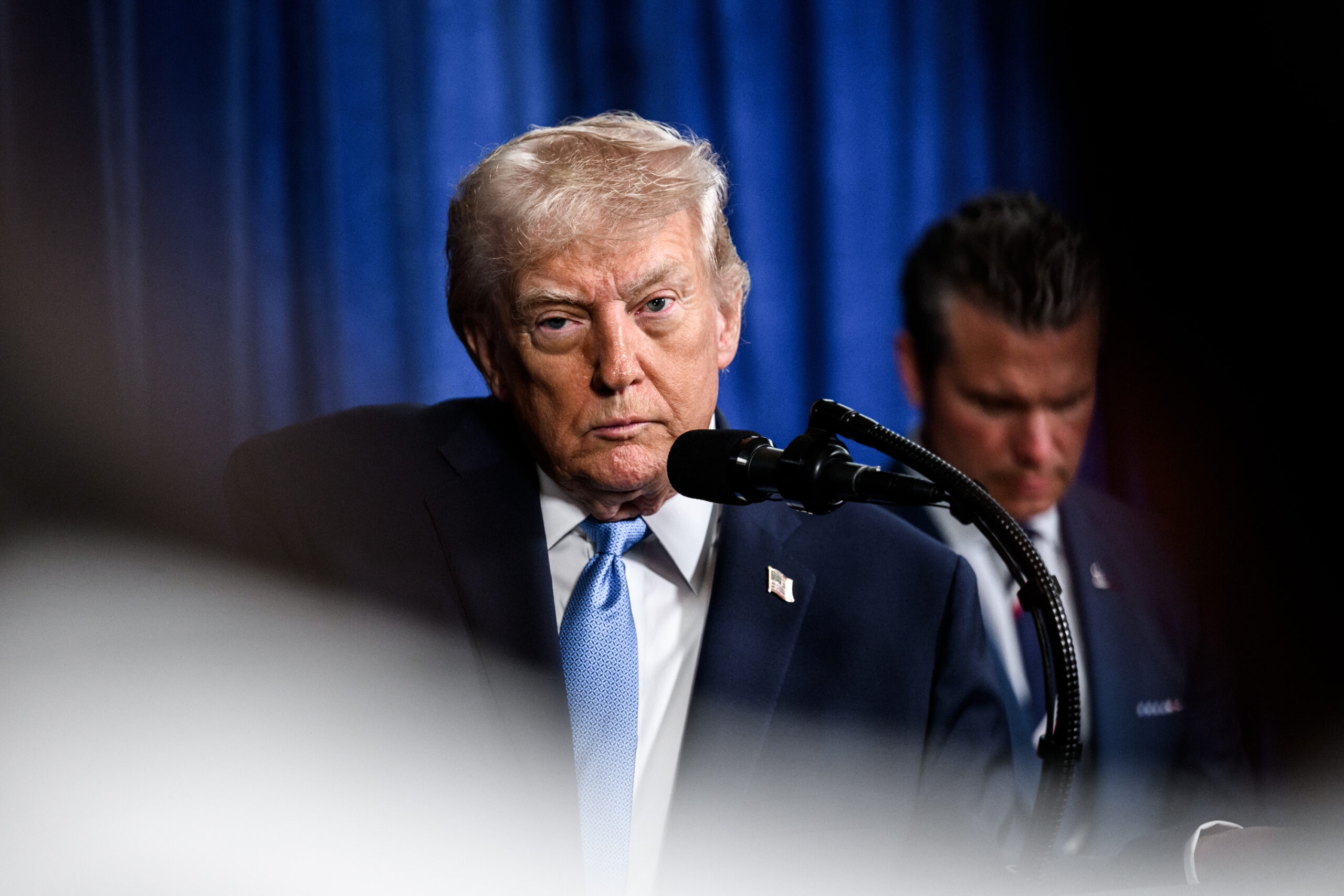
In his proclamation devoted to the 250th anniversary of the adoption of the declaration of independence US president Donald Trump declared “the new era of American greatness”. He promised that it will bring “prosperity, health, opportunity and happiness” to every American family. His “sacred promises” also included a lot of good things. Law and order will be restored in the streets. The American flag will be planted “among the red dunes of Mars”. The energy beneath American soil will be unleashed. American sovereignty will be secured.

However, there were two things missing, which seemed to be essential for American political rhetoric since the Second world war, – promoting liberty in the world and protecting American allies. The incumbent US administration feel no commitments to the former American role in the world as the protector of political and economic freedom. The US is regarded as a sole global power, which should make alliances based exclusively on its own national interests. Washington does not have any intention to defend any ideals and values.

Of course, the propagation of democracy was often used in the past as a pretext for geopolitical expansion. But it was also a ground for a close cooperation with the countries, which were proclaiming similar values, first of all for the Transatlantic ties with European countries. The Transatlantic alliance was a pivot of the Western bloc during the cold war, and afterwards it became the foundation of the world order established after the collapse of the USSR.

Now, the US administration considers sharing global dominance with the EU and Britain to be an  unnecessary burden. Washington is certain that the US is providing too much to its European allies and receives too little in return. Just before two-day NATO summit in Ankara started on July 7, Trump had again criticized the major European partners of the US for low defense spending and disparaged Germany’s contribution to NATO as “ridiculous.”

The European NATO members made an effort to persuade Trump that they are trying to meet his demands to increase their investments in defense. The NATO summit in Ankara was started on July 7, with the Defense Industry Forum at which huge arms deals were made. NATO chief Mark Rutte announced a new era of transatlantic industrial cooperation and reported that new defense contracts are worth more than 40 billion euros.

However, the American president cannot be satisfied with this achievement. Because the EU is striving to support its own industry. And when Trump urged NATO-members to increase their  defense and security spending to 5% of their GDP, he was obviously expecting that it will boost up American weaponry production. Meanwhile, the share of American corporations in the NATO arms deals has diminished. And some the European companies, like Swedish SAAB, have gained from the desire of the leading European countries to meet Donald Trump’s demands and at the same time enhance their own defense capabilities.

The policy of appeasement is destined to fail, because it is not sufficient to Trump. It was proven once again in Ankara by the inability of the US and the EU to overcome their disagreements.

Soon after arriving in the Turkish capital on July 7, the American president announced that he was disappointed with NATO. He blamed  Britain, Italy, Germany, and France for abandoning the US in the war with Iran, which was practically recommenced on the last day of the NATO summit. Trump said that the leading European countries “turned us down”. Though, he is not feeling anger because of it, he wonder why the US is “spending hundreds of billions of dollars” on its European allies, “if they’re not there for us”.

Trump even stated that he would not  have come to NATO summit, if his friend president of Turkey Recep Erdogan hadn’t been the host. The EU countries cannot be trusted, but Trump praised Turkey as a reliable ally with strong military capabilities. The demonstrative closeness between the US and Turkey along with Trumps decisive support to Zelensky (though without any immediate benefits to Ukraine) can be considered the main results of the summit in Ankara.

Erdogan was promised F-35 fighter jets, nevertheless in 2020 the US Congress prohibited their sales to Turkey, unless the S-400 air defense systems purchased from Russia are removed or neutralized. But it is even more important that Trump supported Erdogan’s activity in the region. The US president even met with Syrian leader Ahmed al-Sharaa, who came to power in 2024 thanks to Erdogan’s assistance and remains influenced by him. The sanctions imposed on Syria, when it was under Assad regime, are going to be lifted and all barriers hindering Syrian economic development. It should be considered a great success of Erdogan, who will get an opportunity to carry on with Turkey’s geopolitical expansion and will be able to feel unrestrained in his domestic policy.

Two days before the NATO summit Israeli prime minister Benjanin Netanyahu asked the American president to refrain from providing Turkey with weapons that can help Ankara to expand its military capabilities and change balance of forces in the region. Obviously, Donald Trump ignored his request. At his joint press conference with Recep Erogan, the American president explained Netanyahu’s position by his personal disagreements with the Turkish leader.

Nevertheless, Netanyahu’s concerns seem to be well-grounded. The US political support and access to American weapons will allow Erdogan to become a dangerous rival both to Israel and the EU. It can come in useful for Washington, because the pressure on the EU from the Trump’s administration will be increasing. Trump is going to restart the dispute over Greenland, which he wants to annex from Denmark, a close American ally. The US president reminded during the summit in Ankara that Greenland is surrounded by Russian and Chinese ships. It is a clear exaggeration, because China will not be able to deploy significant forces in the North Atlantic at least for several years. But is a good pretext for scaring the EU with the prospect of military confrontation with the US. It has already worked once and helped to make the EU approve the trade deal on American conditions. At the present time, it can make the EU to give up trying to achieve a strategic autonomy.

At the summit in Ankara, Trump stated that Europe should be concerned about its energy security. He also declared, that the US has plenty of oil even “without including Venezuela”. It can be added, that Trump has a chance to gain control over part of the Russian oil export. If Ukrainian air strikes on Russian oil industry and high-tech manufacturing continue, the Russian government will be compelled to entreat the US administration to remove sanctions on purchasing industrial equipment. And if the EU is scared by the threat of confrontation over Greenland, it can be made to buy oil and gas, supplied under the American control.

Strategic autonomy can be hard to obtain and even more difficult to maintain. The EU with its fragile internal structure seems hardly capable to afford it. But the European leaders should realize that in the current circumstances the lack of strategic autonomy will inevitable cause obstacles for the economic development.

Fifteen years ago, the EU could rely on the US protection, cheap Russian hydrocarbons and access to Chinese market. Now, it’s all gone, and the survival of the EU as center of global development depends on its ability to find substitutes. And the replacement of the US seem to be the hardest problem.

Not only the desire of the US administration to control European energy supply, but also Trump’s rejection of foreign policy based on values account for the security problems, that the EU has started to face. Since the end of the Second world war, and especially since the end of 1970s, Washington insisted that the democratic governance should be considered a significant value. Due to that, European and Asian allies of the US were trying to build and sustain democratic institutions. At the present time, countries that remain the American allies, do not have such motivations any more. Moreover, the political leaders, who are regarded as  important partners, are almost openly allowed to suppress opposition.

The magazine POLITICO on July 4 an article by Ivo Daalder, a former U.S. ambassador to NATO, in which he argues that the US allies can experience a rapid decline of democracy if they fail to form alliances based on democratic values that will gain strategic autonomy. In such circumstances, the most vulnerable seem to be “smaller countries like Fiji, Montenegro and Suriname“, which  rebuilt their political institutions on democratic principles in spite of severe obstacles. Ivo Daalder believes that “the gravitational pull of EU membership carried Montenegro and Albania toward the rules“, even as Washington refused to continue the foreign policy aimed at promoting democratic values.

The Transatlantic partnership is in state of collapse, but the US administration is going to increase its influence in Europe. It is going to act not like an ally, but like a rival of the leading European countries, trying to prevent them from obtaining strategic autonomy. And in that case, the Balkans for the first time in the postwar period can become one of the most important region of Europe. Because this region is destined to  a scene of Transatlantic rivalry, which is replacing the Transatlantic partnership.

Dmitry GALKIN

Komentari

nastavi čitati

Izdvajamo