IN ENGLISH
MONTENEGRO DENIES REFUGE TO LUKASHENKO CRITIC: Montenegrin Ministry of Interior claims that Belarus is a Democracy
Objavljeno prije
2 godinena
Objavio:
Monitor online
Based on the Ministry of Interior’s decision signed by Radovan Popovic, deputy minister and head of the Directorate for Administrative Affairs, Citizenship and Foreigners, it appears that Belarus is a democratic country where life is safe and full of opportunities. Popovic in his decision UP I-132/23-6651/3 dated 5 June 2024, has rejected the request for international protection filed by V.I (citizen of Belarus) because “there is no justified fear of persecution” in his home country
The High Court in Belgrade recently ruled again that Andrei Gnyot, a Belarusian film director, journalist and opposition activist, should be extradited to the totalitarian regime in Minsk based on the Interpol warrant issued by Belarus. He was arrested at the Belgrade airport on 30 October last year where he flew from Thailand. He was immediately taken into extradition custody to the Central Prison (CZ) in Belgrade. He left Belarus in June 2021 upon learning that Aleksandar Lukashenko‘s notorious KGB secret service was ready to go after him for his ties to the opposition. Gnyot is formally wanted for tax evasion amounting to around 300 thousand euros. He never received a hearing summon on the tax evasion accusations in the country. He allegedly committed tax evasion between 2012 and 2018 even though the law that regulates the matter was passed only in 2019. Gnyot rejected those accusations as “politically motivated”. He is one of the founders of the Free Association of Sportsmen of Belarus (FASB), which was set up after the rigged presidential elections in the summer of 2020, which caused massive civic protests and subsequent bloody repression by the regime whose closest ally is Putin’s Russia. FASB led an international campaign which resulted in disqualifying Belarus as the World Hockey Championship host. Moreover, the International Olympic Committee (IOC) has suspended the financing of the Belarusian National Olympic Committee (BNOC) chaired by President Lukashenko himself of which the Monitor already wrote about. The dictator took revenge on FASB by declaring it an “extremist organization”. The association’s lawyer, Aleksandar Danilevitch, was sentenced to ten years in prison. Retaliation followed against other members of the association, except Gnyot who managed to escape.
In the first judgment (7 December 2023), the High Court panel decided in favour of Gnyot’s extradition. Shockingly, the panel of judges even made a precedent by refusing to hear Gnyot about the charges against him. In early March of this year, the Court of Appeal overturned the decision and sent it back for a new decision. However, on 13 June, the first instance court pronounced the same verdict. The journalist has already announced he would appeal the decision. The only good news for Gnyot is that his prison detention of seven months was commuted to house arrest and confinement in a 20-square-meter studio apartment in Belgrade. International and local human rights organizations condemned the verdict and called on the authorities of Serbian President Aleksandar Vucic to end the persecution of political opponents of Minsk and Moscow who have sought refuge in Serbia.
When it comes to Montenegro, one would expect a better situation for asylum seekers, especially after the fall of the 30-year autocratic government of Milo Djukanovic and his Democratic Party of Socialists (DPS) whose role models were Vladimir Putin and Lukashenko. However, Belarusian national V.I. (who asked not to have his full name disclosed) thought so. However, the Ministry of Interior (MUP) proved him wrong. Radovan Popovic, the deputy interior minister and head of the Directorate for Administrative Affairs, Citizenship and Foreigners, considers Belarus a democratic country where life is safe and full of opportunities. The MUP decision has no mention of the ongoing war against Ukraine in which Belarus indirectly joined Putin by putting at his disposal its military bases, weapons, logistics and territory which served as a springboard for early drive on Kyiv. Popovic in his decision UP I-132/23-6651/3 dated 5 June 2024, rejects the request for international protection to the Belarusian citizen because “there is no justified fear of persecution” in the home country.
V.I., whose family already lawfully resides in Montenegro and runs a successful private business, requested protection upon his arrival in Montenegro on 27 July 2023 because of a threat that Lukashenko’s authorities would imprison him for political activism. Namely, after the disputed presidential elections in the summer of 2020, large protests broke out in the country. The wife of V.I. participated while he stayed aside fearing for the wellbeing of his private construction company. However, when the authorities began to violently break up the protests, V.I “couldn’t stay on the side-lines”. In August 2020 he “recorded a 20-minute video post on YouTube” in which he “publicly announced his position… and supported those who are fighting for free Belarus” and “victory of democracy”. He said that “Lukashenko suppressed the protests by shedding blood” and that “the people should reciprocate in the same way”. After a while, in the spring of 2023, his YouTube post was noticed by the authorities and then V.I.’s problems began. Tax inspections and state controls of his company became frequent for no other apparent reason. Moreover, the bank with which he cooperated for over 10 years suddenly denied him access to loans without explanation. After that, a friend in the KGB told him that the secret service found out about his YouTube video and that the problems with the company were not accidental. In July 2023, he received a phone call from the state security which asked him to come to the premises of the KGB. When asked why, he was told that he would find out upon arrival. He immediately bought a ticket to Istanbul and fled to Montenegro via Turkey, leaving his mobile phone with a SIM card in Minsk in case state security tracked his movements through mobile network towers. Later, he learned from a neighbour in Minsk that Lukashenko’s police came to his house to look for him. Then the police contacted his wife and asked about his whereabouts. She replied that they were not together and that he had left for Russia. V.I. is convinced that if he were to return to Belarus “he would find himself in prison” seeing how the authorities treat other entrepreneurs who expressed their views. The available reports of international organisations and western governments (UN, State Department, EU, HRW, Amnesty Int. etc.) contain many well documented cases of torture in Lukashenko’s prisons. The regime’s common practice is to charge dissenters with treason or rather with bribery/corruption so to be more convincing to the public, both domestic and foreign. Detainees are then forced to “confess their crimes” in front of cameras, as was the case of Roman Protasevitch, a journalist and an opposition activist. He “publicly repented” in front of Lukashenko’s television cameras after he was kidnapped from a Ryanair plane. Namely, Protasevich was on the Athens-Vilnius 4978 flight which he was diverted on 23 May 2021 by the Belarusian authorities under the pretext that a bomb had been placed on the plane. Escorted by a MIG-29 interceptor, the plane was forced to emergency landing in Minsk. The journalist and his Russian girlfriend were snatched away and arrested whereas no reported bomb was found on the plane.
However, all these examples of Protasevitch, Gnyot and over 1,400 political prisoners in Lukashenko’s fiefdom were not convincing enough to Popovic, a close associate of the Interior Minister Danilo Saranovic (a high official of the Democrats of Montenegro) since they “do not meet the requirements of Article 3” of the Asylum Law. Neither the fear of V.I. of what might happen to him if he returns home “prevailed enough” to grant him international protection because “there was no element of persecution”. He is also reproached for not seeking asylum in the first transit country, Turkey, which received 3.5 million refugees from Syria, probably on purpose, overlooking that the applicant’s family already lived in Montenegro with a lawful residence and a successful family business. He wouldn’t be a financial liability to the state if he were allowed to stay with his family in the country of refuge.
Popovic claims in the decision he signed, that in accordance with the Geneva Convention and the Directive on Asylum Procedures, “a country is considered safe when, within the framework of its democratic system, there is generally and permanently no persecution, no torture or inhumane treatment…threats of violence”. Nonetheless “even though, to a certain extent, there are violations of human rights in Belarus”, the MUP finds out that V.I. “can return unhindered to the country of origin, and that his life, freedom and security would not be endangered by his return”. Popovic further elaborates that Belarus is an “industrially developed country” and that its main trade partner is Russia, stressing that natural gas largely transits from Russia to the EU (through Belarus). Popovic praises the construction of the Nord Stream 2 pipeline… from Russia to Germany under the Baltic Sea which was completed in 2021 and “is a factor that has a direct impact on the Belarusian economy”. Popovic apparently forgets that Nord Stream 2 has been closed and partly blown up after the beginning of invasion of Ukraine. He doesn’t bother to explain what the gas pipeline has to do with fate of V.I. if he would return home. Popovic also praises Belarus for receiving 2,915 refugees under the mandate of the UNHCR, 143 asylum seekers and over 6 thousand stateless persons. It highlights the successes of the Lukashenko regime in the fight against human trafficking and commends Belarus for being one of the 152 countries that voted for the adoption of the Global Security Agreement. Therefore “in accordance with the above, this institution has concluded that the conditions set forth to constitute persecution in the sense of Article 1A of the Geneva Convention have not been met”. Furthermore, the statement of V.I. makes it “clear that he did not experience persecution given that his allegations are not that egregious” to constitute a serious violation of human rights. It appears that it would be better for V.I. that he first experienced torture in prison as that might convince Popovic (who is also a lecturer at the Police Academy in Danilovgrad) that he was is in danger.
The leader of the Belarusian opposition Sviatlana Tsikhanouskaya, has been informed about the Montenegrin MUP’s reasoning and denial of asylum. She herself had to flee the country after the Minsk regime refused to recognize her victory in the presidential elections in 2020. Her husband was already in prison before the elections. She was sentenced in absentia to 15 years in prison by Lukashenko’s court. Many democratic governments recognize her as the country’s legitimate leader. Her staff told the Monitor that the opposition in exile had proposed to President Jakov Milatovic and Prime Minister Milojko Spajic to meet with Tsikhanouskaya several times after she had previously met with the governments of Greece and Albania. No response ever came from Montenegro.
Fortunately for V.I. he can appeal Radovan Popovic’s decision before the Administrative Court of Montenegro. V.I. still hopes that he will not have to face the democracy and justice of Lukashenko’s government.
Jovo MARTINOVIĆ
Komentari
IZDVOJENO
-
ANDRIJEVICA, ZATVORENA PRVA FABRIKA PELETA U DRŽAVI: Tajkunska misija privedena kraju?
-
UPRAVLJANJE DRŽAVNOM IMOVINOM: Zašto je Vlada naumila da razvlasti parlament
-
SLUČAJ MARKA KOVAČEVIĆA: Kontinuitet govora mržnje
-
NI U CRNOJ GORI NEMA MJESTA ZA LUKAŠENKOVE KRITIČARE: Za naš MUP Bjelorusija je demokratska država
-
EKSPLOZIJA NA CETINJU: Rat koji nije stao
-
MIORAG VUJOVIĆ, ORGANIZACIJA KOD: Stvaraju se preduslovi za raspodjelu nacionalnih resursa
IN ENGLISH
NEW HIGHWAYS LEAD MOUNTAIN COUNTRIES TO THE GLOBAL ECONOMY: We are all closer
Objavljeno prije
3 danana
18 Jula, 2026
Thanks to modern technologies that enable the construction of highways through mountains, the pattern of regional development has changed. Both in the distant mountainous countries of Asia and in Montenegro
Chinese embassy in Dhaka, the capital of Bangladesh, organized on July 13 symposium to mark the 105th anniversary of the Communist Party of China (CPC), and the event attracted high-ranking officials and influential members of Parliament, though the ruling Bangladesh nationalist party (BNP) does not share socialist ideas. Such intention of Bangladeshi political elite to pay tribute to the CPC is quite understandable, because early in July a new epoch in the relations between Bangladesh and China commenced. Dhaka has finally agreed on the Beijing’s proposal to take part in the construction of the China-Myanmar-Bangladesh Economic Corridor (CMBEC). It is going to be a strategic trade route, which will allow to bypass the Malacca Strait, managed by Indonesia, Malaysia and Singapore. China will obtain direct access to the Indian Ocean via Chittagong (the main port of Bangladesh) and Mongla (the second-largest port of the country).
This project is extremely important for China, but Bangladesh did not venture to participate in it, even after the pro-Indian government of Sheikh Hasina was overthrown in 2024 after she had ruled the country for fifteen years. The new government, which was formed by the BNP cannot be cannot called “pro-Chinese” and it certainly wants to keep close ties with New Delhi, in spite of its agreement to assist Beijing’s strategy of encirclement India. There is an example that Bangladesh wants to follow, the CMBEC is supposed to become the eastern twin to the China-Pakistan Economic Corridor (CPEC). And that project, which offered Pakistan with new prospects for economic development and geopolitical influence, did not deprive Islamabad of strategic autonomy. Despite strong dependence on military and economic cooperation with China, Pakistan has been trying to restore its relations with the US, which dramatically deteriorated during the war in Afghanistan.
The Bangladeshi government simultaneously with acceptance of Chinese offer showed that it gives importance to the relations with the US. The US embassy was allowed to organize celebration of the 250th anniversary of American independence on the premises of the National Parliament House, the largest legislative complex in the world. That decision was strongly criticized by some members of parliament with anti-American views. But it clearly proved that Dhaka is not going to change its approach to the relations with Washington.
It is remarkable that the the parliament complex in the Bangladeshi capital was designed by famous American architect Louis Kahn. His pupil Svetlana Kana Radevic became one of the most prominent architects of Montenegro and former Yugoslavia.
But in the aspect of the infrastructure infrastructure development, Montenegro seems to be closer to Pakistan than to its rival Bangladesh (both countries are trying to mitigate the impact of the Bangladesh war of independence in 1971, but mutual trust has not been fully restored yet). Mountains obstructed Pakistan’s connections with the neighboring countries made it rely mostly on the marine trade routes.
That obstacle was surmounted only with the construction of the CPEC, which is linking China’s Xinjiang region to Pakistan’s Gwadar Port. It was launched in 2015, and the CPEC became one of the most important parts of China’s Belt and Road Initiative, which China’s leader Xi Jinping considers to be essential for economic development and geopolitical influence of the country. Over 20 billion euros has been invested in the completed infrastructure and energy projects, related to the CPEC, and at least 34 billion euros has already been spent on the projects, which are still not finished.
The significance of the CPEC is primarily based on its ability to provide secure way straight through the mountains, fist from China to Pakistan, and this spring corridors from Pakistan to Kyrgyzstan and Tajikistan were added. These new corridors provide Central Asian countries, with overland access to the Arabian Sea through Pakistan while bypassing Afghanistan, which is certain to remain insecure in the foreseeable future. Thanks to contemporary technologies which allow to build highways through the mountains, the pattern of regional development has changed. The most significant step in that direction was made in September 2015, when the construction of China-Pakistan Friendship Tunnels was finished. The distance covered by this project seems to be insignificant comparing with 3000 km of the CPEC. But without its completion, the significance of the whole CPEC had been diminished, because the passage from Pakistan to China would remain threatened by weather conditions, floods and landslides.
Construction of a 24-kilometer series of bridges and tunnels took 36 months and cost 240 million euros. The project, which included two large bridges, 78 culverts and five kilometers of tunnels, was executed by the state owned China Road and Bridge Corporation (CRBC). It proved that Chinese corporations obtained advantages in the mountain construction.
Thanks to improving trade routes with neighboring countries and its important role in the Chinese global infrastructure project, Pakistan became more interesting to other global players, first of all the US. Pakistani Interior Minister Mohsin Naqvi arrived on July 11 in Washington for a new round of discussions aimed at expanding bilateral economic cooperation, new opportunities for investment and commercial partnerships between the two countries. Mohsin Naqvi welcomed US investment in the mining and energy sectors and promised that American investors would be provided with the safe environment.
Pakistan was represented at the negotiations with the US by the interior minister through obvious necessity. Americans are mostly interested in acquiring rare earth metals, vital for electric vehicle motors and defense electronics, which were found primarily in Balochistan. Port Gwardar, which is considered to be one of the key elements of Chinese Belt and Road Initiative is also located in that province. And the situation in Balochistan is far from being peaceful. There are two main anti-government military organizations that operate in the province, – Baloch Liberation Army (BLA), a separatist movement that is thought to be supported by India, and Tehrik-e-Taliban Pakistan (TTP), a fundamentalist group based on the same ideas as the Afghan Taliban. Despite their differences, they seem to coordinate their activity.
BLA carried out attacks on July 7, targeting police stations and coast guard camps, killing 11 soldiers and 18 police officers (skirmishes started two days earlier). TTP on July 6 assaulted the police post, which was guarding a dam, killing 8 police officers and abducting 18 others. But the most most damaging economic impact was caused by a suicide bomber on July 3, who drove an explosives-laden truck into a coast guard camp close to Gwadar port. Such attacks are the main cause, why the deep-water port, which was supposed to become “the Singapore of the Arabian Sea” cannot operate at full capacity.
Of course, Montenegro does not have the problems with militants attacking police or trying to destroy infrastructure. However, in the current circumstances Montenegro does not have a chance to become a part of the Chinese global infrastructure project, because neither the EU nor the US can allow that. China made an attempt to do that providing both the credit and the construction corporation for the highway from Podgorica to Kolasin. But even before the project was finished, it became clear that China would not be able to use it for the economic expansion and facilitation access to the European market. The Biden administration that came to power in 2021 was trying to diminish China’s global influence and strengthen Transatlantic partnership by restricting Europe’s economic relations with China. Russian invasion of Ukraine gave a reason for creating a US-led coalition for constraining China’s expansion in Europe under the slogan of confronting authoritarian regimes that threaten democracy. On July 13 2023, the Foreign subsidies regulation was put into action. The activity of Chinese state-owned corporation (and under Xi Jinping all significant corporation became state-owned) was restricted, they were forbidden to obtain control over European ports. The Greek port Piraeus, which is operated and majority-owned by Chinese COSCO remains the only exception. Though, the corporation has shares in several other European ports, it cannot increase them.
However, after the election of the incumbent US president Donald Trump, the situation has slightly changed. The current US administration does not regard the EU as an essential all. Therefore, it has nothing against some strengthening of economic ties between the EU and China. Besides, the US has nothing to fear in that sense anymore. The EU has started to be afraid of Chinese economic development, because Chinese industrial export grows mostly at the expense of European. Anyway, Montenegro got an opportunity to use Chinese technologies for increasing its transit potential. Now Chinese credit cannot be used for that, Montenegro is to pay some expenses from its own budget and provided with European grants. Highway Matesevo – Andrijevica, like China-Pakistan Friendship Tunnels, does not cover a long distance. And it plays the same function. It changes pattern of development of the country, where mountains hindered construction of the trade routes. It can bring new economic prospects to Montenegro, which is the third most mountainous country in the world, after Bhutan and Nepal. Of course, if the EU will not refuse to fight for its economic security.
Dimitry GALKIN
Komentari
IN ENGLISH
MESSAGES OF THE NATO SUMMIT IN TURKEY: The transatlantic partnership is not in crisis, it is falling apart
Objavljeno prije
2 sedmicena
10 Jula, 2026
In his proclamation devoted to the 250th anniversary of the adoption of the declaration of independence US president Donald Trump declared “the new era of American greatness”. He promised that it will bring “prosperity, health, opportunity and happiness” to every American family. His “sacred promises” also included a lot of good things. Law and order will be restored in the streets. The American flag will be planted “among the red dunes of Mars”. The energy beneath American soil will be unleashed. American sovereignty will be secured.
However, there were two things missing, which seemed to be essential for American political rhetoric since the Second world war, – promoting liberty in the world and protecting American allies. The incumbent US administration feel no commitments to the former American role in the world as the protector of political and economic freedom. The US is regarded as a sole global power, which should make alliances based exclusively on its own national interests. Washington does not have any intention to defend any ideals and values.
Of course, the propagation of democracy was often used in the past as a pretext for geopolitical expansion. But it was also a ground for a close cooperation with the countries, which were proclaiming similar values, first of all for the Transatlantic ties with European countries. The Transatlantic alliance was a pivot of the Western bloc during the cold war, and afterwards it became the foundation of the world order established after the collapse of the USSR.
Now, the US administration considers sharing global dominance with the EU and Britain to be an unnecessary burden. Washington is certain that the US is providing too much to its European allies and receives too little in return. Just before two-day NATO summit in Ankara started on July 7, Trump had again criticized the major European partners of the US for low defense spending and disparaged Germany’s contribution to NATO as “ridiculous.”
The European NATO members made an effort to persuade Trump that they are trying to meet his demands to increase their investments in defense. The NATO summit in Ankara was started on July 7, with the Defense Industry Forum at which huge arms deals were made. NATO chief Mark Rutte announced a new era of transatlantic industrial cooperation and reported that new defense contracts are worth more than 40 billion euros.
However, the American president cannot be satisfied with this achievement. Because the EU is striving to support its own industry. And when Trump urged NATO-members to increase their defense and security spending to 5% of their GDP, he was obviously expecting that it will boost up American weaponry production. Meanwhile, the share of American corporations in the NATO arms deals has diminished. And some the European companies, like Swedish SAAB, have gained from the desire of the leading European countries to meet Donald Trump’s demands and at the same time enhance their own defense capabilities.
The policy of appeasement is destined to fail, because it is not sufficient to Trump. It was proven once again in Ankara by the inability of the US and the EU to overcome their disagreements.
Soon after arriving in the Turkish capital on July 7, the American president announced that he was disappointed with NATO. He blamed Britain, Italy, Germany, and France for abandoning the US in the war with Iran, which was practically recommenced on the last day of the NATO summit. Trump said that the leading European countries “turned us down”. Though, he is not feeling anger because of it, he wonder why the US is “spending hundreds of billions of dollars” on its European allies, “if they’re not there for us”.
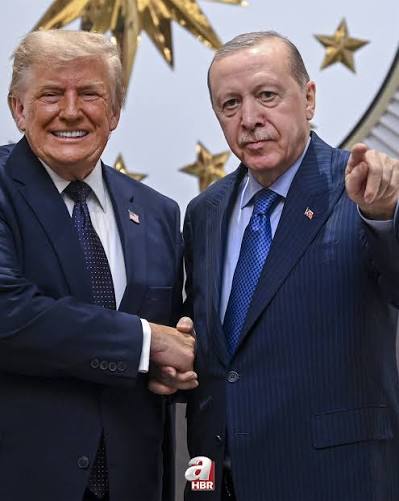
Trump even stated that he would not have come to NATO summit, if his friend president of Turkey Recep Erdogan hadn’t been the host. The EU countries cannot be trusted, but Trump praised Turkey as a reliable ally with strong military capabilities. The demonstrative closeness between the US and Turkey along with Trumps decisive support to Zelensky (though without any immediate benefits to Ukraine) can be considered the main results of the summit in Ankara.
Erdogan was promised F-35 fighter jets, nevertheless in 2020 the US Congress prohibited their sales to Turkey, unless the S-400 air defense systems purchased from Russia are removed or neutralized. But it is even more important that Trump supported Erdogan’s activity in the region. The US president even met with Syrian leader Ahmed al-Sharaa, who came to power in 2024 thanks to Erdogan’s assistance and remains influenced by him. The sanctions imposed on Syria, when it was under Assad regime, are going to be lifted and all barriers hindering Syrian economic development. It should be considered a great success of Erdogan, who will get an opportunity to carry on with Turkey’s geopolitical expansion and will be able to feel unrestrained in his domestic policy.
Two days before the NATO summit Israeli prime minister Benjanin Netanyahu asked the American president to refrain from providing Turkey with weapons that can help Ankara to expand its military capabilities and change balance of forces in the region. Obviously, Donald Trump ignored his request. At his joint press conference with Recep Erogan, the American president explained Netanyahu’s position by his personal disagreements with the Turkish leader.
Nevertheless, Netanyahu’s concerns seem to be well-grounded. The US political support and access to American weapons will allow Erdogan to become a dangerous rival both to Israel and the EU. It can come in useful for Washington, because the pressure on the EU from the Trump’s administration will be increasing. Trump is going to restart the dispute over Greenland, which he wants to annex from Denmark, a close American ally. The US president reminded during the summit in Ankara that Greenland is surrounded by Russian and Chinese ships. It is a clear exaggeration, because China will not be able to deploy significant forces in the North Atlantic at least for several years. But is a good pretext for scaring the EU with the prospect of military confrontation with the US. It has already worked once and helped to make the EU approve the trade deal on American conditions. At the present time, it can make the EU to give up trying to achieve a strategic autonomy.
At the summit in Ankara, Trump stated that Europe should be concerned about its energy security. He also declared, that the US has plenty of oil even “without including Venezuela”. It can be added, that Trump has a chance to gain control over part of the Russian oil export. If Ukrainian air strikes on Russian oil industry and high-tech manufacturing continue, the Russian government will be compelled to entreat the US administration to remove sanctions on purchasing industrial equipment. And if the EU is scared by the threat of confrontation over Greenland, it can be made to buy oil and gas, supplied under the American control.
Strategic autonomy can be hard to obtain and even more difficult to maintain. The EU with its fragile internal structure seems hardly capable to afford it. But the European leaders should realize that in the current circumstances the lack of strategic autonomy will inevitable cause obstacles for the economic development.
Fifteen years ago, the EU could rely on the US protection, cheap Russian hydrocarbons and access to Chinese market. Now, it’s all gone, and the survival of the EU as center of global development depends on its ability to find substitutes. And the replacement of the US seem to be the hardest problem.
Not only the desire of the US administration to control European energy supply, but also Trump’s rejection of foreign policy based on values account for the security problems, that the EU has started to face. Since the end of the Second world war, and especially since the end of 1970s, Washington insisted that the democratic governance should be considered a significant value. Due to that, European and Asian allies of the US were trying to build and sustain democratic institutions. At the present time, countries that remain the American allies, do not have such motivations any more. Moreover, the political leaders, who are regarded as important partners, are almost openly allowed to suppress opposition.
The magazine POLITICO on July 4 an article by Ivo Daalder, a former U.S. ambassador to NATO, in which he argues that the US allies can experience a rapid decline of democracy if they fail to form alliances based on democratic values that will gain strategic autonomy. In such circumstances, the most vulnerable seem to be “smaller countries like Fiji, Montenegro and Suriname“, which rebuilt their political institutions on democratic principles in spite of severe obstacles. Ivo Daalder believes that “the gravitational pull of EU membership carried Montenegro and Albania toward the rules“, even as Washington refused to continue the foreign policy aimed at promoting democratic values.
The Transatlantic partnership is in state of collapse, but the US administration is going to increase its influence in Europe. It is going to act not like an ally, but like a rival of the leading European countries, trying to prevent them from obtaining strategic autonomy. And in that case, the Balkans for the first time in the postwar period can become one of the most important region of Europe. Because this region is destined to a scene of Transatlantic rivalry, which is replacing the Transatlantic partnership.
Dmitry GALKIN
Komentari
IN ENGLISH
RUSSIA IS SINKING INTO DEPENDENCE ON WASHINGTON: Putin is out of the big game, but he has not realized it yet
Objavljeno prije
3 sedmicena
4 Jula, 2026
German Gref, the CEO and chairman of the executive board of the largest Russian bank Sberbank, stated at the annual general meeting of shareholders on June 30, that the main issue that concerns all Russians without exception is the immediate end of military operations. He added a good joke. The best way to avoid anxiety in the current circumstances, – he said, – is to stop thinking about the future. Because trying to make a forecast or develop a strategy, a person with an analytical mindset can only get into depression.
Gref can afford to make public jokes. He worked with Russian president Vladimir Putin in Saint Petersburg, where he was an important municipal official in charge of state property. He won the respect of Putin, then the deputy mayor of the city, as an economic expert. Though, Gref governs Sberbank as his own property, it is still the main state owned bank. And there are a lot of people, who would be glad to replace him, which can be easily done, if Putin feels it necessary. Nevertheless, Gref is not afraid to call for the rapid termination of hostilities at the event, which always has a good media coverage. There is only one explanation of such bravery. Gref expresses the opinion widespread in the elite circles, even among those who is close to Putin.
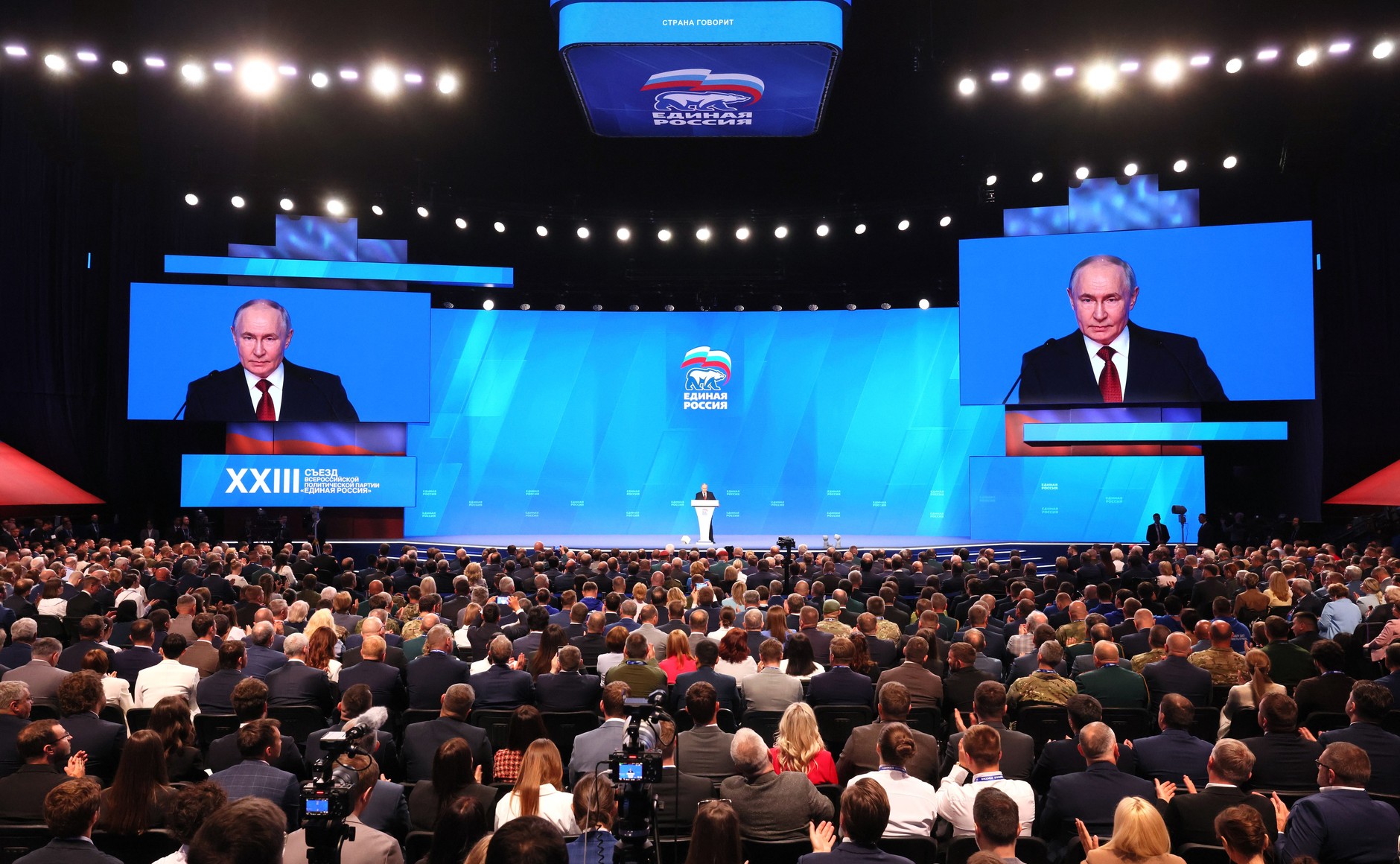
However, the president himself supports the opposite views. Speaking at the congress of the ruling party “United Russia” on June 28, Putin stressed that “the Kyiv regime is retreating along the entire line of contact”. On the same day, Putin in his interview with the state television declared that Russian forces will keep on fighting until they accomplish their main task “the final liberation of Donbass and Novorossiya”.
It is something new. Novorossiya, as a historical region, includes two Ukrainian largest seaside cities, – Odesa and Mykolaiv, which were never officially demanded by the Russian government previously. Besides, Kherson and Zaporizhzhia, which were claimed by Russia, are still controlled by Ukraine. There is no doubt that Putin still believes that he can capture the whole Donbas and in theory he has enough resources to accomplish it in seven or eight months. But it is hard to imagine that he can seriously contemplate besieging and destroying Odesa, a big and densely populated city. It seems that he just wanted to say that he is going to fight as long as he finds it necessary.
Russian political system is completely different from those that exist throughout Europe and resembles models widespread in Africa. There are no stable political institutions in Russia. The government, the parliament and leading political parties are just platforms for communication between the supreme power and different groups of elite, which try to influence the course of the state, but never openly oppose important decisions taken by the leader.
In such a system, one of the main obligations of the state is preventing all spontaneous actions, caused by social discontent. Because the mass social groups have no political representations, public opinion can gain influence state decisions only, if part of the elite will use it as a tool for changing state policy. In order to prolong the war in accordance with his wishes, Putin just has to deprive all the elite groups of the opportunity to utilize anti-war sentiments that are gaining popularity in the Russian society.
The top of the electoral list of the “United Russia” announced at the congress opened with Putin’s speech can be regarded as an indication that the Russian president is going to prevent all attempts to influence his decision to go on with the war. First of all, it is important that Putin rejected the advises to postpone the elections set for September 18 on the grounds of security, because Ukrainian air attacks can scare off the voters. The general outcome of parliamentary elections in contemporary Russia can be foreseen right now. But if the loyal supporters of the ruling party, annoyed and disturbed by Ukrainian air attacks, decide to abstain from voting, local authorities will face difficulties in achieving desired results. Putin showed that he is confident in his popularity and believes that his endorsement of the “United Russia” will overcome all doubts.
Chairman of the “United Russia” Dmitry Medvedev did not manage to get into the top of the electoral list, though he was reported to make efforts to achieve it. It means that he is not supposed to become the chairman of the next Duma (the lower chamber of the Russian parliament) and once more become a player with real political influence. It may be a blow to Medvedev, but the main target of this combination seems to be Sergey Sobyanin, the mayor of Moscow. Now, he is the leading political figure in the top of electoral list of the ruling party, though it is officially headed by foreign minister Sergey Lavrov. The trick is that the mayor of the city with strong anti-war sentiments became surrounded with the strong supporters of the war and will be obliged to imitate their position during the campaign. It will inevitably undermine Sobyanin’s popularity in Moscow, which has been bothering the presidential administration for quite a long time. But even more important it will make him suppress the expression of anti-war views and declare that all the inhabitants of Moscow support the President’s intention to fight until victory.
The joke appeared in the Russian capital after recent Ukrainian air-attacks: Moscow will ignore all provocations and will not allow to engage it in the war between Russia and Ukraine. It seems that Moscow will not be able to avoid an involvement, and anti-war sentiments in the capital will remain politically insignificant. It will be impossible to use them to compel the president to stop the hostilities, even if there is an elite group determined to achieve it.
But it remains unclear what Putin wants to achieve himself. He suddenly acknowledged on June 28, that no agreements were concluded during his meeting with the US president Donald Trump in Anchorage in August 2025. A few days before this statement, Lavrov declared directly opposite, complaining that the US administration does not want to carry out agreements reached by two presidents.
Putin seems to realize that Trump does not intend to give him the whole Donbas providing an opportunity to end the war looking as a winner. However, Putin cannot comprehend why Trump has changed his approach to Russia.
There is no sense to explain it by European influence on Trump or Trump’s exaggeration of the impact of Ukraine’s air-attacks on Russian economy. There is hardly a person in the world, whose opinion Trump will take into consideration if it contradicts his own beliefs. And Trump can exaggerate his role in history, but not the achievements of other political leaders.
Trump just does not need Russia any more, because his strategy has changed. He does not intend to increase pressure on China any more. He wants to control the energy supply of Europe and make concessions to China at the expense of the EU, gaining an access to Chinese to market in exchange. The US will also try to decrease its dependence on import of metals produced in China, but the direct confrontation will be avoided. Of course, China is destined to remain the only strategic rival of the US, but the main current goal of the US administration seems to be preventing the EU from obtaining a strategic autonomy. When Trump entered the session on economic security at the G7 summit with the phrase “I am the boss”, he was not joking. But the EU in its turn can hinder the US policy by enhancing cooperation with China. And Washington will be compelled to consent to it, at least to some extent.
There is no place for Russia in this scheme, which allows main global players, – the US and China, – to postpone the confrontation. Trump still can use Russia for getting advantages against both the EU and China, but in that case he needs Russia to be weak and dependent. And Ukraine’s air-strikes help to achieve that.
The Ukrainian attacks have been concentrated on oil-refineries and high-tech military production. The air-strikes are designed and organized by the American AI system Palantir. So the Pentagon can influence the selection targets. By the way, Putin still refuses to recognize the American role in the attacks and blame for them exclusively Europe (explosive parts for Ukrainian drones are supplied by Norway).
The choice of targets indicates that they are not aimed at rapid disabling of Russian forces. Neither refineries, nor the high-tech manufacturing are related directly to the main Russian advantages on the battlefield, – superiority in artillery rounds and air-bombs. When Putin says that Ukraine’s strikes cannot stop the Russian offensive in Donbas, he is not lying. But these attacks are destroying industrial equipment, which cannot be acquired by Russia without breaching American sanctions. To replace such an amount in short time seems to be completely impossible. Either if truce is established, or if the war is continued, the Kremlin is going to become completely dependent on the good will of Washington.
The change of American approach to policy towards Russia and China has already influenced the behavior of Alexander Lukashenko, the president of Belarus, who started to demonstrate that he should be regarded not as a Russian satellite, but as an independent player. On June 16, he expressed regret for being too harsh in his statements about Ukraine’s president Volodymyr Zelensky and stressed that Belarus does not want a war with Ukraine. On June 19, Zelensky demanded to switch off Russian equipment, located in Belarus, which helps to carry out air-attacks on Ukraine. Minsk gave no response, but on June 24, Zelensky announced that the equipment stopped functioning. On June 25, Lukashenko told the Russian ambassador in Minsk that his attempts to engage Belarus into the war with Ukraine are in vain, because people of Belarus have no desire to fight against Ukrainians. On June 27, Lukashenko went to meet Putin in his residence on Valdai (a beautiful lake not far from Novgorod). They spent two days in negotiations and their only result was the statement that Belarus should remain neutral, increasing cooperation with Russia. After that Lukashenko went to China where he received confirmation from Chinese president Xi Jinping that Belarus is regarded by China as a close friend.
If the peace in Ukraine is established, Belarus can become an important transit country for China, and in the current situation it will not obstruct relations between Minsk and Washington. The Balkan countries, can also gain a lot from their location on the routes that can be used by China for the access to the European market. Thanks to new technologies, Montenegro can enhance its national transit potential. Its high relief ceased to be a problem for the route construction. China built three most elevated roadways in the world. The road in the Himalayas reaches 5 886 meters above the sea level. The EU cannot allow China to control the strategically important trade routes, but it can finance their construction using Chinese workforce and technologies. Opening of the road construction in Kolashin second part of highway Matesevo-Andrijevica on June 29, proves that the Balkan countries can use for their advantage the desire of the EU to obtain a strategic autonomy and Chinese economic expansion.
Utilizing the competition between China and the US over Europe can be even more profitable. Moreover, Putin will be kept out of the game. Therefore, he will become less dangerous for the stability in the Balkans. At least until he realizes, what is happening.
Dmitry GALKIN

Komentari

NEW HIGHWAYS LEAD MOUNTAIN COUNTRIES TO THE GLOBAL ECONOMY: We are all closer
UPOTREBA ANTIFAŠIZMA: Od julskih vatri do julskih prevara
TRINAESTOJULSKA NAGRADA: Toplo-hladno
Izdvajamo
-
IN ENGLISH3 danaNEW HIGHWAYS LEAD MOUNTAIN COUNTRIES TO THE GLOBAL ECONOMY: We are all closer
-
IN ENGLISH2 sedmiceMESSAGES OF THE NATO SUMMIT IN TURKEY: The transatlantic partnership is not in crisis, it is falling apart
-
DRUŠTVO4 sedmiceCIN-CG: GOVOR MRŽNJE I DEZINFORMACIJA DODATNO NARUŠAVA ODNOSE SRBIJE I CRNE GORE: Diplomatija uvreda
-
INTERVJU4 sedmiceDR SRĐA PAVLOVIĆ, ISTORIČAR: Vladajuća struktura je u značajnoj mjeri ideološki antievropska i antizapadna
-
Izdvojeno4 sedmiceSLUČAJ IVANE RADOVANOVIĆ NA UNIVERZITETU CRNE GORE: Odbijen izbor u zvanje zbog nepodobnosti
-
Izdvojeno4 sedmicePRESLAGANJE MOĆI: Nova Trampova strategija može ugroziti jedinstvo Evrope
-
Izdvojeno4 sedmiceSTEČAJNA MAFIJA: ISPARAVANJE MILIONA U VEKTRA BOKI: Privredni sud, SDT i država ćute
-
INTERVJU4 sedmiceDR RASTKO MOČNIK, UNIVERZITETSKI PROFESOR, SOCIOLOG, PSIHOANALITIČAR I GRAĐANSKI AKTIVISTA, LJUBLJANA: Okolnosti ne idu naruku da se Janša uzdigne na Orbanov nivo